


What Are Keyword Match Types?
Introduction
Pick the wrong match type and you're either missing half your potential traffic or paying for clicks that will never convert. It's one of those settings that looks simple on the surface — three options, how hard can it be — but gets mismanaged constantly, even in accounts with serious budgets behind them.
Keyword match types control which search queries trigger your ads. If you've ever wondered how do keyword match types work at a technical level — or why the same keyword produces completely different traffic in two different accounts — the answer almost always comes down to match type settings and bidding strategy. Get them right and your ads show up when someone is genuinely looking for what you offer. Get them wrong and you're either too restrictive to scale or too loose to be profitable. Neither extreme works.
The landscape shifted meaningfully over the last few years. Broad match used to be the match type you used carefully, if at all. Now Google's own data and independent research both point to broad match paired with Smart Bidding as a legitimate strategy — not a lazy default.
This article breaks down what are keyword match types, how they work in 2026, and how to build a strategy around them that actually holds up in practice — not just in theory.
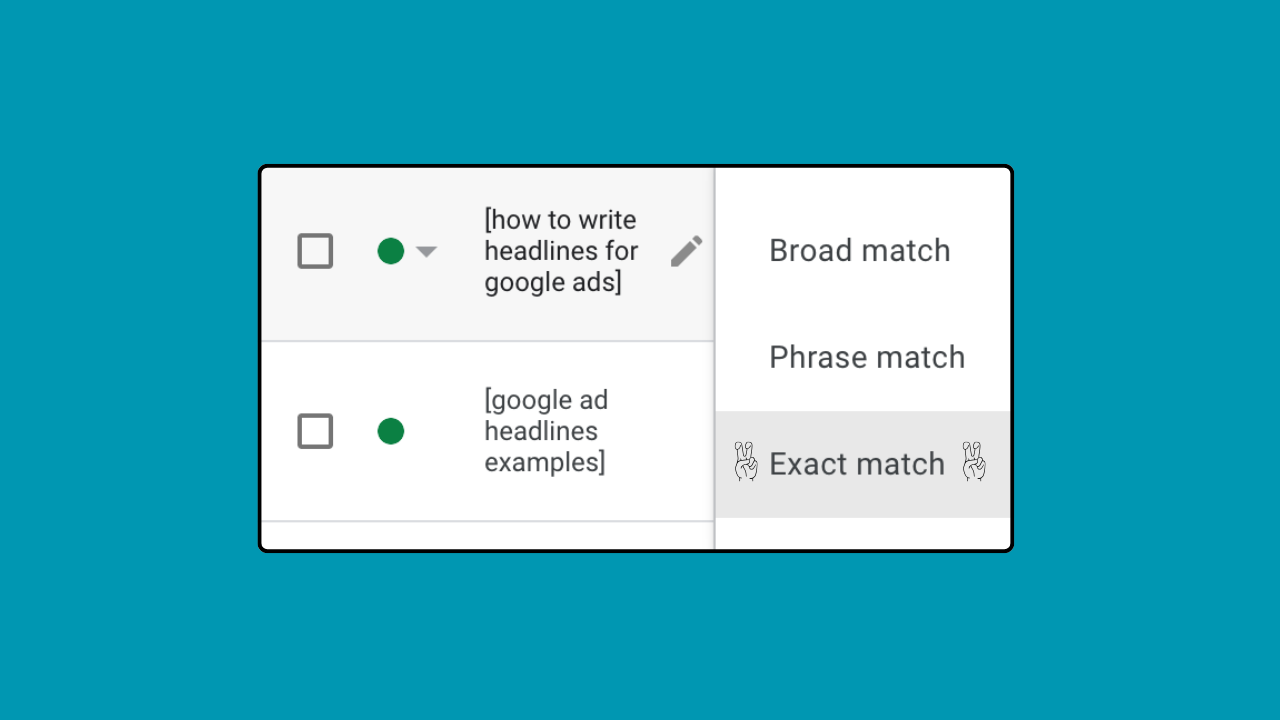
Overview of Keyword Match Types in 2026
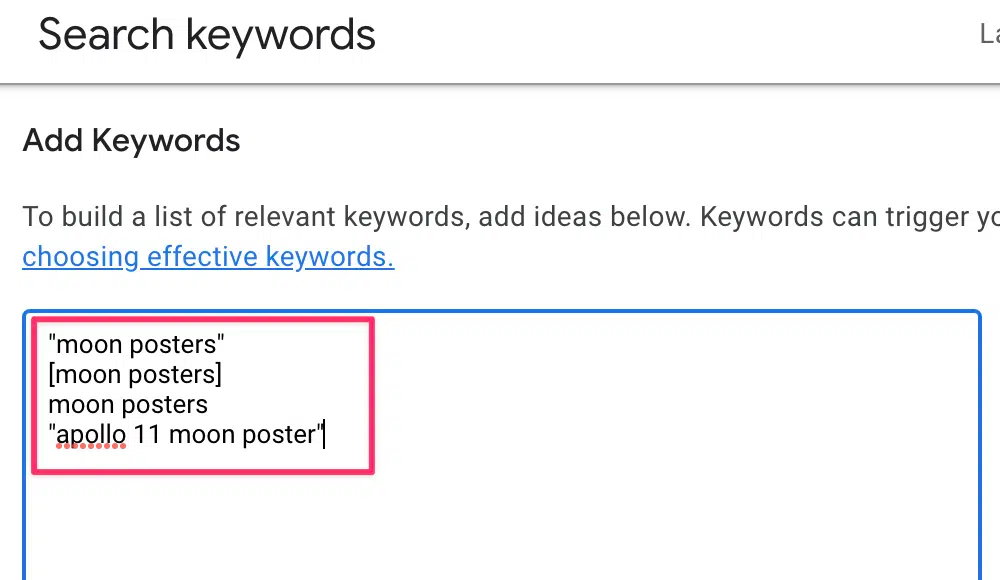
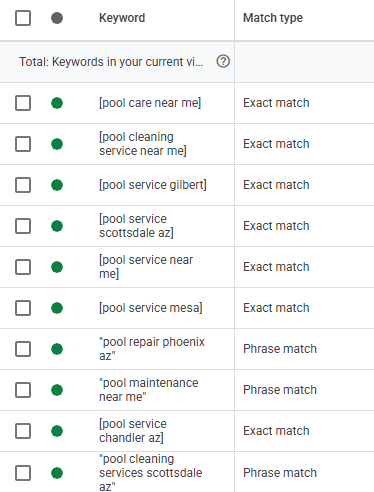
There are three keyword match types in Google Ads: broad match, phrase match, and exact match. Before getting into strategy, here's keyword match types explained in plain terms: each one defines how closely a user's search query must match your keyword for your ad to be eligible to show. Modified broad match was retired in 2021 and its behavior largely absorbed into phrase match — so the types of keyword matches in Google Ads now stand at three: broad, phrase, and exact. That simplification was overdue — three match types is already enough complexity to get wrong.
Broad match overview and role in modern campaigns
Broad match is the default match type in Google Ads, and for years that default status was a red flag — it meant advertisers who didn't pay attention ended up with irrelevant traffic they didn't ask for. That reputation isn't entirely undeserved, but the context has changed.
Google's official documentation describes broad match as showing ads for searches related to your keyword — which, for keyword match types for beginners, is the most important default setting to understand because it's what Google applies automatically if you don't specify anything else. In practice, that means Google is making judgment calls about intent — using signals like the user's search history, location, device, and the content of your landing page to decide whether a query is relevant enough to trigger your ad.
The key shift: broad match without Smart Bidding is still risky. Broad match with Smart Bidding — tCPA or tROAS — is a different proposition. The algorithm uses the same signals to decide whether to bid, which creates a self-correcting mechanism that wasn't there when broad match ran on manual CPC.
How to use broad match safely comes down to two non-negotiables: Smart Bidding must be active, and a maintained negative keyword list must be in place before launch — not added reactively after budget burns on irrelevant queries.
Raymond, a growth marketer with 15 years of experience, documented this directly: "One of my accounts was stuck in a performance plateau. I switched a few high-intent keywords to broad match and layered in Smart Bidding. A few weeks later, we uncovered new converting terms I hadn't even considered." That's the real use case for broad match in 2026 — discovery and scale, not replacement for tighter match types.
At YeezyPay, we monitor transaction flows for thousands of high-spend accounts daily. The data tells a story that Google’s reps often omit: Broad Match is a double-edged sword. We’ve observed that 70% of accounts switching to Broad without at least 50–100 historical conversions per month end up burning through their initial deposit in under 48 hours. Our team’s stance is firm—unless your pixel is 'seasoned' with deep conversion data, Broad Match is just a donation to Google’s R&D department.
Phrase match overview and typical use cases
Phrase match shows ads for searches that include the meaning of your keyword. The exact wording doesn't need to appear, but the intent does. According to Google, phrase match replaced the old modified broad match behavior in 2021, which is why it now covers more ground than it used to.
Phrase match sits in a useful middle position — more control than broad, more reach than exact. It works well when you know the core intent you want to capture but don't need to specify every possible phrasing. To put it in keyword match types examples: a phrase match keyword like "accountant for small business" will trigger for "affordable accountant for small business London" but not for "accounting software" — which is roughly the behavior most advertisers want from a mid-funnel keyword.
The CPC premium for phrase match is real and worth factoring in. At 43% CPC growth over two years versus 29% for broad match, phrase match is getting relatively more expensive. That doesn't make it the wrong choice — but it does mean the economic case for broad match with Smart Bidding is stronger than it was.
Exact match overview and when to rely on it
Exact match shows ads only for searches that match the meaning of your keyword closely — same intent, minimal additions. Google's documentation is clear that exact match now includes close variants: misspellings, singular/plural forms, abbreviations, and reordered words with the same meaning all qualify.
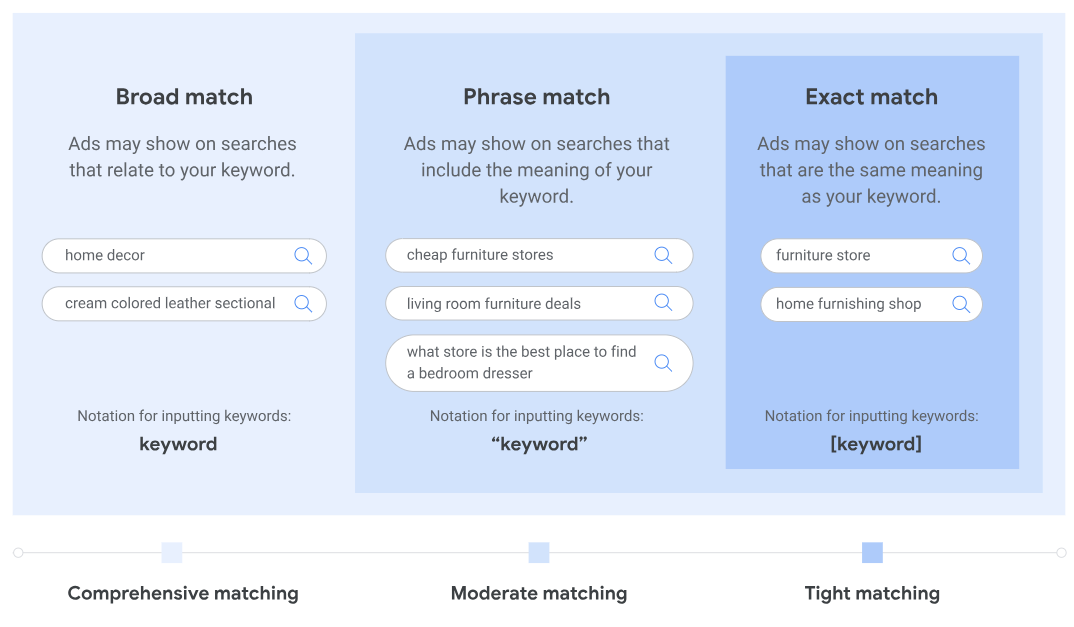
That last point trips people up. Exact match no longer means exactly what it says — a keyword set to exact match for "project management software" can trigger for "software for project management." WordStream documented a case where an advertiser running branded exact match keywords started seeing competitors appear in their own search terms report, tracing it to Google's close variants expansion which broadened matches without any campaign-level notification.
Exact match still earns its place for high-value, high-intent terms where traffic quality matters more than volume — branded keywords, competitor terms, and bottom-funnel queries where a slightly off-intent match wastes significant budget. But treat it as a precision tool, not a control mechanism that keeps Google fully in check.
Beyond Keywords: The Infrastructure of Scaling
You can spend weeks perfecting your Match Type combinations, but in 2026, Google’s algorithms look at more than just your keywords. They look at your account’s "reputation." At YeezyPay, we’ve analyzed data from thousands of high-spend campaigns and noticed a clear pattern: even the most surgical Exact Match strategy can be derailed by account instability.
When you start scaling Broad Match or testing multiple GEOs, your account’s trust score is put to the test. This is why professional teams are increasingly moving away from individual setups to Google Ads Agency Accounts via YeezyPay.
These agency accounts provide:
-
Higher Trust Thresholds: Less likely to hit "Suspicious Activity" flags during rapid budget scaling.
-
Financial Stability: Reliable billing that prevents Smart Bidding from "resetting" due to payment failures.
-
Strategic Flexibility: The ability to isolate experimental Broad Match tests on separate high-trust assets.
In short, your Match Type strategy is only as strong as the account it’s running on. Mastering the infrastructure is the first step to mastering the auction.
How Match Types Work in Google Ads Auctions
How Google matches search queries to your keywords
Match type isn't a simple filter that blocks or allows queries — it's more like a relevance threshold. Google's auction system evaluates each search against your keyword list and decides whether your keyword is eligible to enter the auction at all. Match type defines the outer boundary of that eligibility.
What most advertisers miss: the auction considers context beyond the keyword itself. Device, location, time of day, search history, and landing page content all factor into whether Google serves your ad — even when the query technically matches your keyword. This is why two advertisers with identical keywords and match types can see very different query distributions in their search terms reports.
Close variants, synonyms and intent signals
Every match type in 2026 includes close variants — and the definition of "close" is broader than most advertisers expect. According to Google's documentation, close variants cover misspellings, singular and plural forms, abbreviations, acronyms, and reordered words with the same meaning. For phrase and broad match, synonyms and related concepts come into play too.
WordStream's analysis of match type behavior documented a pattern that catches advertisers off guard: a brand protection campaign running on exact match keywords started showing competitor names in the search terms report after Google quietly expanded close variants. The brand protection looked intact in the settings — the actual traffic had shifted without any notification.
The lesson: no match type gives you complete control over which queries trigger your ads. Exact match gets you closest, but "exact" now means "same intent, minor variations acceptable" — not "this precise string of words and nothing else." Weekly search terms report reviews are the only reliable way to see what's actually triggering your ads.

How match types interact with Smart Bidding strategies
Match type and bidding strategy aren't independent choices — they compound each other, for better or worse.
Google explicitly recommends pairing broad match with Smart Bidding because broader query coverage gives the algorithm more conversion signal to learn from. The flip side: exact match campaigns in low-volume niches can starve Smart Bidding of the data it needs. Google's own guidelines require at least 30 conversions per month for tCPA to function reliably — exact match on niche B2B terms rarely hits that threshold.
Raymond, a growth marketer with 15 years of experience, ran into this directly: his account hit a performance plateau running tight match types. After switching high-intent keywords to broad match and layering Smart Bidding, the campaign uncovered converting search terms he hadn't considered — and performance recovered. The combination worked where either setting alone hadn't.
Choosing the Right Keyword Match Types for Your Goals
Match types for lead generation campaigns
Choosing the right keyword match type isn't a one-time decision — it changes as your account matures, your conversion data grows, and your competitive landscape shifts. The sections below break this down by campaign goal. Lead generation is where match type mistakes are most expensive. A law firm or B2B SaaS company paying $80 per click can't absorb irrelevant traffic the way a $15 ecommerce product can. Quality has to come before volume.
The practical starting point: phrase and exact match on bottom-funnel, high-intent terms. Build conversion history first. According to WordStream's Google Ads Benchmarks, average conversion rate across industries sits at 7.52% — but lead generation verticals like legal and financial services run significantly below that average, which means every wasted click hits harder. Once the account has 30+ conversions per month, introducing broad match on proven converting themes with tCPA active makes sense as a discovery layer — not before.
Match types for ecommerce and shopping goals
Ecommerce has more margin for experimentation than lead generation, but that doesn't mean broad match by default. The best keyword match type for ecommerce on Search tends to be layered: exact match on branded terms and known high-converting product queries, broad match with tROAS on category and discovery terms where volume matters.
WordStream's benchmark data puts average ecommerce conversion rates higher than most other verticals — which means Smart Bidding has more signal to work with, and broad match performs more predictably than it would in a low-conversion B2B account. The economics support a more aggressive match type approach when conversion data is sufficient.
Match types for local service businesses
Local businesses face a volume problem — and match type strategy for small business ads looks different from enterprise accounts precisely because of this constraint. Exact match on low-volume local terms can leave campaigns with too few impressions to exit Smart Bidding's learning phase.
Phrase match on service-plus-location terms — "emergency plumber Austin," "roof repair contractors Denver" — gives enough reach to gather data while keeping intent tight. Broad match only makes sense once geo targeting is locked down precisely enough that the algorithm can't pull in traffic from outside the service area. Google's documentation on geographic targeting recommends "presence in location" rather than "interest in location" for service businesses — that setting matters as much as match type for controlling who actually sees the ads.
Match types for B2B and long sales cycles
B2B has the opposite volume problem from local businesses — the specific, high-intent queries that indicate real buying intent are searched by very few people per month. "Enterprise contract lifecycle management software for legal departments" might get 10 searches a month globally. Exact match on that term gives you precision but no scale.
Phrase match on core intent themes gives Smart Bidding enough query volume to learn from, while keeping the algorithm within a relevant intent space. According to WordStream's benchmark research, B2B categories consistently show higher CPCs than consumer categories — which makes irrelevant traffic particularly costly and argues for tighter match types than ecommerce accounts typically need.
The other B2B-specific issue: attribution lag. A keyword that looks like it isn't converting after two weeks may be contributing to deals that close in 60 or 90 days. Restructuring or pausing campaigns before that window closes is one of the most common ways B2B advertisers destroy data they needed to let mature.
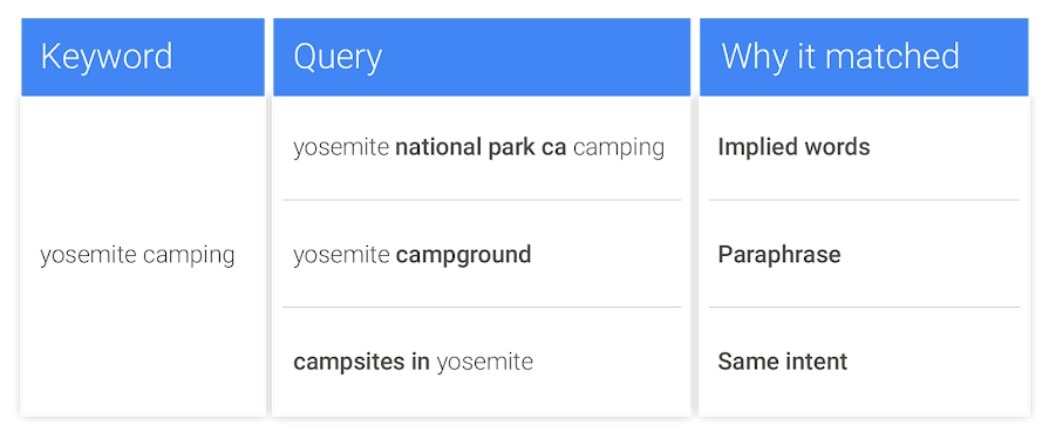
Building Account Structure Around Match Types
Single vs mixed match type ad groups
For years the dominant advice was SKAGs — and one of the most common keyword match type mistakes still seen in audits is accounts still built around that 2019-era logic, with dozens of near-identical ad groups that fragment Smart Bidding data without adding meaningful control. That approach made sense when exact match actually meant exact. In 2026 it's counterproductive. WordStream's 2026 account structure guide puts it plainly: with all the keyword matching updates, you don't need as many keywords as you once did — stick to core terms and avoid muddying the waters with excessive variations.
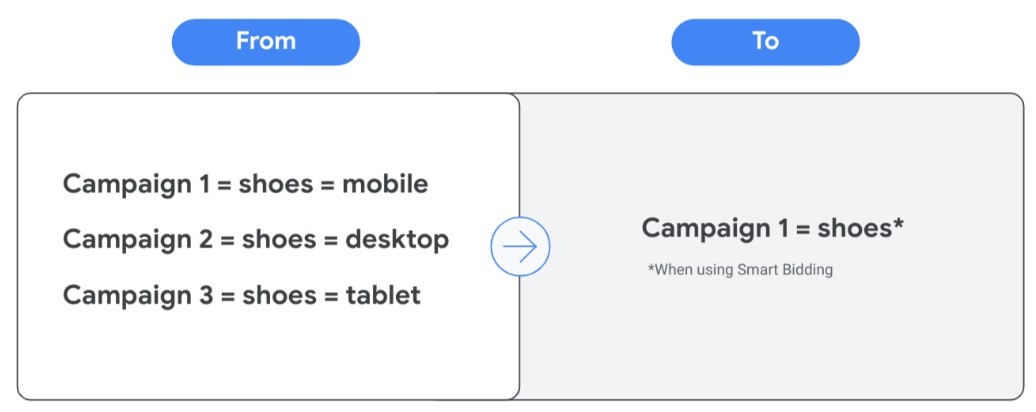
The current consensus among practitioners is tighter ad groups built around keyword themes, not individual keywords. LeadsBridge's campaign structure guide is direct: avoid making separate campaigns just for match type — broad vs exact in separate campaigns is old-school thinking that can actually hurt performance by fragmenting the data Smart Bidding needs to learn from.
When to combine match types in one campaign depends entirely on intent alignment. Mixed match types within the same ad group work fine when the keywords share the same intent and landing page — the problem isn't mixing match types, it's mixing intents. The problem isn't mixing match types — it's mixing intents. An ad group combining "buy running shoes" (transactional) with "best running shoes for beginners" (informational) creates message match problems regardless of match type.
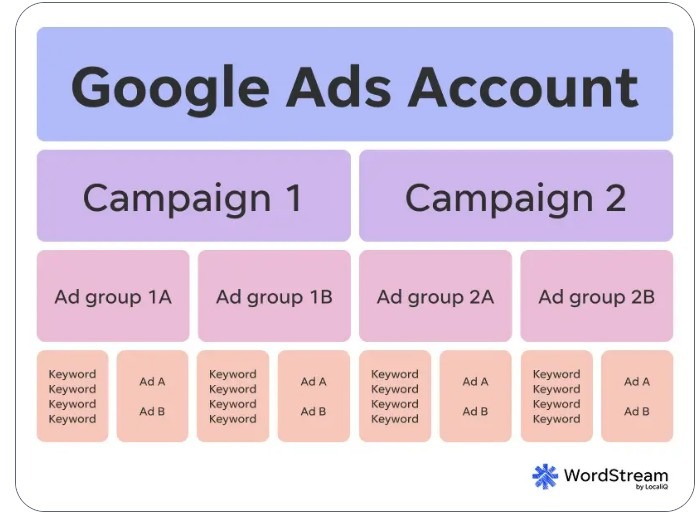
Structuring campaigns by intent and funnel stage
The question of how to structure campaigns by match type gets asked constantly — and the answer in 2026 is counterintuitive: don't. Segment by objective and intent instead. Match type follows from intent, not the other way around. Groas.ai's account structure analysis documents the framework that works for most businesses — brand keywords in a separate campaign on exact match with manual CPC or Maximize Clicks, non-brand Search campaigns consolidated by intent type rather than product category, and Performance Max campaigns segmented by margin tier or business objective.
The reason brand stays separate isn't just organizational — it's measurement. Brand campaigns inflate apparent performance when mixed with prospecting campaigns, making it impossible to tell whether your acquisition campaigns are actually working. Groas.ai notes that broad match paired with Smart Bidding has become the recommended approach for accounts with 50 or more monthly conversions — below that threshold, tighter match types give the algorithm cleaner signal to work with.
Using match types for prospecting vs remarketing
Match types serve different functions depending on whether you're prospecting for new customers or re-engaging people who already know you. For prospecting, broad match with Smart Bidding makes sense — you want the algorithm to find queries you haven't explicitly listed. For remarketing, exact and phrase match on high-intent terms work better because the audience is already warm and intent is what matters, not discovery.
Dennis Moons, founder of Store Growers with over 12 years managing Google Ads campaigns, makes a practical point: "For high-CPC accounts or tight budgets, starting with phrase match and graduating winners to exact match is still the smarter play." That graduation logic — starting broader, then locking down what converts — applies to prospecting campaigns specifically. Remarketing campaigns don't need that discovery phase because the audience qualification already happened upstream.
Scaling winning queries into new keywords and themes
The search terms report is where match type strategy and account growth intersect. Broad match surfaces queries you didn't plan for — some irrelevant, some genuinely converting. The ones converting are candidates for promotion into dedicated exact or phrase match keywords with their own ad copy and landing page.
Raymond's documented experience is the clearest real-world example of this: after switching high-intent keywords to broad match and adding Smart Bidding, the account surfaced converting terms from adjacent industries and long-tail phrasings that weren't on the original keyword list. Those discoveries then feed back into the keyword architecture as exact match terms — tighter control, better message match, cleaner performance data. Broad match does the discovery work. Exact match locks in what works.
Controlling Traffic with Negative Keywords
Building and maintaining shared negative lists
Negative keywords are where most advertisers underinvest their time relative to the impact. Using negative keywords with match types is not optional — it's the mechanism that makes broad and phrase match viable at scale. Every broad or phrase match keyword you run is an open door — negative keywords are how you control what comes through it.
Shared negative lists — account-level lists applied across multiple campaigns — are the most efficient way to manage this at scale. Google's account structure guidance recommends cleaning up duplicate and non-serving keywords as part of structural consolidation. The same logic applies to negatives: maintaining one shared list for themes you never want to show for — "free," "jobs," "DIY," "how to" for commercial campaigns — is more reliable than managing negatives campaign by campaign.
Twominutereports' 2026 Google Ads best practices guide makes a useful distinction: instead of adding individual negative words, use account-level negative keyword lists to block entire themes. That approach scales better and catches variations you'd miss adding terms one by one.
One update worth knowing: Google announced that negative keywords now automatically block misspellings. Previously, blocking "analytics" didn't block "anlytics" — now it does. This reduces the manual workload for negative keyword maintenance significantly, though brand names with intentional variations still need individual attention.
One hard lesson our team learned while scaling aggressive Lead Gen campaigns: in 2026, a static negative keyword list is a recipe for failure. Google’s AI is now so 'creative' with semantic matching that it bypasses standard filters. We now recommend a 'Hyper-Active' workflow—auditing Search Terms Reports every 6 hours during the first 48 hours of any Match Type expansion. This manual oversight usually saves our partners around 15% of their total spend—money better kept on your YeezyPay balance for scaling rather than wasted on junk clicks.
Mining the search terms report for negatives
The search terms report is the most underused optimization tool in most accounts. It shows the actual queries triggering your ads — which is the only way to see where broad and phrase match are taking you versus where you intended to go.
Downeymarketing's 2026 match types guide is straightforward on this: "If I'm running phrase match keywords, I'm always monitoring my search terms report closely and adding negative keywords constantly." That cadence — constant rather than occasional — reflects how much ground phrase match covers in 2026 compared to a few years ago.
A practical mining workflow: pull the search terms report weekly, sort by cost descending, and look for three things — queries with spend but zero conversions above your CPA threshold, queries with clearly wrong intent, and competitor brand names appearing in non-brand campaigns. Each category gets handled differently: the first goes on a watch list before adding as negative, the second gets added immediately, the third gets evaluated against whether competitor targeting makes strategic sense.
Preventing irrelevant and non-compliant traffic
Beyond performance, negative keywords serve a compliance function that's easy to overlook. Advertisers in regulated industries — healthcare, financial services, legal — can find broad match pulling in queries that violate platform policies or industry regulations. A medical services advertiser running broad match on "treatment options" might surface queries about conditions outside their practice scope. AOK Marketing's match types analysis flags this directly: broad match can be particularly problematic for sensitive industries where ad context must be tightly regulated.
The fix is proactive negative keyword lists built around categories of queries you cannot or should not appear for — not just irrelevant commercial terms, but queries that could create regulatory or reputational risk. For healthcare advertisers, that might mean negative lists around specific conditions you don't treat. For financial services, it means excluding terms associated with financial hardship targeting restrictions. Building these lists before launch — not after a policy flag — is the difference between a preventable problem and a reactive one.
Measuring Performance by Match Type
Segmenting reports to diagnose match type issues
The default campaign view in Google Ads aggregates everything — broad, phrase, and exact match keywords all roll up into the same CTR, CPA, and conversion rate figures. That's fine for a top-level health check, but useless for diagnosing whether your match type strategy is actually working.
The fastest way to improve PPC performance with match types isn't switching to a different match type — it's measuring what your current match types are actually doing in the search terms report before making any changes.
The segment you need is the search terms report, not keyword-level data. Keywords tell you what you're targeting. Search terms tell you what's actually triggering your ads — and the gap between the two is where match type problems live. AOK Marketing's 2025 match types analysis documented findings from an Optmyzr study of roughly 2,600 accounts showing that in 85.6% of accounts, CTR was higher with exact match than with broad — meaning broad match frequently delivers traffic that users are less inclined to click. Conversion rates were higher on exact match in 56.7% of accounts. Those figures don't argue against broad match — they argue for measuring it properly rather than averaging it into your overall numbers.
Segment by match type at the ad group level and look for asymmetry. If broad match is generating three times the impressions of exact match but only 20% of the conversions, the match type balance needs adjusting. If exact match keywords are sitting at zero impressions because search volume is too thin, that's the signal to introduce phrase or broad.
Using experiments to test match type changes
Changing match types on live keywords mid-flight creates attribution problems — you can't tell whether performance shifted because of the match type change or because of seasonal trends, competitor activity, or bid strategy behavior. Google Ads Experiments solves this by running a controlled A/B test with split traffic.
Google's Experiments tool lets you split campaign traffic and budget 50/50 between a control and a test variant, run them simultaneously, and compare results with statistical significance. For match type testing specifically, ALM Corp's guide to Campaign Mix Experiments notes that Google now provides a dedicated broad match experiment — a one-click setup that tests enabling broad match across existing keywords without manually duplicating campaigns.

AOK Marketing documented a real example of this approach: a DTC ecommerce brand ran a 50/50 experiment comparing a broad match-heavy strategy against a phrase and exact match strategy on the same campaigns. The broad match version drove more conversions at lower cost, with search terms that "weren't too irrelevant." That's the kind of evidence that justifies a match type shift — not a gut feel, not a Google recommendation, but a controlled test on your own account data.
Google Ads Experiments guidelines recommend running tests for 3 to 4 weeks to gather statistically meaningful data, testing one variable at a time, and only applying changes when the uplift is statistically significant. For match type experiments specifically, 4 weeks is the practical minimum — shorter windows catch too much weekly variance to be reliable.
Migrating legacy campaigns to modern match type strategy
Many accounts are still running architecture built in 2019 or 2020 — SKAGs, separate campaigns per match type, modified broad match keywords that technically still work but behave like phrase match. Migrating these to a modern structure without disrupting performance requires a staged approach.
Dennis Moons of Store Growers, who has managed over $5 million in ad spend across clients ranging from small businesses to global brands, frames the migration logic clearly: "There's no optimal match type configuration for 2026. What works for a $10k/month jewelry store won't work for a $200k/month electronics retailer." The point isn't to copy a template — it's to test your way into the right configuration for your specific account.
The migration sequence that minimizes risk: start with observation — add broad match keywords alongside existing phrase and exact keywords in the same ad group without removing anything. Monitor the search terms report for two to three weeks to see what broad match surfaces. Promote converting new queries to exact match. Only then retire the phrase match duplicates if broad is covering the same intent more efficiently. Jyll Saskin Gales, Google Ads coach and former Googler with six years at Google, puts the broader direction plainly: "A more holistic approach to keywords that focuses on a few core terms framed up with the right audience targeting is going to be the move in 2026 and beyond." Fewer keywords, broader match, better signals — that's the direction the platform is moving.
Conclusion
What are keyword match types in 2026? Technically, they're the same three options they've always been — broad, phrase, exact. But what those labels actually mean has shifted enough that strategies built on 2020-era assumptions are running on faulty logic.
Exact match isn't exact anymore — it's same intent with variations. Phrase match is broader than it used to be. Broad match paired with Smart Bidding is a legitimate strategy, not a lazy default. And AI Max, launched in May 2025, is Google's push to remove keyword matching from the equation entirely — a direction Dennis Moons of Store Growers describes as removing "the anchor" that keeps your Search Terms Report readable.
The right response to all of this isn't to hand over control or to fight Google's automation. And the answer to how many keyword match types should I use isn't "all three by default" — it's "as many as your account data and budget can support effectively, starting with tighter match types and expanding as conversion volume grows." It's to meet it halfway. Broad match with Smart Bidding gives the algorithm room to find queries you didn't think of, while keeping your keyword list as a directional signal. Negative keywords — maintained actively, not set up once and forgotten — control what actually comes through. And experiments give you the evidence to make match type decisions based on your account's data rather than industry generalizations.
Raymond's experience captures the practitioner mindset that works in 2026: "I still don't trust it fully without good guardrails, but I respect it more than I used to." That's a reasonable place to land. Use broad match where it makes sense, test it properly, build negative keyword lists that actually reflect what you don't want, and measure match type performance in your search terms report — not your keyword list.
The keyword match types 2026 update story isn't about new features. It's about understanding that the control you think you have with exact match is less than it appears, and the reach you're afraid of with broad match is more manageable than it looks — when you build the right guardrails around it.
FAQ
What are keyword match types and why do they matter in Google Ads?
Keyword match types control which search queries trigger your ads. They determine how closely a user's search must align with your keyword for your ad to enter the auction. Get them wrong and you're either missing eligible traffic or paying for clicks that don't convert. In 2026, match types matter more than ever because all three have expanded in scope — meaning your actual traffic distribution may differ significantly from what you'd expect based on older definitions.
How do broad, phrase and exact match keywords differ?
Broad match shows ads for searches related to your keyword, including synonyms and conceptually related queries. The difference between broad and phrase match is that phrase match limits ads to searches containing the meaning of your keyword in context — it's more directional. The difference between phrase and exact match is precision: exact match targets searches with the same meaning or intent as your keyword, with only minor variations. In practice, all three now cover more ground than their names suggest, particularly exact match, which since 2021 means "same intent" rather than "same words."
Which keyword match type should I use for my campaign goals?
There's no universal answer — and anyone who tells you otherwise is oversimplifying. For new campaigns with limited data, start narrow with phrase and exact match to build clean conversion history. For accounts with 30+ monthly conversions and Smart Bidding active, broad match is worth testing as a discovery layer. Store Growers' Dennis Moons puts it well: "For high-CPC accounts or tight budgets, starting with phrase match and graduating winners to exact match is still the smarter play."
How do keyword match types work with Smart Bidding strategies?
Match type and bidding strategy interact directly. Google recommends pairing broad match with Smart Bidding because broader query coverage generates more conversion signal for the algorithm to learn from. Exact match on low-volume keywords can starve Smart Bidding of data — the system needs at least 30 conversions per month per campaign to optimize reliably. The combination that fails most often: broad match with manual CPC, which enters every eligible auction regardless of conversion probability.
How do I change or test keyword match types without hurting performance?
Use Google Ads Experiments to run a controlled 50/50 split between your current match type setup and a test variant. Run the experiment for at least 4 weeks before reading results. Don't change anything else during the test period — bid strategy, budget, or landing pages — or you lose the ability to attribute performance differences to the match type change. Apply changes only when results are statistically significant, and do it in stages rather than converting your entire keyword list at once.


