


Running Gambling Ads on Google in 2026
Introduction
If you’ve been trying to keep up with the chaos of the US betting market over the last few years, you know that Running Gambling Ads on Google in 2026 feels vastly different than it did even eighteen months ago. We’ve moved past the "Wild West" phase of state-by-state launches and into a period of heavy consolidation and razor-sharp regulatory scrutiny. Today, it’s not just about having the biggest budget; it’s about navigating a compliance minefield that Google has automated with terrifying efficiency. For any operator or affiliate, the goal remains the same: capturing high-intent traffic without getting your entire Merchant Center or Ads account nuked in a routine sweep.
The reality of the American landscape is that the "moment of intent" has become a moving target. While search remains the bedrock for direct conversions, the way users arrive at that search query is no longer a straight line. They might see a breakdown of a parlay on YouTube Shorts, discuss odds in a private community, and finally hit Google to find a sportsbook that doesn't have a laggy interface. If you aren't visible at every one of those touchpoints, you are essentially paying for your competitors' brand awareness.
Why gambling ads remain restricted on Google
Google has never been shy about its cautious stance on "vice" industries, and gambling sits at the top of that list. The core of the restriction isn't just moral; it’s a massive legal shield for Alphabet. Because gambling laws in the United States are a fractured mosaic of state-level mandates, Google’s automated systems are designed to "disapprove first and ask questions later." One small slip in your landing page disclaimer or a mistargeted zip code in a "dark" state can lead to an instant, account-level suspension that is notoriously difficult to appeal.
There are three main reasons why the "Restricted" tag continues to haunt this niche:
-
Consumer protection remains the primary driver for the legal teams at Google.
-
The risk of significant fines from state commissions and the CFTC forces a zero-tolerance policy for non-certified accounts.
-
High rates of chargebacks and fraud in the industry lead to stricter financial scrutiny for advertisers.
This level of restriction means that the barrier to entry is high, but that is actually good news for legitimate players. It keeps the low-quality "get rich quick" schemes out of the auction, which stabilizes the CPC for those of us who have done the paperwork and have the right licenses in place.
What changed by 2026
By the time we hit early 2026, the industry saw two major shifts that changed the game for anyone Running Gambling Ads on Google in 2026. First, the integration of third-party verification services like G2 Risk Solutions became mandatory and fully automated within the Ads interface. You no longer just "self-certify"; your backend data is constantly pinged against state licensing databases to ensure you are active and in good standing. If a state commission pauses your license at 2:00 PM, your ads are usually dark by 2:05 PM.
Second, the rise of "micro-betting" and prediction markets has forced Google to create entirely new sub-categories for certification. We’ve seen a shift away from just "Sportsbooks" and "Casinos" into more granular buckets like "Exchange Betting" and "Event-Based Trading." This has opened up the auction to a new breed of fintech-adjacent platforms that previously struggled to find a home on the Search Network.
These changes have brought a new level of maturity to the market, characterized by several key trends:
-
AI-driven compliance bots now scan landing pages for "predatory" language in real-time.
-
There is a much heavier emphasis on "responsible gaming" metrics within the ad creative itself.
-
The "Value-Based Bidding" model has become the standard, where we bid for high-LTV players rather than just any sign-up.
This evolution means that "set it and forget it" campaigns are dead. If you aren't actively monitoring your policy signals and adjusting to the latest state-level tweaks, you’re going to find yourself on the wrong side of an automated ban.
Overview of Google Gambling Ads Policy
Navigating the Google gambling ads policy USA requires more than just a passing glance at the help center; it demands an understanding of how Google’s internal risk engines have evolved. In the early months of 2026, the policy has shifted from a broad "restricted" category to a highly granular, automated verification system. Google’s primary goal is to ensure that every ad served is 100% compliant with the legal framework of the specific state where the user is located. This means the policy isn't just a set of rules—it's a living filter that checks your license status, your domain's historical health, and even the "responsible gaming" labels on your creative in real-time.
A major update that took effect in late 2025 and is fully enforced as we move through 2026 is the "Website-Specific Certification" mandate. Previously, an operator might have felt comfortable running various subdomains or landing pages under a single master certification. Those days are gone. Today, Google requires an individual certification for every single root domain you intend to use. If you’re trying to figure out how to advertise gambling legally, the first step is ensuring your URL is not on a shared or free platform. Google now explicitly rejects certifications for sites hosted on third-party subdomains or root domains that the advertiser does not directly own and operate.
Allowed gambling categories
Under the current online gambling advertising Google framework, "allowed" does not mean "open season." Even the most common categories are subject to strict regional geofencing and individual account certification. As of early 2026, Google has actually expanded the list of permitted categories to include newer financial-hybrid products, provided they meet the specific "Financial Services" or "Gambling and Games" criteria depending on their structure.
The following categories are generally permitted for advertising in the United States, provided the advertiser holds the necessary state-level certifications:
-
Online Sportsbooks: This includes traditional fixed-odds betting, live in-play wagering, and point spread betting in states where sports wagering is legal.
-
Online Casino Games: Permitted in a growing number of states, covering digital versions of slots, poker, blackjack, and baccarat.
-
Daily Fantasy Sports (DFS): While widely accepted, DFS ads still require a distinct certification and must follow specific state-by-state disclosure rules.
-
State and Private Lotteries: Advertising for official state lotteries and approved private lottery couriers is allowed, though state-level restrictions apply to courier services.
-
Social Casino Games: These are allowed but require a "Social Casino Games" certification; notably, affiliates are now barred from promoting this category.
-
Horse Racing: Ads for parimutuel wagering on horse racing are permitted, though there has been a recent crackdown on uncertified horse racing aggregators.
-
Prediction Markets: A newer addition in January 2026, allowing ads for regulated event-based trading markets that meet specific financial oversight standards.
It is worth noting that while these categories are "allowed," their visibility is often limited by the ad format you choose. For instance, while you can run sports betting ads Google ads on the search network with relative ease, you’ll find much tighter restrictions if you attempt to move that same creative into Gmail or onto certain sections of the YouTube Masthead.
Prohibited gambling content
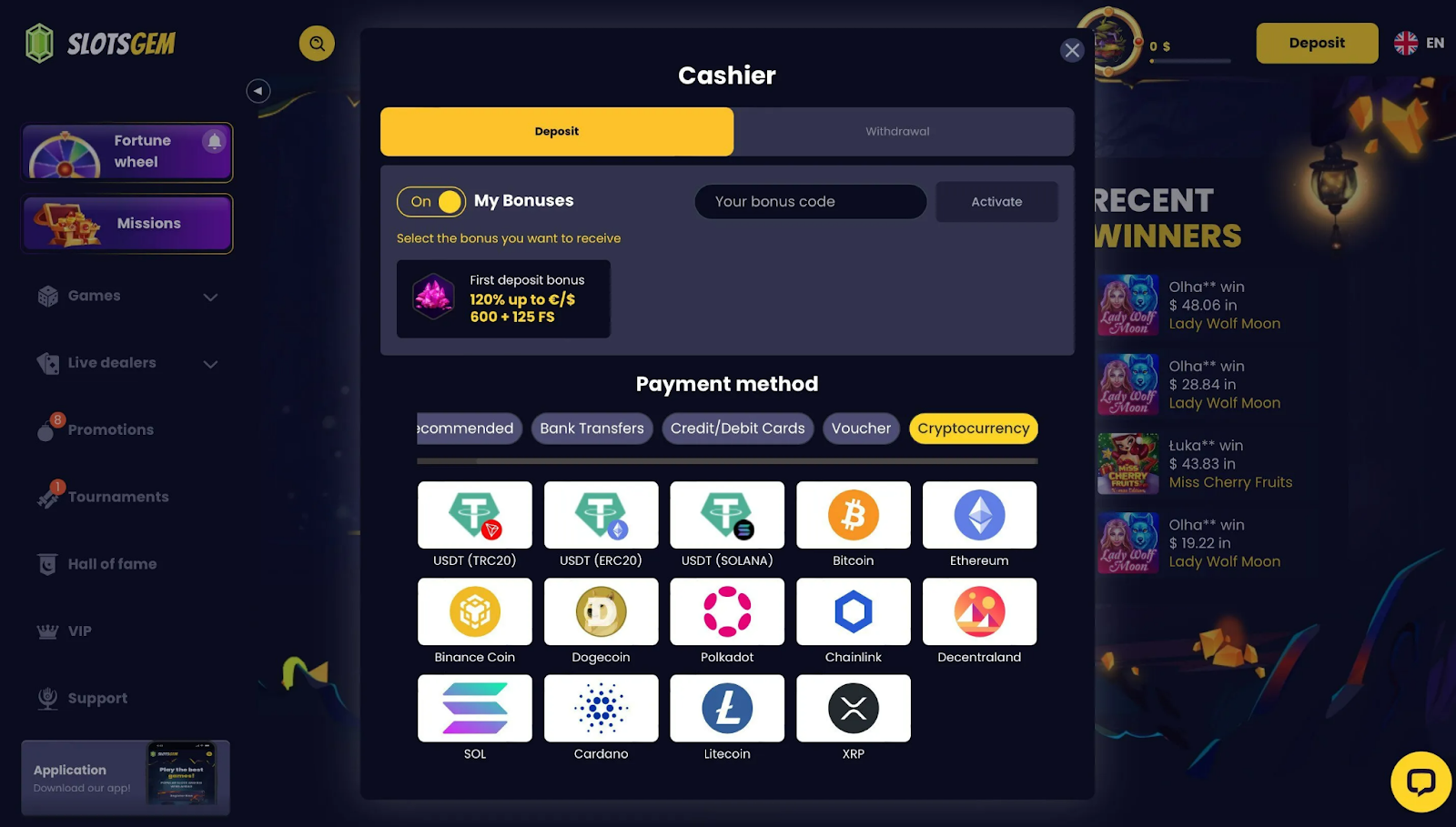
Despite the expansion of legal markets, Google has drawn a very hard line around what it considers high-risk or deceptive gambling content. In 2026, the definition of "restricted content gambling ads" has been widened to include anything that uses virtual assets with real-world value. This was a direct response to the surge in unregulated platforms that bypassed traditional banking systems to facilitate wagers.
Google currently maintains a zero-tolerance policy for the following types of prohibited gambling content:
-
Crypto and NFT Casinos: Any platform that allows wagering with virtual currencies or digital goods without a specific US state-issued license.
-
Guaranteed Returns: Any ad copy or landing page that implies a user can "beat the house" or guarantees a financial profit from gambling activities.
-
Uncertified Sweepstakes: "Sweepstakes casinos" that haven't transitioned to the full gambling certification workflow are now flagged and suspended automatically.
-
Minors-Targeted Content: Any creative that uses cartoons, youthful influencers, or themes that could be interpreted as appealing to those under 21.
-
Aggregator Social Promotion: As of late 2025, affiliate sites and aggregators are strictly prohibited from promoting social casino games.
-
Non-Functional Landing Pages: Sites that exist solely to redirect traffic or lack clear "Responsible Gambling" links are rejected immediately.
The "one-strike" rule is particularly brutal in 2026. If Google’s AI detects that you are attempting to mask prohibited content—such as using cloaking to hide a crypto casino behind a "news" site—the suspension is usually permanent. For those managing legal gambling ads United States, staying on the right side of these prohibitions isn't just about following rules; it's about protecting the long-term viability of your entire MCC (Manager Account).
Licensing and Eligibility Requirements
If you think you can just spin up a landing page and start bidding on high-volume keywords, you’re in for a rude awakening. The bureaucratic wall Google has built around this niche is designed specifically to exhaust those who aren't serious about compliance. In the US market of 2026, the iGaming advertising guidelines US have moved beyond simple "proof of license." You are now required to prove a direct, unbroken chain of ownership between the entity holding the state license and the domain running the ads.
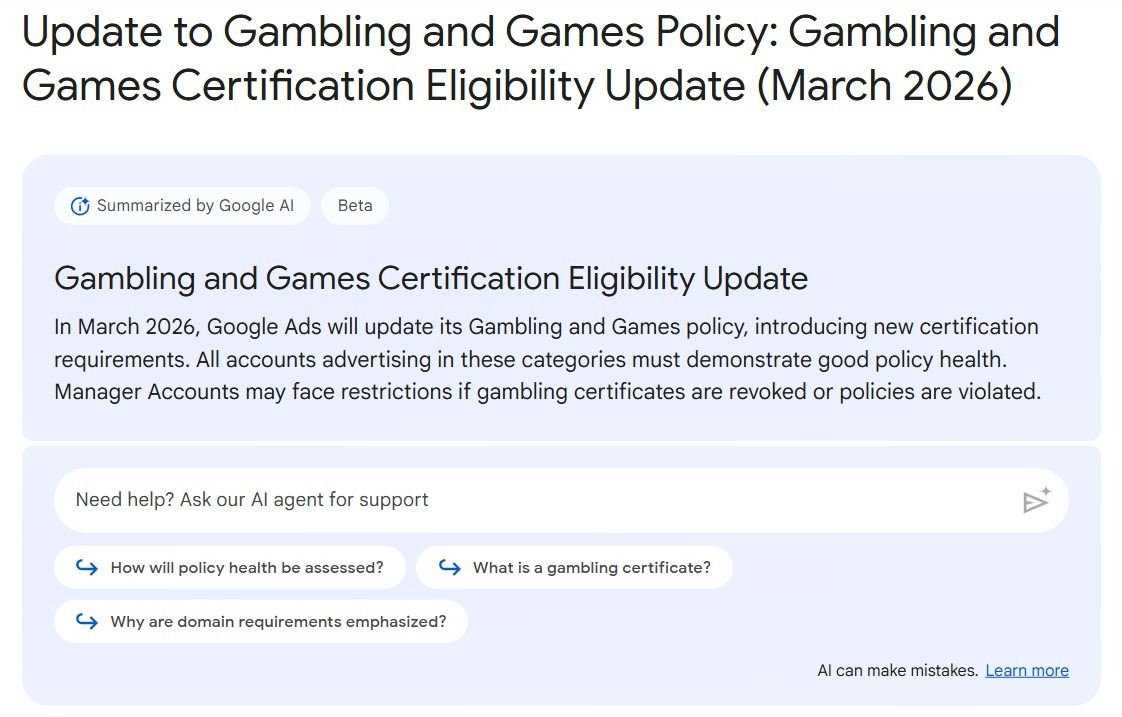
This level of scrutiny is partly due to the March 23, 2026, policy update, which effectively ended the era of "rented" domains and third-party hosting for gambling advertisers. Google’s automated systems now verify that the root domain is owned and operated by the license holder. If you’re using a subdomain on a shared platform or a "free-of-charge" host, your application will be rejected before a human even looks at it. This is a critical hurdle for those trying to figure out the Google Ads gambling approval process for the first time.
Required licenses and documentation
To even get a foot in the door, you need a stack of documentation that would satisfy a federal audit. Google doesn't just want to see a PDF of your license; they want to see the active status verified by the state commission’s own database. For those running Google Ads for sportsbooks or online casinos, the primary document is the state-issued Certificate of Licensure, but that’s just the baseline.
The following documents are now mandatory for every new certification request in the United States:
-
State-Issued Operating License: A current, valid license from the specific state(s) where you intend to serve ads.
-
Domain Ownership Verification: Legal documentation proving that the advertiser owns the second-level domain (e.g., https://www.Google.com/search?q=yoursite.com) and is not using a third-party host.
-
G2 Risk Solutions (G2RS) Verification: While initially for financial services, this third-party check is now increasingly used to verify merchant health and anti-money laundering compliance.
-
Authorized Representative Letter: If an agency is applying on behalf of an operator, a signed letter on company letterhead from the license holder is non-negotiable.
-
Responsible Gaming Accreditation: Evidence that your platform meets the national standards for player protection and self-exclusion database integration.
-
Tax Identification Records: Updated IRS documentation that matches the business name on the state license and the Google Ads billing profile exactly.
Any discrepancy between these documents—even a misplaced comma in a corporate name—will trigger an automated rejection. This is why Google Ads compliance gambling starts in the legal department, not the marketing department.
Operator vs affiliate rules
The distinction between operators and affiliates has become significantly more blurred in 2026, mostly because Google now holds both to the same punishing standards. Historically, affiliates could get away with a lighter certification process. Today, if you are a media partner or an aggregator, you must comply with the exact same responsible gambling advertising standards as the multi-billion dollar operators you are promoting.
There are, however, some specific functional differences that you need to be aware of:
-
Direct Operators: Can promote real-money gambling, sportsbooks, and social casinos, provided they maintain separate accounts for each as required by the 2025-2026 updates.
-
Affiliates and Aggregators: Are permitted to promote licensed gambling services but are now explicitly prohibited from running ads for social casino games.
-
Licensing Transparency: Affiliates must clearly state on their landing pages that they do not provide gambling services directly and must link to the licenses of the operators they feature.
-
Domain Restrictions: Affiliates can no longer "borrow" the authority of an operator's domain; they must be certified on their own independent, owned-and-operated URLs.
-
Content Limits: Affiliates are barred from using "guaranteed win" language or proprietary betting systems that haven't been vetted by a recognized regulatory body.
The ban on affiliates promoting social casinos was a major blow to the industry in late 2025, but it has cleaned up the casino ads on Google Search results by removing hundreds of low-quality "review" sites that were essentially funneling users into unverified sweepstakes.
Approval and certification workflow
The actual Google Ads gambling approval process is a test of patience. You should plan for a timeline of at least 4 to 6 weeks from the moment you hit "submit" to the moment your first ad goes live. This isn't a process you can rush, and trying to "nudge" support will usually just reset your position in the queue.
The workflow for 2026 typically follows this path:
-
Step 1: Account Hygiene: Before applying, you must ensure your Google Ads account has completed the standard "Advertiser Verification" (biometric or ID-based) and has a clean billing history.
-
Step 2: External Pre-Verification: You apply for a G2RS code or a similar third-party credential that proves your business is a legitimate financial entity.
-
Step 3: The Google Application: You fill out the gambling-specific form in the Help Center, selecting your target states and uploading your primary licenses.
-
Step 4: Technical Review: Google’s bots crawl your domain to ensure it meets the March 2026 "owned and operated" criteria and that your responsible gambling advertising disclosures are in place.
-
Step 5: Evaluation Phase: A specialized policy team reviews the manual and automated signals; this is where the 4-6 week wait occurs.
-
Step 6: Certification Issuance: If approved, a "certificate" is applied to your account ID, allowing ads to serve in the approved GEOs.
Keep in mind that this certification is website-specific. If you decide to launch a new brand or even a significantly different landing page on a new domain, you have to start this entire process from scratch. For those managing Google Ads for betting websites at scale, this means maintaining a rigorous "compliance calendar" to ensure no license or certification expires without a renewal already in the works.
Account Setup for Gambling Ads
Once your documentation is in order, the actual technical implementation begins. Setting up your account for Running Gambling Ads on Google in 2026 is less about "hacking the algorithm" and more about building a robust data silo that can withstand a sudden policy audit. In the current US landscape, your account structure isn't just an organizational choice; it’s a compliance necessity. If you bundle multiple states or different gambling products into a single campaign, you risk a "cascading disapproval" where a minor issue in one jurisdiction pauses your entire national spend.
Think of your account as a set of firewalled compartments. By isolating your traffic, you ensure that a policy flag in New Jersey doesn’t accidentally kill your high-performing campaigns in Pennsylvania. This level of intentionality is what separates the long-term operators from the "churn and burn" accounts that Google’s bots are designed to sniff out and eliminate.
Google Ads account structure
For anyone managing paid search for online casinos or sportsbooks, the golden rule in 2026 is one state per campaign. While Google’s automated bidding is powerful, it still struggles with the nuances of state-level geofencing and varying legal disclosures. By splitting your structure by geography, you can apply state-specific negative keyword lists and unique ad assets that comply with local commission rules without muddying your data.
A professional-grade structure for the US market typically looks like this:
-
The "Shared Account" Separation: You must maintain entirely separate Google Ads accounts for real-money gambling and social casino games, as crossing these streams is a primary reason for permanent suspensions.
-
Campaign-Level Geography: Each campaign should target exactly one state to allow for precise budget control and to ensure your state-specific helpline numbers are always accurate.
-
Product-Specific Ad Groups: Within each state campaign, break your ad groups down by intent—one for "Live Betting," one for "Prop Bets," and another for your "Sign-up Bonus" terms.
-
Branded vs. Generic Split: Keep your own brand terms in a dedicated campaign with a "Target Impression Share" strategy to defend your turf from aggressive competitors.
-
Experimentation Folders: Use the "Campaign Experiments" tool to test new creative hooks or landing pages in a controlled environment before rolling them out to your entire portfolio.
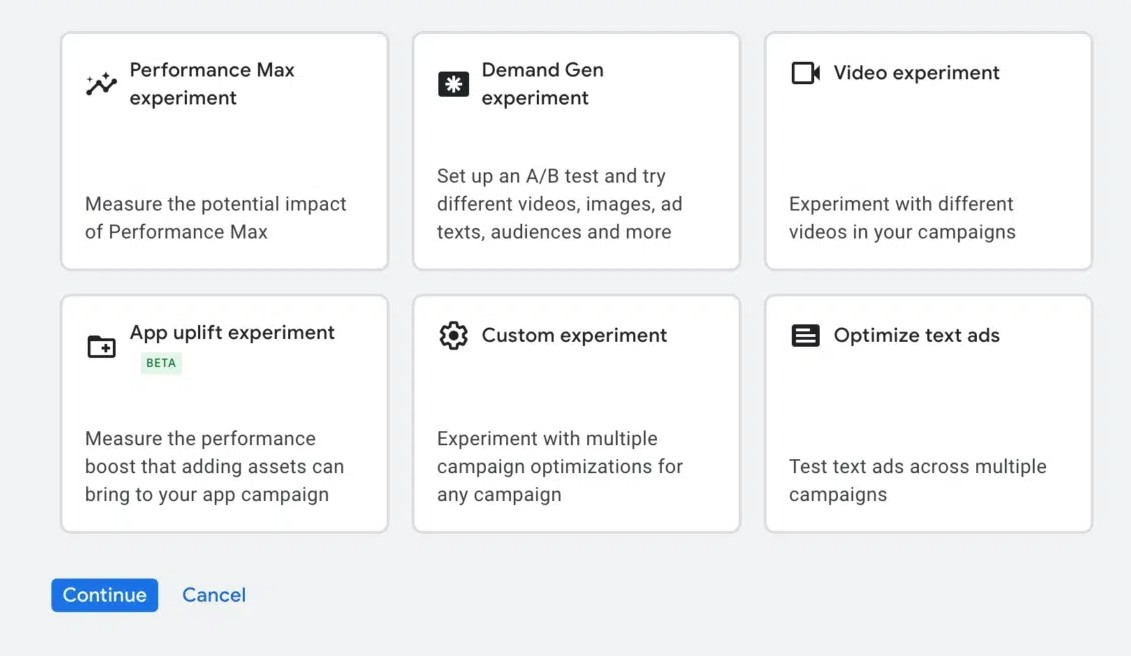
This modular approach makes it much easier to handle the frequent policy shifts we see in the gambling ads targeting USA sector. If a state regulator suddenly changes the rules for "free bet" terminology, you only have to update a handful of ad groups rather than performing a frantic, account-wide overhaul.
Domain and landing page requirements
As we discussed earlier, the March 23, 2026, update made "root domain ownership" the single most important technical requirement. If you’re running legal gambling ads United States, your landing page must be a fortress of speed and transparency. Google’s Quality Score for gambling is notoriously sensitive to "unreliable" signals, such as slow load times or a lack of clear navigation. Your page shouldn't just be a wall of text; it needs to be a functional extension of the user’s search intent.
To pass the 2026 automated crawl, your landing pages must adhere to these strict standards:
-
Direct Domain Association: The page must be hosted on a second-level domain (like brandname.com) that you own; subdomains on third-party "review" platforms are now a trigger for immediate disapproval.
-
Mobile-First Infrastructure: Since over 80% of US bettors engage via smartphone, your page must load in under 2.5 seconds on a standard 4G connection or your "Landing Page Experience" score will tank.
-
Static Legal Headers: Your state license number and the name of the operating entity must be clearly visible, usually in the header or a persistent top-bar, to satisfy the latest transparency mandates.
-
Clear Value Proposition: The "Hook" of your offer—whether it’s a deposit match or an odds boost—must be the most prominent element on the screen without using "predatory" or "guaranteed" language.
-
Functional Exit Paths: All links to your "About Us," "Terms and Conditions," and "Privacy Policy" must be active and easily accessible from any part of the page.
One of the most common mistakes is trying to use "bridge pages" or thin affiliate content that doesn't offer real value. In 2026, Google’s AI is sophisticated enough to detect when a landing page is just a "click-through" shell. Your destination needs to feel like a premium, trustworthy portal if you want to maintain a competitive CPC in the casino ads on Google search auction.
Responsible gambling disclosures
In the eyes of Google and US state regulators, your responsible gambling advertising disclosures are the most critical part of your ad. These aren't just "fine print" items; they are legal requirements that must be handled with surgical precision. Each state has its own preferred helpline and specific phrasing that must be included. For instance, New Jersey might require one number, while Arizona or Ohio might insist on a different 1-800 contact.
Failure to update these disclosures is the fastest way to get an account flagged for "non-compliance." You must ensure that your ad copy and landing pages include these specific elements:
-
Legal Age Warnings: A bold "21+" (or 18+ where applicable) must be included in the ad headlines or at the very top of the landing page content.
-
State-Specific Helplines: You must display the correct problem gambling hotline for the state you are targeting, such as "1-800-GAMBLER" or the local equivalent.
-
Self-Exclusion Links: Your landing page must provide a direct, easy-to-find link to the state’s official self-exclusion registry and your own platform’s responsible gaming tools.
-
Risk Clarification: Brief, clear text stating that gambling involves financial risk and is not a way to solve financial problems.
-
Entity Transparency: The name of the licensed operator must be present on the page, ensuring there is no confusion about who is providing the wagering service.
We have found that integrating these disclosures into the design of the page—rather than burying them at the bottom—actually improves trust and conversion rates. It signals to the user (and to Google’s reviewers) that you are a legitimate, high-quality operator that takes player safety seriously. This transparency is the cornerstone of Running Gambling Ads on Google in 2026 and will save you from the "manual review" nightmares that plague less-prepared advertisers.
Measuring Performance
In an industry where high-intent keywords can command over $50 per click, tracking "leads" is no longer enough. For 2026, the industry has pivoted toward Value-Based Bidding (VBB) and Net Gaming Revenue (NGR) optimization. As Jason Robins, CEO of DraftKings, noted in the company’s Q1 2025 earnings call, the shift toward "AI-driven efficiencies in digital advertising" has allowed major operators to maintain margins even as the market matures. If you aren't feeding Google the data on which players actually deposit and stay, you are overpaying for "bonus hunters" who will never provide a return.
Key Metrics for Gambling Campaigns
Success in online gambling advertising on Google is defined by the quality of the player, not the quantity of registrations. According to Rush Street Interactive (RSI) CFO Kyle Sauers during their Q3 2025 financial update, a disciplined focus on "marketing efficiency" allowed the operator to decrease their Cost Per Acquisition (CPA) in North America by approximately 33% year-over-year.
To achieve these kinds of results, you must monitor a specific hierarchy of 2026 KPIs:
-
Cost Per First Time Deposit (FTD): The baseline for acquisition. For mid-sized operators like BetRivers, the goal is often to recoup this cost within 7 months, as documented in RSI’s historical performance reports in mature markets like New Jersey.
-
Average Revenue Per Monthly Active User (ARPMAU): A critical retention metric. In 2025, RSI reported an ARPMAU of $365 for North American players, highlighting the high value of users acquired through targeted search.
-
Structural Hold Percentage: An internal metric that should be synced with your bidding strategy. DraftKings has publicly prioritized increasing this to 46% in 2025/2026 through better promotion deployment and AI-driven pricing.
-
Bonus-to-NGR Ratio: This helps identify if your Google Ads are attracting "sharp" bettors or "bonus abusers." A high ratio indicates you need to tighten your audience targeting or increase your negative keyword list.
Conversion Tracking Setup
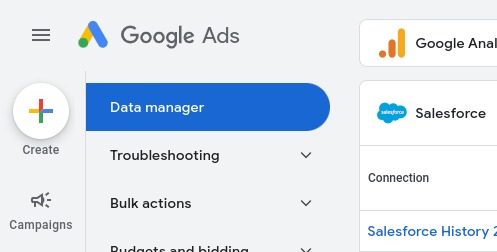
By 2026, standard client-side pixels are insufficient due to privacy regulations and "Youth Shielding" protocols. The gold standard is now Server-Side Tracking (S2S) combined with Google's Enhanced Conversions. This setup ensures that your CRM (like Salesforce or HubSpot) communicates directly with Google Ads, bypassing browser-level blocks.
The Tech Stack of Top Operators:
-
Offline Conversion Import (OCI): This is how brands like FanDuel (led by CEO Amy Howe) match search clicks to actual high-value deposits made in-app days later. It provides the "full picture" that Google's algorithm needs to find more "whales."
-
First-Party Data Hashing: Using hashed emails and phone numbers to improve match rates in a "cookieless" world.
-
Proprietary Event Tracking: Companies like RSI leverage their own technology platforms (as mentioned in their SEC filings) to track unique engagement features like "PropPacks" or community chat interactions as "soft conversions" that predict long-term LTV.
ROAS and Budget Control
Controlling spend in 2026 requires a "Profit-First" approach. Richard Schwartz, CEO of RSI, famously calls iGaming the "profit engine" of the industry. This philosophy should dictate your Google Ads budget: prioritize high-margin iCasino keywords over high-volume but lower-margin sports betting terms.
Strategic Budget Rules for 2026:
-
Automated Bidding with Guardrails: Use Target ROAS (tROAS) to let Google’s AI bid aggressively for high-value players, but set a Max CPC limit to prevent budget spikes during massive events like the World Cup or Super Bowl.
-
Seasonality Adjustments: Don't wait for the AI to learn; use Google's Seasonality Adjustment tool 48 hours before major events to tell the system to expect a higher conversion rate.
-
Geographic Portfolio Bidding: Since states like Pennsylvania and Michigan are high-margin for iGaming, group these into a single portfolio to let the budget flow to where the NGR is currently highest.
Risk Management and Policy Updates
In 2026, risk management is no longer a "set and forget" task; it is a live operational requirement. Google implemented 18 major policy changes to gambling advertising in 2025 alone, and a critical update scheduled for March 23, 2026, will further tighten certification eligibility. This new rule mandates that all gambling sites must be hosted on proprietary second-level domains owned by the advertiser—effectively ending the use of subdomains or third-party platform hosting for licensed ads.
As Jeff Ifrah, founding member of Ifrah Law and a leading voice in US gaming law, often emphasizes, the regulatory "veil" has been lifted, but it has been replaced by a digital microscope. "Compliance in 2026 isn't just about what your ad says," Ifrah notes, "it's about the entire technical and legal architecture of your account."
Handling Suspensions
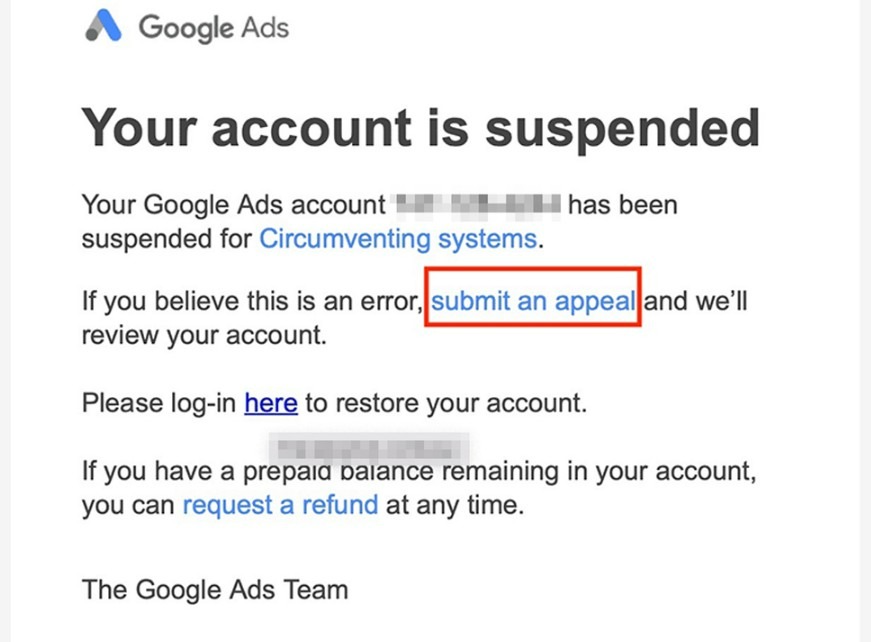
A suspension in 2026 is often the result of Google’s "entity-level" fingerprinting. If one account in your MCC (My Client Center) is flagged for "Circumventing Systems," every linked account—including those with pristine histories—is at risk of a "guilt by association" ban.
The "Circumventing Systems" Trap: The most common trigger for this in 2026 is unintentional redirection. If your tracking template (e.g., using AppsFlyer or Adjust) creates a double-hop redirect that Google’s bot can't resolve instantly, the system flags it as cloaking.
-
Real-World Evidence: In late 2025, several mid-tier operators were suspended when their CDN (Content Delivery Network) misconfigured a geo-gate, causing Google’s "AdBot" (crawling from a California IP) to see a "403 Forbidden" page while users in legal states saw the ad. Google interpreted this discrepancy as an attempt to hide content from reviewers.
The 2026 Appeals Process
If you are suspended, the 2026 appeals process is strictly gated through the Google Ads Policy Manager. You are no longer permitted to "test" multiple appeals; if Google fails to verify your identity after three attempts, your right to appeal is permanently revoked.
Step-by-Step Recovery Protocol:
-
G2RS Verification: Ensure your G2 Risk Solutions (formerly G2 Web Services) certification is active. Google now cross-references your Ads ID with the G2RS database every 24 hours.
-
The "Clean Slate" Brief: Instead of a generic "we followed the rules" message, you must submit a technical audit. This should include timestamped screenshots of your State Gaming License from the official regulator portal (e.g., the NJDGE or Michigan Gaming Control Board).
-
Entity Matching: Verify that the "Legal Name" in your Google Ads "Advertiser Verification" tab is a 100% character-match with the name on your corporate tax filings and gambling license.
Staying Compliant in 2026
The biggest regulatory shift of 2026 is the New Jersey Senate Bill S2356. Introduced in January 2026, this bill mandates that the Division of Gaming Enforcement (DGE) perform continuous studies on gaming advertisements to refine requirements for "responsible gaming messaging."
2026 Compliance Audit Checklist:
-
Domain Integrity: By March 23, 2026, ensure your site is not on a subdomain (e.g., bet.platform.com is out; betrivers.com is in).
-
Youth Shielding: Implement the Google Play Age-Restricted Content Policy (updated Jan 2026), which requires mandatory age-screen prompts and geofenced access for all real-money apps.
-
Prohibited Terminology: Avoid "Risk-Free" or "Guaranteed." Following the $150,000 fine levied against a major operator in Ohio for misleading "bonus" language, Google’s 2026 AI now auto-rejects any copy that implies a wager has zero financial risk.
Compliance Checklist
Maintaining a clean record in 2026 isn't just about avoiding a single rejected ad; it is about protecting your "Policy Health Score." Under the March 23, 2026, Google Ads Gambling and Games Certification Update, Google now evaluates your entire account history and track record before granting or renewing certifications. A "good health" status is now a mandatory prerequisite, meaning that frequent, small violations can lead to a permanent loss of advertising privileges.
As Niji Narayan, a leading analyst at EEGaming, recently noted: "The March 2026 update isn't a minor tweak; it's a market-discipline lever. Google is effectively using access to its search engine to force a higher standard of corporate behavior across the iGaming sector."
Common disapproval reasons
Even seasoned operators like BetMGM or FanDuel occasionally run into disapproval issues when launching in new jurisdictions. In 2026, the AI-driven review process is faster and more literal than ever. The most common reasons for ad rejections today are often technical rather than intentional.
Check your campaigns against these frequent 2026 "tripwires":
-
Domain Misalignment: Per the 2026 certification rules, your second-level domain must be owned and operated by the advertiser; using subdomains on third-party platform hosts like operator.platform-provider.com will trigger an automatic rejection.
-
Prohibited "Risk" Language: Following the FTC and state-level crackdowns in 2024, terms like "risk-free," "guaranteed," or "can’t lose" are blacklisted globally; use "Bonus Bet" or "Deposit Match" instead.
-
Missing State-Specific Helplines: Each state has its own mandatory disclosure; for example, New Jersey ads must include the "1-800-GAMBLER" call-to-action, while Massachusetts requires "1-800-327-5050" or "GamblingHelpLineMA.org."
-
Landing Page Inconsistency: If your ad mentions a "Bet $5 Get $200" offer, but the landing page has been updated to a "100% Deposit Match," the ad will be flagged for Misleading Content within minutes of the first crawl.
-
Youth-Appealing Imagery: Any use of cartoon-style graphics, celebrities with a significant underage following, or "gamified" loot box mechanics in your creative will lead to a Youth Shielding violation.
Ongoing monitoring
Compliance is a "live" process. One broken link or an expired certificate can pause your entire national operation. According to the 2025 iGaming Monitoring Report, operators who utilized automated compliance scripts saw a 40% reduction in account-level warnings compared to those relying on manual checks.
To stay ahead of the regulators and Google's bots, implement these three pillars of monitoring:
-
Weekly Technical Audits: Use an automated script to check every destination URL in your account for 404 errors or slow load times, as a "Destinations Not Working" flag is a primary driver of account health degradation.
-
G2RS Synchronicity: Check your G2 Risk Solutions portal every Monday morning to ensure your certification is in "Good Standing"; any lapse here will cause an immediate and often unannounced pause of your Google Ads.
-
Regulatory Horizon Scanning: Assign a team member to track bills like New Jersey S2356, which as of early 2026, is set to mandate a new set of 3-10 specific "Responsible Gaming" phrases that must rotate through all digital advertisements.
-
Creative Asset Refresh: Rotate your display and video assets every 30 days to avoid "Ad Fatigue" and to ensure that no legacy copy containing outdated promotions or defunct helpline numbers remains active in the system.
Conclusion
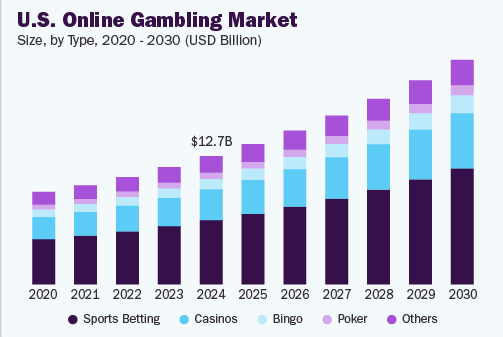
Running Gambling Ads on Google in 2026 is the most complex it has ever been, but the rewards for those who master the system are immense. With the US iGaming market projected to exceed $100 billion by 2027, the ability to capture high-intent search traffic through Google is the single greatest competitive advantage an operator can hold.
As Richard Schwartz of RSI has frequently stated, the goal is to build a "sustainable profit engine." By aligning your technical setup with Google’s latest domain requirements, feeding the AI high-quality LTV data, and staying one step ahead of state regulators like the NJDGE, you can turn Google Ads from a risky expense into your most reliable source of new, high-value players.
When Google Ads makes sense for gambling
Google Ads is not for every operator or affiliate. It is best suited for those who:
-
Hold valid state-level licenses and are willing to undergo the rigorous G2RS certification process.
-
Have a "Data-First" culture that can support server-side tracking and Value-Based Bidding.
-
Prioritize long-term account health over short-term gray-hat tactics or aggressive bonus baiting.
For those who check these boxes, Google remains the primary "gatekeeper of intent" in the digital world. Master the gatekeeper, and the market is yours.
FAQs
Is gambling advertising allowed on Google in the US in 2026?
Yes, but with the strictest oversight in the platform’s history. While Google expanded its policy in January 2026 to include federally regulated Prediction Markets (Exchange-Listed Event Contracts), it simultaneously launched a major crackdown on account health.
As of the March 23, 2026 update, any advertiser in the gambling space must demonstrate "Good Policy Health." This means Google is now looking at your historical compliance record across all linked accounts before allowing you to spend a single dollar. If you have a history of frequent "minor" rejections, you may find yourself locked out of the certification process entirely.
What licenses are required to run gambling ads on Google?
To run ads in 2026, you need a "dual-key" verification setup:
-
State-Level Licensing: You must hold an active license from the regulatory body in every state you target (e.g., the NJDGE in New Jersey or the MGCB in Michigan).
-
G2RS Certification: You must be certified by G2 Risk Solutions (formerly G2 Web Services). Google cross-references your Ads ID with the G2RS database daily.
Critical Note: The legal entity name on your gambling license must be a 100% character match to your Google Ads "Advertiser Verification" profile. Even a missing "LLC" or a slight address discrepancy is a leading cause of "Suspicious Payment" or "Identity" flags in 2026.
Can affiliates run gambling ads on Google Ads?
Yes, but the "Golden Age" of simple affiliate arbitrage is over. Following the December 2025 ban on horse-racing aggregators and the March 2026 domain update, affiliates face two major hurdles:
-
Domain Ownership: You can no longer use subdomains on third-party platforms. You must own and operate a second-level domain (e.g., yourbrand.com).
-
Affiliate Licensing: In high-value states like Pennsylvania and New Jersey, Google now requires affiliates to submit their "Gaming Enterprise" or "Ancillary Equipment" licenses.
If you are a "thin" affiliate providing no unique value or using automated redirection, Google’s 2026 AI will likely flag you for "Unacceptable Business Practices."
Why are gambling ads disapproved on Google?
In 2026, the AI-driven review process is nearly instantaneous. The most common "account killers" right now are:
-
Prohibited Terminology: Under the NJ S2356 guidelines adopted by many states, terms like "Risk-Free" or "Guaranteed" are strictly forbidden.
-
Redirect Loops: Using tracking links that create multiple hops (common with older versions of AppsFlyer or Adjust) is often misidentified as "cloaking," leading to a permanent ban for Circumventing Systems.
-
Missing Disclaimers: Every ad must feature the state-mandated responsible gambling number (e.g., 1-800-GAMBLER).
-
The "Subdomain" Trap: Post-March 2026, any ad pointing to a subdomain hosted on a third-party platform will be auto-disapproved.
Which US states allow Google gambling ads?
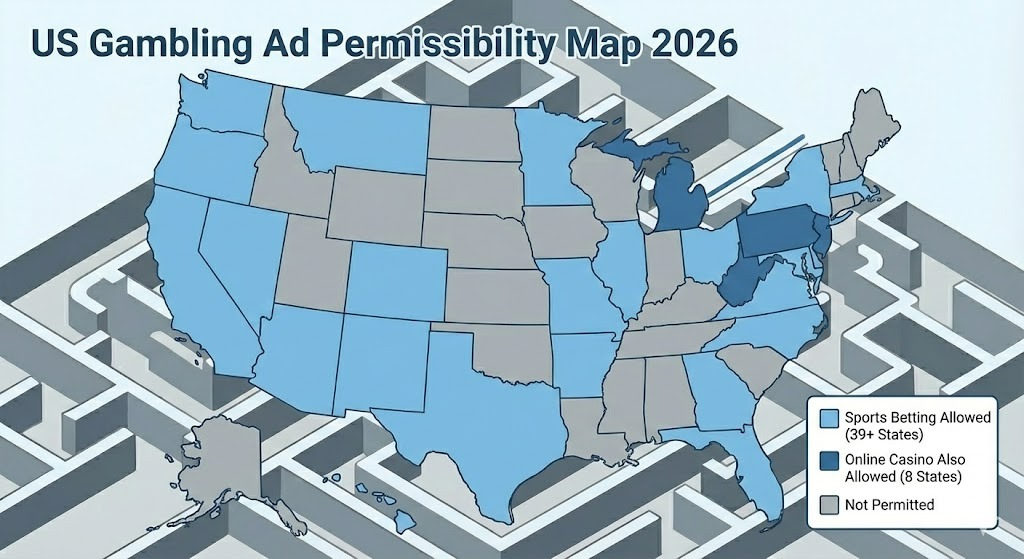
The map is divided into two categories in 2026:
-
Sports Betting: Allowed in 39 states (plus D.C.), provided you have the specific state-level certification.
-
Online Casino (iGaming): As of February 2026, Google only permits online casino ads in 8 states: Connecticut, Delaware, Maine (the newest addition as of Jan 2026), Michigan, New Jersey, Pennsylvania, Rhode Island, and West Virginia.


