


Invalid Clicks Are Draining Your Google Ads Budget — Here's What to Do
Invalid clicks have become a growing problem for Google Ads media buyers over the past year and a half. Since early 2025, more and more users have been reporting cases where 30–50% of clicks come from bots. That kind of traffic drains ad budgets quickly, and basic anti-fraud systems won't protect you from it. Sometimes invalid clicks can eat up the majority of your daily spend: one user in the screenshot below hit a 40% invalid click rate that was consuming nearly his entire daily budget.

Some cases report bots accounting for up to 90% of clicks, depending on the traffic source and campaign settings. One user complained that the moment he enabled Search Partners, 90% of his budget started going to bots and low-quality traffic.

There are several straightforward actions you can take to reduce your invalid click rate. Let's break down exactly what they are — and why taking those same steps on self-registered accounts can cause serious problems.
Where Invalid Clicks Come From — and What AI Has to Do With It
Google officially classifies several types of invalid clicks, including:
-
Accidental clicks by users on creatives
-
Double clicks
-
Click fraud from competitors
-
Click fraud by site owners inflating their placement revenue
-
Bot and fraudulent traffic
Bots are the biggest threat in affiliate marketing: according to industry reports, they account for the highest share of fake clicks. Marketing analyst Mike Ryan notes that Search Partners and Display Network generate particularly high volumes of bot traffic. In his sample, the invalid click rate in Search Partners was around 10%, and in Display Network around 17%. He singled out Search Partners specifically as a source with an elevated share of junk and fake traffic.
The biggest problems arise when the algorithm starts training on that bot traffic. That's exactly how Google Ads automation can behave when you're optimizing for clicks rather than conversions.
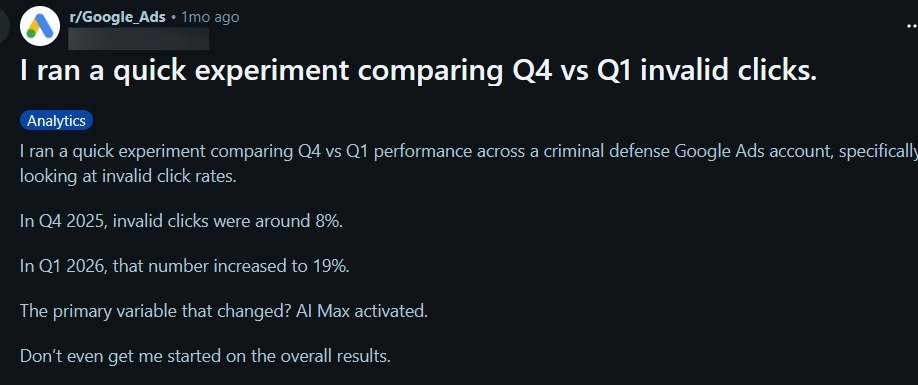
Even if Google filters out the invalid clicks itself, the algorithm may still favor low-quality sources — and risk getting stuck in a bad learning loop. One Reddit user ran into this firsthand: as an experiment, he launched a campaign without AI Max in late 2025, then relaunched it with AI Max in early 2026. In the first run, the invalid click rate was 8%. In the second, it climbed to 19%.
Once you've identified the source of invalid traffic, you have to reconfigure the campaign from scratch. That means disabling Search Partners and Display Network, changing your optimization goals, running new tests, and watching how the algorithm behaves after the changes. On a fresh self-registered account, all of that is risky. The account has no history, so a sudden shift in behavior can look to Google like an attempt to manipulate the system or aggressively spend a fresh account before it gets flagged.
To reduce the risk of a sudden ban, you need an account with history and strong trust signals. The easiest and most straightforward solution here is agency accounts. In the YeezyPay infrastructure, agency accounts come pre-seasoned: their high trust standing with Google means you don't need to spend weeks warming them up before going live, so you move faster to the actual task — disabling poor-quality sources and rebuilding the campaign on cleaner traffic.
Performance Max creates a different set of risks: it automatically distributes impressions across multiple Google channels and gives advertisers less manual control over where traffic is actually coming from. If a campaign is pulling in a lot of invalid or low-quality clicks, it's much harder to quickly separate clean sources from problematic ones inside PMax — some stats are only available in aggregated form, and the algorithm makes all budget allocation decisions. If your fake click rate is climbing, it's better to temporarily pause PMax or isolate it in a separate test with hard spending limits, so its data doesn't contaminate your regular search campaigns.
How to Reduce Your Invalid Click Rate: Practical Methods
To bring down the invalid click rate, you have a few options: adjust campaign settings, connect third-party software, and deploy the right scripts.
Disable Display Network and Search Partners
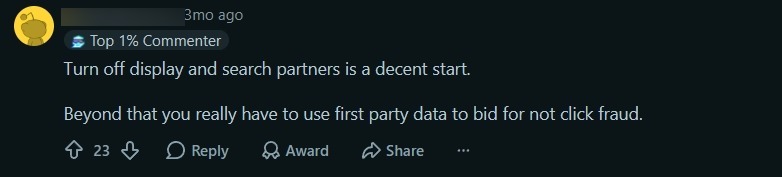
If the bulk of your fake clicks are coming from specific sources, the first move — as people on the forums recommend — is to disable them.
Google doesn't publish the full list of Search Partners placements, but the official documentation confirms the network isn't limited to search engines. It has historically included parked domains, directory pages, third-party search pages, and other third-party search placements. It's no coincidence that in 2025–2026, Google quietly started removing parked domains from Search Partners — that inventory had been criticized for years for weak user intent and a high volume of junk clicks.
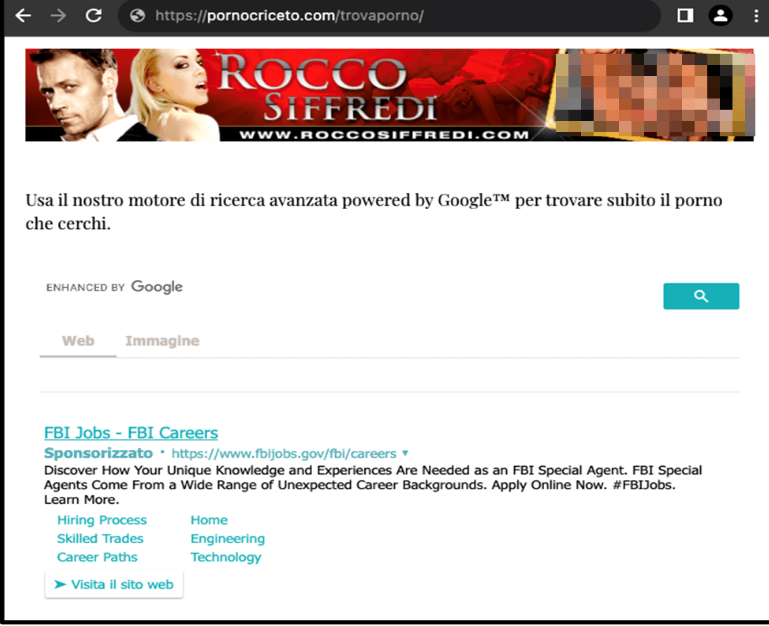
Many of Google's partner properties have a questionable reputation among advertisers, due to low traffic quality: small forums, news feeds, entertainment sites, adult content sites. One of the more striking examples was an FBI job ad appearing on an adult website featuring extreme content.
Disabling these sources lowers your cost per click, cuts down on non-targeted clicks, and improves campaign ROI.
Disable Performance Max, AI Max, and Auto-Apply Recommendations
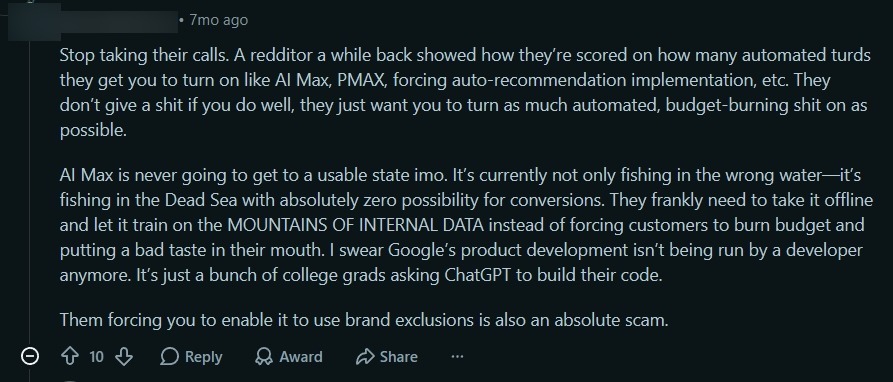
Performance Max and AI Max not only choose what they consider "relevant" placements for your campaign — they also don't give you access to detailed breakdowns. You have virtually no ability to influence what criteria they're using to select those placements. Media buyers on forums flatly say these features exist to extract your budget, not to serve your interests.
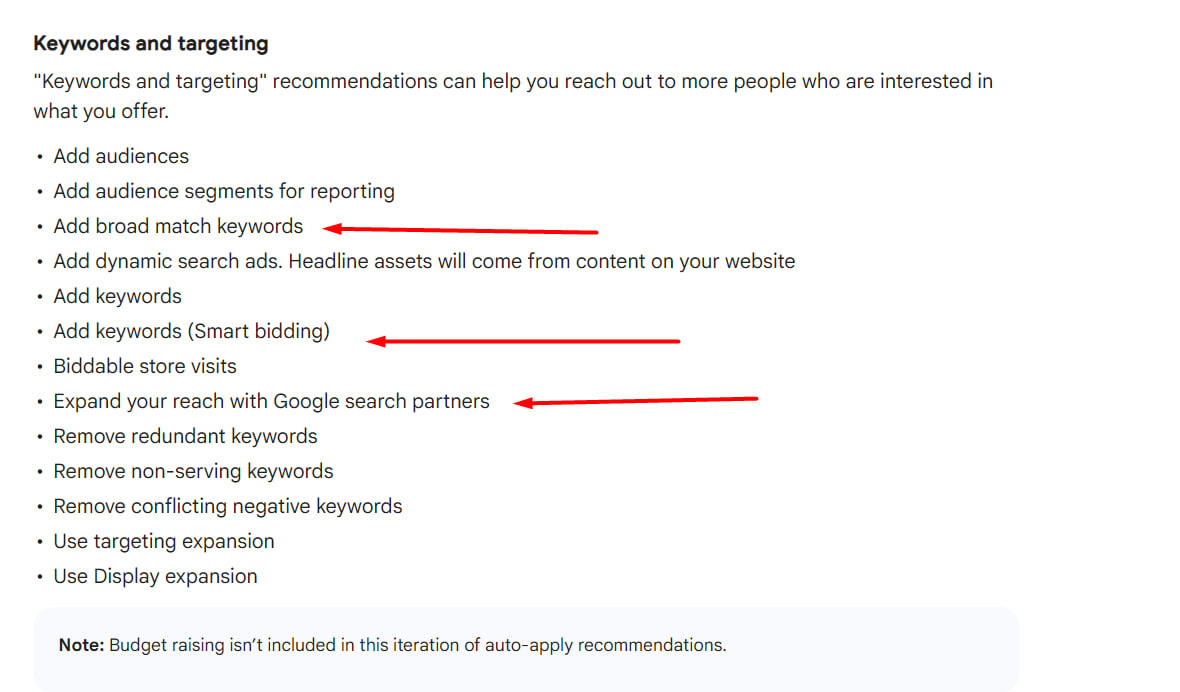
Auto-Apply Recommendations is aggressive enough that it effectively hijacks your campaign control. It can enable Broad Match, Search Partners, and Display Network on its own — and the notifications don't always reach the media buyer. Most media buyers prefer to disable it to avoid burning thousands of dollars and to meaningfully reduce your invalid click rate.
After you cut the low-quality sources, the campaign may enter an active relearning phase. At that point, automation becomes essential: spend control scripts, the ability to preserve accumulated training data, anomaly alerts, campaign pause rules. On self-registered accounts, those tools aren't always accessible — and using them carelessly can look like suspicious activity and trigger a review.
Which means you need an account that can safely support automation. YeezyPay's logic is built directly into its agency infrastructure: trusted accounts let you test scripts with less anxiety, cap algorithmic spend, and filter out low-quality traffic sources on a regular basis without constantly risking a ban.
Don't Rely Solely on Google's Built-In Anti-Fraud
If invalid clicks are defined as traffic from bots, keep in mind: in 2026, bots are exceptionally good at mimicking real users. They fill out forms, "place" orders, leave fake contact details. Google's own algorithms can keep treating these "users" as legitimate for a long time — and continue optimizing toward them. The result: more invalid clicks, higher campaign costs, and in the worst case, a lost account.
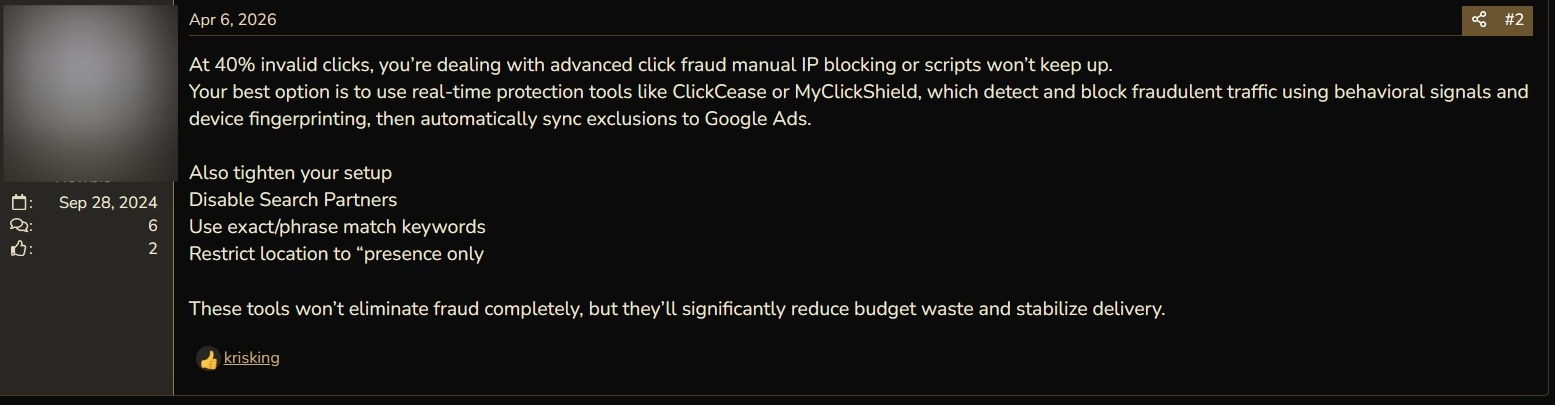
To get ahead of this, experienced affiliates recommend setting up a solid external anti-fraud solution: ClickCease, MyClickShield. These can noticeably reduce your bot percentage and lower the risk of your training Google's algorithms on fake traffic.
Summary
Based on what media buyers are reporting, some of Google's automated tools appear to prioritize traffic expansion over traffic quality more than they serve the advertiser. Search Partners, Display Network, AI learning loops, and Auto-Apply Recommendations can all increase the odds that your budget ends up on bot or accidental clicks.
The ability to fight invalid traffic on new self-registered accounts is seriously limited: any sudden changes at low trust levels gets flagged as suspicious activity and leads to bans. YeezyPay agency accounts give you more room to make these kinds of adjustments. Their stronger account history gives media buyers more flexibility to test automation, run scripts, tighten traffic controls, and automatically maintain negative keyword and blocked placement lists. That saves you budget, headaches, and a lot of wasted time.


