


How to Cloak YouTube in 2026 and How This Process Differs from Other Placements
On forums, you can find dozens of messages from affiliates with questions about YouTube cloaking. They are curious, ask for help, and don't understand why accounts sometimes get banned in batches. On BHW, one user shared how they tried several different cloakings, but the ads were still rejected.

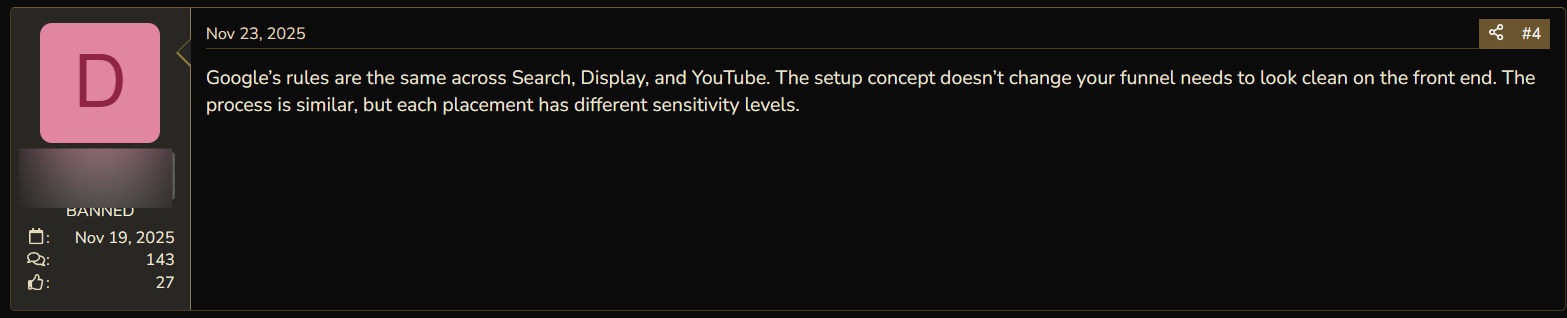
Technically, cloaking on YouTube and, for example, on Google Search, are identical. However, according to media buyers, YouTube's algorithms are much stricter.

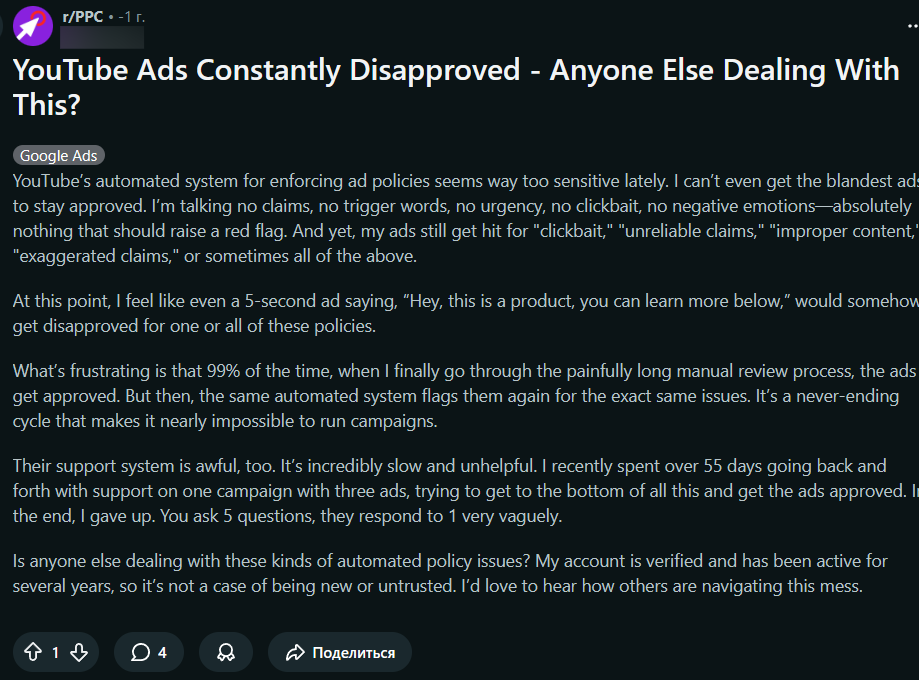
Therefore, you can catch a block or a reject on YouTube Ads even with a seemingly perfectly configured campaign. One Reddit user faced an absurd situation: even a clean creative in a white-hat vertical still does not pass the check. The reasons remain unknown.
The YeezyPay team looked into the matter. We explain how to cloak YouTube correctly, how this process differs from other Google placements, and for what reason even a white-hat creative might be rejected.
What Google Ads Checks on YouTube and Why Cloaking Here is Harder
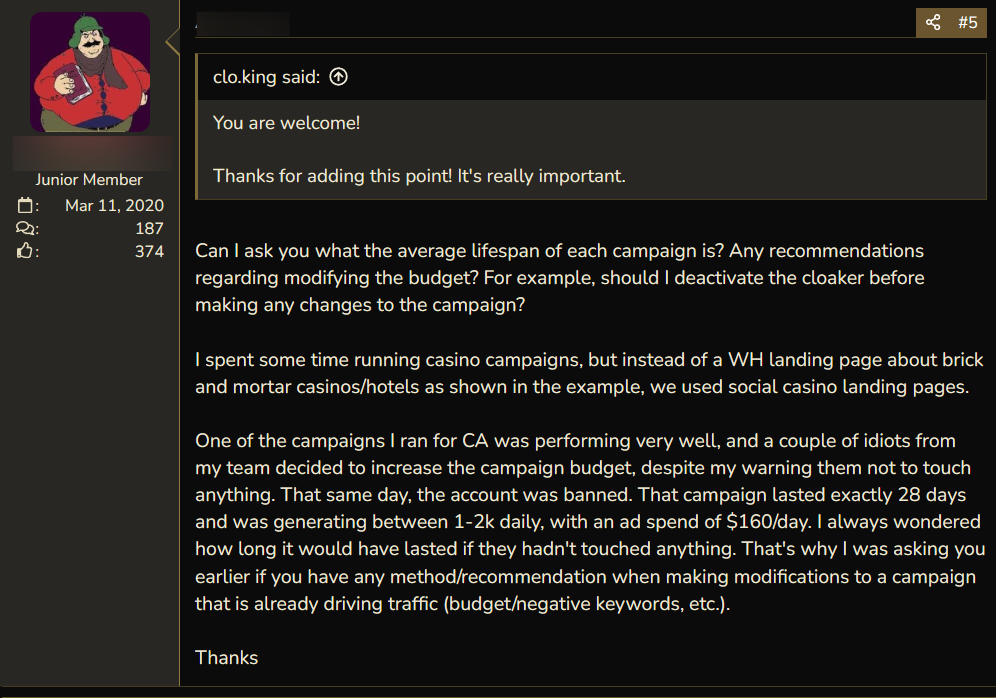
When an affiliate works with PPC traffic, two main elements are available to them: the landing page and the creative. Google uses responsive search ad mechanisms, so the creative is assembled for each user in real-time. Therefore, simple white pages, pre-landers, and generated pages are quite suitable for cloaking. Media buyers confirm this – one user used a white page for social casinos in their cloak, and the campaign ran successfully.
With YouTube, however, the situation is more complex. Google itself explains in detail how it reviews content that falls under the "Rich Media" definition, including video creatives. Everything is analyzed:
-
Watch time
-
Faces, elements, and graphics
-
Voiceovers, text content
-
User cursor movements – if they are on Desktop
-
Events, character emotions
That is, unlike, for example, a Search campaign, here we get a mass of content as output, which no longer allows the algorithm to get confused and allows for an unambiguous interpretation of the ad's content. An addition is the overlay – the product description and CTA.
Since Google considers high-quality landing pages to be only those that ideally match what is stated in the advertisement, the algorithms begin to check exactly whether the landing page matches the pre-roll content or not.
For this reason, cloaking campaigns on YouTube are harder than with other placements: generated white pages are no longer sufficient, and the risk of receiving a rejection or block increases.
What Specifically Needs to Be Changed in the Cloaking: Practical Recommendations
Of course, the main recommendation is to use good cloaking, but the process will also have to be adapted specifically for YouTube. The main difficulty is that the white page must be a direct continuation of the creative so that Google does not reject the campaign for "Misrepresentation".
How to Work with a White Page for YouTube Cloaking
A pre-roll provides the algorithms with exhaustive information about your offer. Consequently, you can get a rejection or a block even for a minor deviation from the topic.
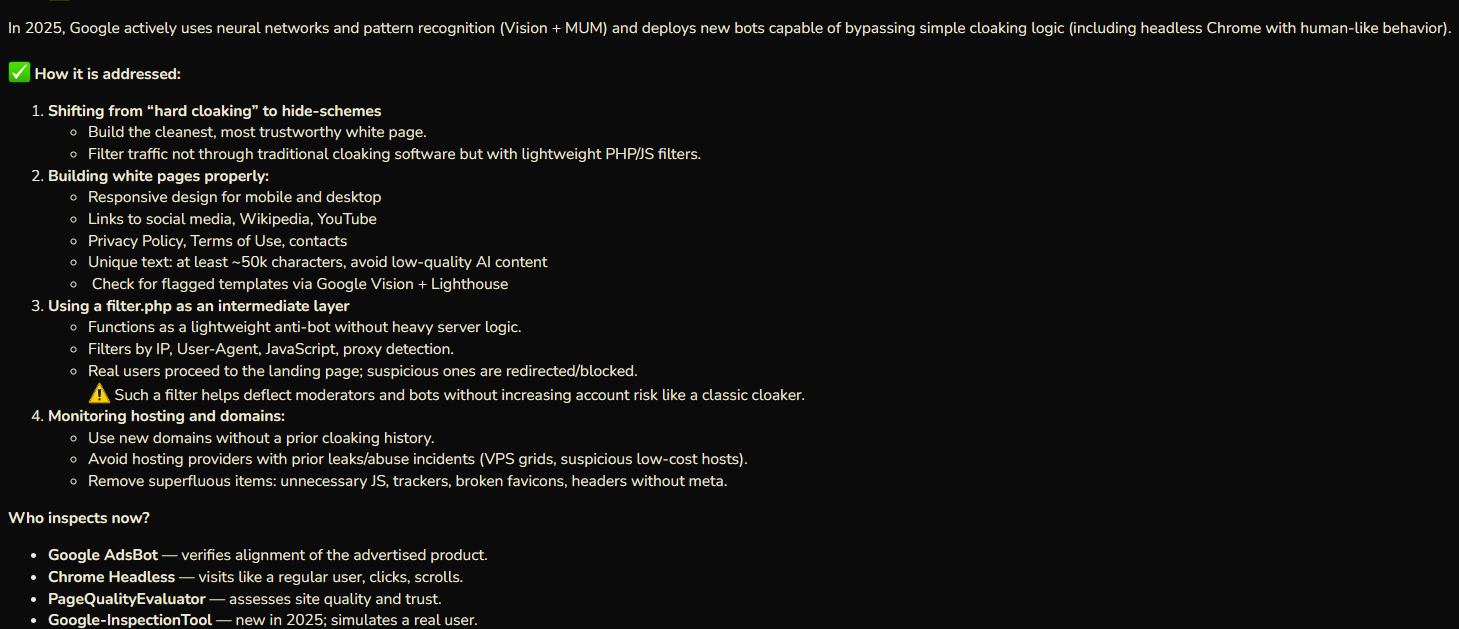
When working with YouTube, the requirements for the white page increase significantly. On BlackHatWorld, the following recommendations are given:
-
White page volume – from 50,000 characters.
-
Thematic alignment with the creative is achieved through the "educational focus" of the page: if you are running crypto, the white page should be created as a long-read about proper crypto asset management. This recommendation fits any vertical.

-
The page must have a privacy policy, licensing agreement, and contacts.
-
The white page should be hosted on a clean domain with no history of bans.
-
It is recommended to add a lightweight filter like a filter.php file for traffic management.
-
To reduce the risk of rejection, you should avoid templates that were previously used on banned white pages.
Most of these requirements apply to those advertisers whose account is not yet sufficiently warmed up: users of agency accounts can afford to spend less time on developing the white page because algorithms check landing pages more leniently and carelessly.
How to Work with Creatives for Cloaking on YouTube
A pre-roll shouldn't be too "vague" or uninformative, because then the AI may decide that its content doesn't match the white page. You shouldn't make it too specific either – in grey-hat verticals, being specific in pre-rolls significantly increases the risk of bans.
Here’s what forum users recommend for creating an attractive and safe creative when working with black-hat:
-
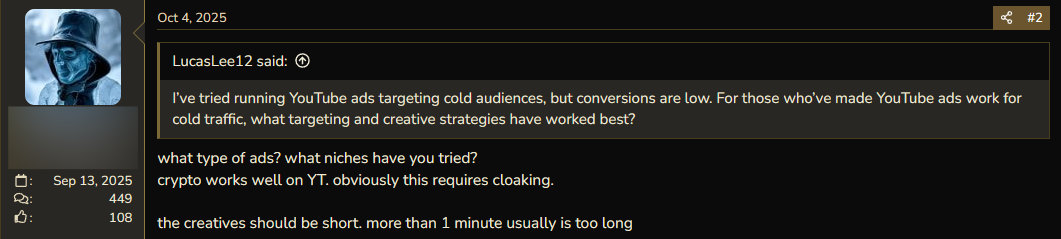
Shorten the pre-roll duration. On BlackHatWorld, they recommend limiting the pre-roll duration to one minute. This way, algorithms extract less information, which lowers the risk of rejection.
-
Remove logos. On BHW, they warn that a brand logo in a pre-roll significantly increases the risk of a block, and a reject becomes almost inevitable.

-
Don't sell the product directly. This recommendation logically follows from the previous ones: when you are cloaking on YouTube, a pre-roll with direct advertising can trigger a block. Suitable angles – a big win in a "gaming app" for gambling, investment tips for crypto, etc.
It’s worth considering that with such an approach to creatives, there’s a high probability of attracting "dirtier" traffic than desired, and the risk of a ban doesn't go away. Users of agency accounts, thanks to high trust, can afford to worry about rejects less and use more direct creatives.
Summary
On YouTube, algorithms analyze the creative inside and out, cross-check it with the landing page, and reject it for the slightest discrepancies. Requirements for the white page and creatives are significantly higher than for other placements, and the margin for error is lower.
Account trust plays a key role in YouTube cloaking. On self-registered accounts, a media buyer will first have to warm up the account on white-hat campaigns, wait for several days, and only after that cautiously connect the cloaking – and even then, there are no guarantees. Warming up is time, money, and nerves, and on YouTube, the price of a mistake is especially high.
Agency accounts allow you to skip this stage entirely. The account is already warmed up, trust is accumulated, and moderation is more loyal – you can immediately proceed to working with traffic instead of spending the budget on preparation.


