


How to Run Ads in Google's AI Mode Using the New Conversational Discovery Ads Feature
On May 20, 2026, Google announced it was testing a new feature in its AI-powered search results: the system can now generate creatives on the spot based on a user's specific query. Marketer Chris Long demonstrated what this looks like on his X account — ad offers are marked with a "Sponsored" label and appear beneath the main conversation. They can look like banners or like clipped sections pulled directly from the target site.
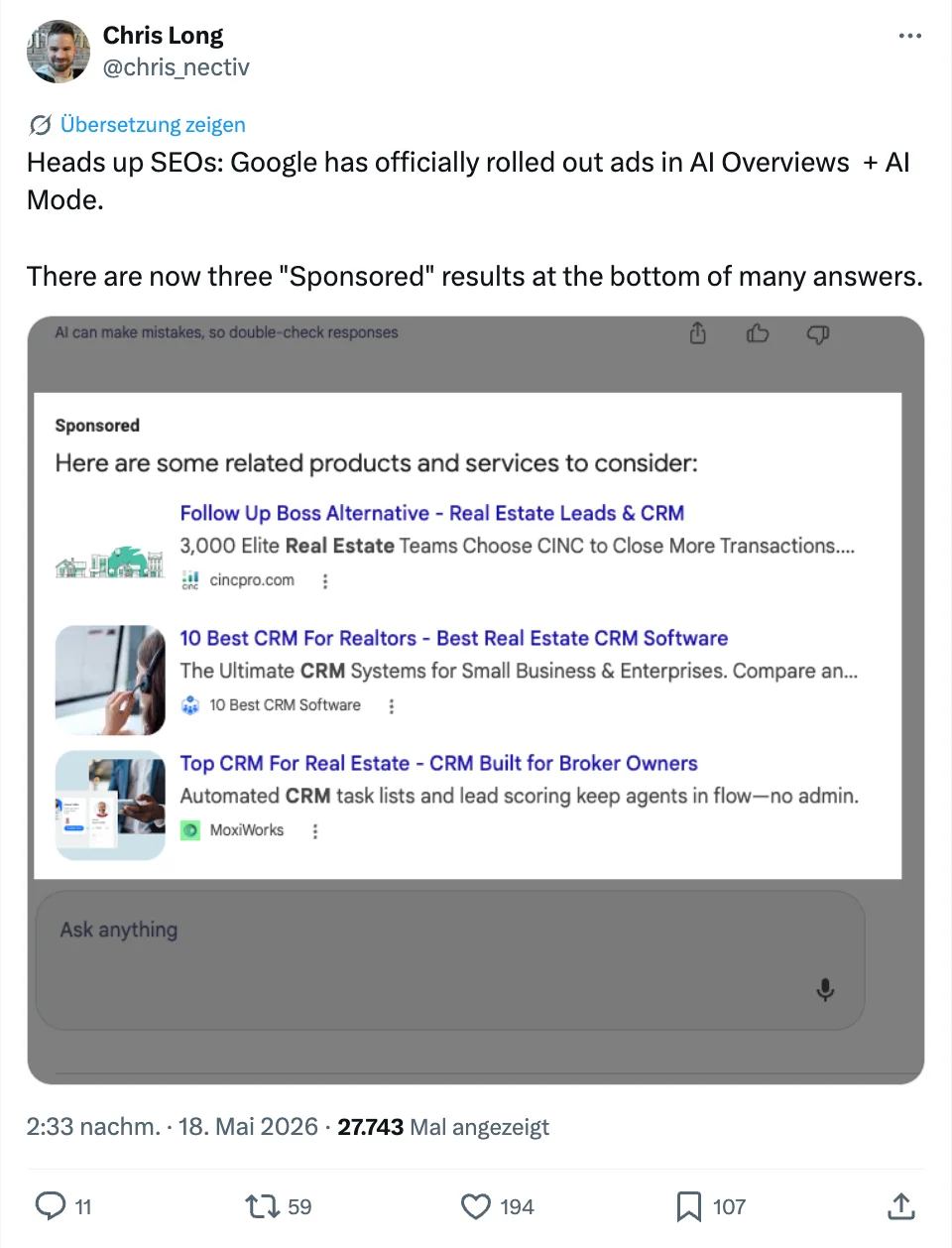
Users see these creatives mid-conversation, which means Google can match them to the specific query rather than just a set of keywords. Alongside Conversational Discovery Ads, the company is testing Highlighted Answers — ad offers highlighted within Gemini's recommendation list. In theory, this makes ads more noticeable: they look less like an external banner and more like part of the answer itself.
But how do you break into AI search results — and what does it take to stay there long-term across different niches, including gray hat ones?
How to Get Into AI Search Results
According to official data, the campaigns most likely to appear in AI results are those using PMax and AI Max in Search campaigns. There's no separate "show ads in AI Mode" toggle yet. Google pulls ads from already-running campaigns and decides on its own which ones fit the user's query and the context of the AI response. So the main task is to set up your campaigns in a way that lets the algorithm connect your offer to conversational queries. One user shares: to get into the AI results, you need to enable either PMax with AI Max (if running campaigns without keywords) or Broad Match.

Landing pages will need to be written differently too. In standard Search, advertisers often think in the chain: keyword → ad → page. In AI Mode, queries are longer and more conversational — users aren't always searching for a brand; they're describing a task, constraints, and objections. So the page needs to answer real audience questions: who the offer is for, what problem it solves, how it differs from alternatives, and what the terms, limitations, reviews, and proof points look like.
For example, instead of "best new weight loss supplements," a user is more likely to type something like "what supplements would work for me if I want to lose weight fast without a complicated routine?" In that case, AI Mode is most likely to surface creatives from supplement landing pages that immediately address the weight loss angle, back it up with consumer reviews, and mention something like a once-a-week dosing schedule. The takeaway: understand your audience's real questions and objections, then address them systematically on the landing page.
In gray hat verticals, rebuilding the landing page is especially critical: AI Mode can pick up not just the meaning of an offer but also risk signals on the page itself. Guaranteed results, aggressive CTAs, third-party brand mentions, overly bold claims, and clickbait are best replaced with a neutral product description, FAQ, terms and conditions, disclaimers, reviews, and a clean lead form. That kind of landing page looks safer both to moderation and to the algorithm.
To build more trust with Gemini toward your offer, it pays to develop a reputation layer around the brand. Gemini draws conclusions based on everything available across the web — it generates targeted creatives for specific user queries based on both offer relevance and existing online information, including reviews. Google officially states that ads within AI Overviews, including Conversational Discovery Ads, are matched not just to the user's query but also to the content of the AI response. That means an offer's reputation and its reviews can indirectly influence how likely Conversational Discovery Ads is to surface it to a given user.

For Conversational Discovery Ads to work correctly, the Text Customization feature needs to be enabled — it's what allows creatives to be generated on the fly. URL exclusions and brand exclusions should also be configured, so the neural network can't associate your offer with third-party brands or landing pages.
To help the AI notice your offer and generate the right creative in a Search campaign, Broad Match is also recommended: based on media buyer experience, Gemini selects potential offers partly based on keywords, then uses those to evaluate how well the offer matches the user's query.
That said, Broad Match carries a real risk of wrecking a campaign with irrelevant queries that have nothing to do with the offer, pulling in the wrong audience, and burning a significant share of the budget. To keep Broad Match under some degree of control, scripts can be used to automatically build negative keyword lists and filter out that kind of junk traffic.
But Google can flag heavy automation — especially anything that pushes against the platform's policies — as suspicious activity and use it as grounds for banning an account. To reduce that risk, you need a properly aged account and infrastructure built for API work. YeezyPay covers both through its agency accounts: scripts can run actively there with significantly lower risk of Google treating the activity as a violation.
Pros and Cons of Conversational Discovery Ads
Verified real-world experience with this feature is almost impossible to find — it launched very recently and there are barely any case studies yet. But based on what users have already shared, some early takeaways are starting to emerge.
Pros
Nativeness. The creative slots into Gemini's results carefully and is nearly indistinguishable at first glance. The only thing that sets it apart is a small "Sponsored" label next to the brand logo.
Access to long-tail queries. AI Mode becomes a unique tool for reaching audiences who aren't looking for a specific brand but need to get something done. Through follow-up questions, stated preferences, and voiced objections, Gemini can guide the user toward an offer on its own.
Cons
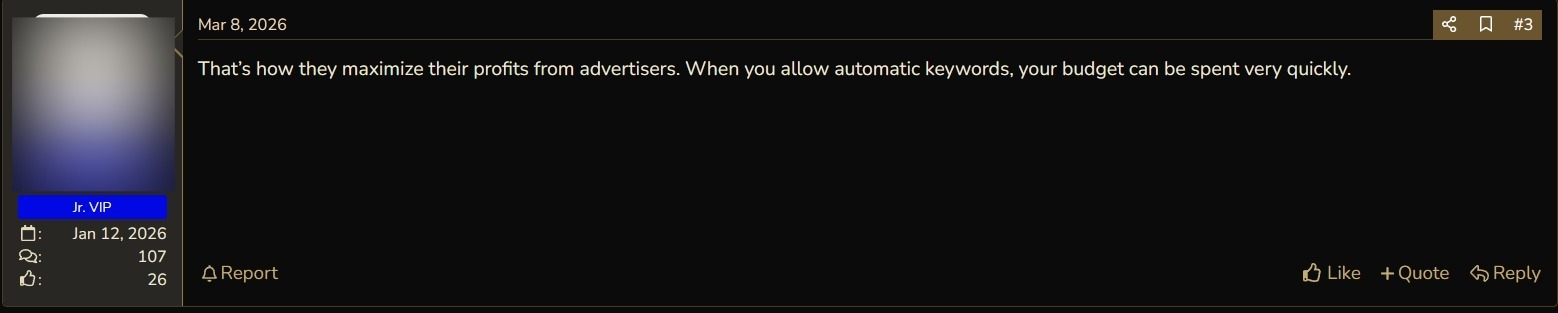
Dependency on PMax and AI Max. Experienced media buyers warn that these features risk destroying a campaign, delivering no audience at all, or significantly inflating the cost per click. "When you allow automatic keywords, your budget can be spent very quickly," warns one BlackHatWorld user.
PMax and AI Max can't be left unsupervised. They need to be kept in check with negative keywords, URL exclusions, budget caps, scripts, and regular reviews of the Search Terms report. Running this kind of setup actively and safely requires high account trust and properly seasoned infrastructure. Media buyers who've been in the game for years solve this through trusted agency accounts from YeezyPay. Because Google inherently trusts agencies far more than self-registered accounts, many of the typical headaches — bans, gray hat niches, payment issues, account management — simply stop being issues.
Opacity. While the feature is in beta, there's no way to track exactly where a user came from — Gemini or regular search.
Forum users are upfront about this: traffic will need to be watched closely to determine whether Conversational Discovery Ads is driving any leads at all.
Conclusion
Conversational Discovery Ads is still in beta: there's no dedicated toggle for it, the results are hard to control, and there are no ready-made case studies in the wild yet. But that's no reason to ignore it — it's worth making sure Gemini can find and surface your offer. Getting there isn't easy: PMax and AI Max need to be enabled, and in Search campaigns, Broad Match on top of that.
On top of that, Gemini may ignore an offer entirely if it's tied to a new account in a gray hat vertical like nutra — the algorithm reads account history. What's needed here are accounts with real trust, which is exactly what YeezyPay provides. The service works with 13 agencies simultaneously: if one agency account gets banned, the media buyer gets a replacement with the remaining budget refunded. The infrastructure is built for gray hat verticals, and the track record with Google Ads is long and clean.


