


Top 10 Google Ads Agency Account Providers in 2026
Picking an agency account provider in 2026 feels a lot like picking a bank in a country you've never visited. Everyone smiles, everyone promises stability, and the real differences only show up once your money is already inside.
I'm Mike, and I review these services for YeezyPay. I've watched advertisers from Russia, Nigeria, Pakistan and a dozen sanctioned regions burn deposits on the wrong provider simply because a slick landing page said "unlimited spend" and "zero bans." So this isn't a puff piece. It's the comparison I wish someone had handed me three years ago, with the numbers, the trade-offs, and the red flags spelled out.
By the end you'll know what actually separates a top provider from a money trap, and where ten of the best-known names really stand.
What a Google Ads agency account actually is

An agency sub-account inherits the MCC's trust score, which is why scaling tends to be smoother.
An agency account is a client sub-account that lives under a provider's Manager Account, the thing Google calls an MCC. The provider usually owns a Premier Partner manager account registered in a non-restricted country, and they hand you a sub-account inside it.
You run the campaigns. They handle billing, KYC and the relationship with Google. That single structural detail changes everything, because your sub-account inherits the trust score of an established manager account instead of starting cold.
The benefits stack up fast. There's no $5,000-a-month-plus-one-year-of-history threshold that Google normally demands before it grants monthly invoicing. Budgets are effectively unlimited at the account level, capped only by your campaign daily limits. And when something goes wrong, representation matters: agency-backed suspension appeals reportedly succeed 85–90% of the time, against well under 30% for a lone advertiser shouting into the void.
Setup is quick. Most reputable providers get you live in 24 to 72 hours through a four-step flow: pick the reseller, submit business or domain verification, accept the MCC invite, and link billing.
Why restricted-country and grey-vertical buyers rely on them
Here's the part Google's own help pages won't tell you.
For most advertisers in restricted markets, the wall isn't geography. It's payment. Google paused its ad services in Russia back in March 2022, and Belarus lost bank-transfer billing on 24 January 2025. Russian-issued Visa and Mastercard stopped clearing international charges after both networks exited, local banks decline USD transactions, and a mismatched billing address trips fraud filters within minutes. An agency sub-account under an MCC in a clean jurisdiction, funded by an intermediary, simply sidesteps that broken chain.
Grey verticals face a different problem: survival. Gambling, nutra, crypto and dating offers get torched on self-registered accounts. Google now permits gambling ads in 55 countries, but since the 19 November 2025 update it bans offline-gambling promotion across 35 of them, up from 21, and demands per-domain certification with verified ownership. iGaming affiliates can no longer hide behind third-party hosted pages. A high-reputation agency account gets sensitive categories approved more consistently, and US and EU accounts carry the highest trust for these niches.
In my experience, that's the real reason serious media buyers pay a commission. They're not lazy. They're buying reliability they can't manufacture alone.
The seven criteria that actually matter

Score every provider against the same checklist before you deposit a cent.
Before you compare a single brand, fix your scorecard. These are the seven things I weigh on every provider that crosses my desk.
- Commission or top-up fee. Aim for 5% or under on whitehat, 10% or under on grey verticals.
- Top-up methods. Crypto, specifically USDT, is essential for restricted geos. Card and wire are useful backups.
- Geo coverage. The MCC's registration country should match the market you're targeting.
- Supported verticals. Confirm gambling, nutra and crypto explicitly. Plenty of providers quietly refuse them.
- Account stability and ban policy. A refund or replacement on suspension is non-negotiable.
- Support speed. Telegram or Slack with sub-30-minute responses. Slow support during a ban costs real money.
- Minimum deposit. $200 is the low-end entry benchmark right now.
One mistake swallows more budgets than any other: people conflate two completely different products. Whitehat e-commerce agency accounts and grey-vertical-friendly intermediaries are not the same business, and a provider that's brilliant at one is often useless at the other.
Tired of comparing spreadsheets?
YeezyPay gives restricted-country and affiliate buyers a Google Ads agency account with crypto top-ups, a $200 minimum, and a refund on the budget you don't spend if an account goes down.
Start with YeezyPay →The top 10 Google Ads agency account providers in 2026
I've grouped these by what they're genuinely good at, not by who pays the most for placement. Two segments run through the list: compliance-first whitehat shops, and intermediaries built for restricted geos and grey traffic.
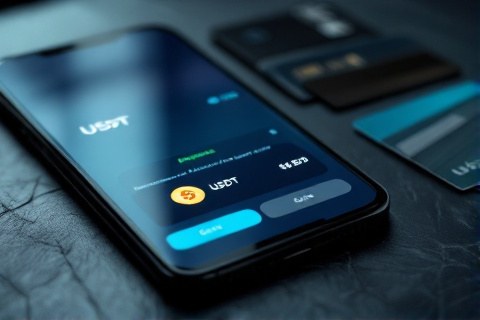
USDT top-ups have become the default funding rail for buyers in sanctioned markets.
1. YeezyPay. Google-focused, built for restricted geos and affiliates. Commission lands around 5–10% by niche and volume, with free USDT top-ups, a $200 minimum, and 10+ geo-optimized MCCs. Gambling, nutra, crypto and dating are all on the table, and the unspent budget returns to your YeezyPay balance if a sub-account is suspended. Over 40,000 accounts issued and $50M+ in managed spend back that up.
2. Uproas. A broad multi-platform player covering Meta, Google, TikTok, Bing, Taboola and Outbrain. Google fees run a tier-based 1–3%, but it's a subscription model at $299–$1,995 a month, so it suits high-spend whitehat scaling more than a lean affiliate. Instant replacement is a nice touch.
3. OrangeTrail. Compliance-first and whitelisted, spanning Meta, TikTok, Google, Snapchat, Bing, Pinterest and Reddit. Funding via card, wire, Payoneer or crypto. You pay a premium over peers, and gambling isn't its world.
4. AdSkill. Twenty-plus platforms including Yandex and Telegram, with full creative pre-moderation. That moderation is a double edge: safer accounts, but every creative goes through review first.
5. 4x4 Agency. Meta plus 20 traffic sources, an instant-deposit system, and a 24-hour business-manager response guarantee. White and moderate grey only, no gambling.
6. TrafficHeroes. Google, TikTok and eight more networks, managed through a Telegram bot with roughly 5–7% on Google top-ups. Convenient, though grey-vertical support is only partial.
7. Laurel. A grey-friendly intermediary with a smart structural edge: multiple backup providers, so one dead MCC doesn't end your campaign. Commission starts at 8% and drops to 5% once you're spending $3,000 a day. Crypto, gambling, finance and nutra all welcome.
8. Uvads. Meta, Google and TikTok with a headline "0% service fee" that the platform covers elsewhere. Grey support is limited, so read the fine print.
9. Ecomparkour. A legitimate e-commerce Google specialist quoting 85–90% appeal success. Fees sit at the typical 5–10%, but it expects around $1,500 a month in justified spend and bans unsubstantiated nutra and crypto MLM offers.
10. GoScale. A whitehat scaling option for e-commerce and lead-gen brands that want clean accounts and predictable billing over grey flexibility.
If you skim only one row, make it the match between your vertical and the provider's appetite for it. A 1% fee means nothing if they suspend your gambling campaign on day two.
| Provider | Commission / fee | Min deposit | Grey verticals | Top-up |
|---|---|---|---|---|
| YeezyPay | ~5–10% | $200 | Yes (gambling, nutra, crypto) | USDT, card, wire |
| Uproas | 1–3% (Google) | $299–1,995/mo sub | Greyhat partial | Crypto, wire, card |
| OrangeTrail | Premium | n/a | Whitelisted focus | Card, wire, Payoneer, crypto |
| AdSkill | Pre-moderation | n/a | Per-creative review | n/a |
| 4x4 Agency | Instant deposit | n/a | No gambling | Instant deposit |
| TrafficHeroes | 5–7% | n/a | Partial | Telegram bot |
| Laurel | 8% → 5% | n/a | Yes + backups | Crypto |
| Uvads | 0% service fee | n/a | Limited | n/a |
| Ecomparkour | 5–10% | ~$1,500/mo spend | Legit e-com only | Card, wire |
| GoScale | Whitehat fee | n/a | Whitehat only | Card, wire |
What the numbers say about pricing
Commission is where most of the confusion lives, so let's anchor it to real benchmarks I see across the market in 2026.
- Whitehat top-up fee: 0–6%, most commonly 4%.
- Grey verticals (crypto, CBD, adult): 4–10%.
- High-risk policy-adjacent (gambling, supplements): 8–15%.
- Credit-line / card-share model: 2–4% of spend, no advance payment.
- Subscription model: $299–$1,995 a month plus a per-platform fee.
Notice how wide the grey-vertical band is. A gambling buyer quoted 15% somewhere and 7% elsewhere isn't seeing a discount on the second offer, they're seeing a provider who actually wants that traffic. My honest opinion: anything above 10% on a standard grey offer means you're either paying for genuine ban-replacement infrastructure or you're overpaying. Ask which.
And don't confuse a top-up fee with full campaign management. The classic "15% of ad spend" agency retainer is a different product entirely, one where someone else builds and runs your campaigns.
Red flags that should end the conversation

Some warning signs are loud if you know to listen.
Walk away when a provider won't say where your top-up fee actually goes, or refuses to put terms in writing. Be skeptical of "guaranteed approvals, no bans ever" promises, because nobody can honor that under 2026's tightened gambling and crypto rules. The absence of any ban-replacement or refund policy is a dealbreaker, since you'll eat the full deposited budget when a sub-account dies.
I also distrust shops younger than three years with no forum track record. The affiliate community on BlackHatWorld, affLIFT and Wickedfire is brutally honest about who pays out and who ghosts. And watch for the single point of failure: one MCC, no backups. Laurel's multi-provider model exists precisely because one suspended manager account can wipe a campaign overnight.
Last one: hidden currency-conversion and management fees stacked on the headline rate. The advertised 4% has a way of becoming 9% by the time the invoice clears.
How to actually choose
Start with your vertical and your geo, not the price. A whitehat dropshipper in clean markets and a crypto affiliate in a sanctioned country need almost opposite providers, and the cheapest option rarely fits both.
If you're running grey traffic or paying from a restricted country, prioritize crypto funding, explicit vertical support, and a written ban policy. If you're scaling clean e-commerce at volume, a compliance-first shop with low fees and strong appeal rates will serve you better than any intermediary.
For the restricted-geo and affiliate crowd I work with daily, YeezyPay hits all four pillars at once: low commission, native USDT top-ups, wide geo, and budget refunds on suspension, at a $200 entry point. That combination is rarer than the landing pages suggest. But whichever way you go, run every candidate through the seven-criteria scorecard first. The provider that survives that test is the one worth your deposit.
Choose deliberately. Your account, and the money sitting inside it, depends on it.


