


How to Choose a Google Ads Agency Account Provider: 8 Criteria
I'm Mike from YeezyPay, and I've watched more advertisers pick the wrong agency account provider than the right one. The pattern is always the same. They chase the lowest commission, sign up in an afternoon, and three weeks later they're messaging me asking why their account is frozen and their balance is gone.
Choosing a provider isn't like buying a subscription. You're handing someone your ad spend, your campaigns, and a big chunk of your risk. Get it right and the payment problem disappears for good. Get it wrong and you've just added a new one on top of the old ones.
So let's slow down and do this properly. Below are the eight things I'd check before I trusted any provider with a single dollar, in the order I'd check them.
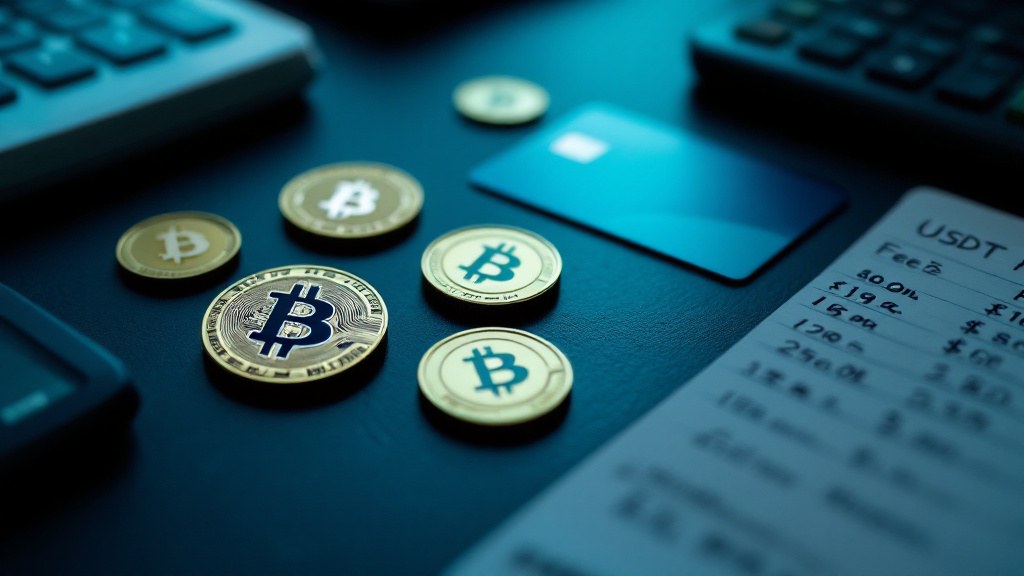
Before you compare prices, understand what you're actually paying for.
First, what you're actually buying
Quick refresher, because the word "agency account" gets thrown around loosely. An agency account is a sub-account created under a provider's Google Ads Manager Account, the thing Google calls an MCC. The provider owns an established manager account with billing already set up and trust already built. You advertise in a sub-account beneath it.
Your campaigns inherit that account's higher spending caps and lower suspension risk. You top up a balance with the provider, usually in crypto, and they fund the Google side. No ads run from the MCC itself. It's the billing and trust layer that sits above your campaigns.
That's the product. Every provider sells the same basic thing. What separates a good one from a wallet-drainer is everything in the next eight sections.
1. Geo and country support
Start here, because if this fails nothing else matters. Does the provider actually accept advertisers from your country?
This is the whole reason the market exists. Google Ads can't be used from OFAC-embargoed locations like Crimea, Cuba, Iran, North Korea, and Syria, and accounts in newly sanctioned regions get suspended with no grace period. Advertisers in dozens of other countries face soft blocks, payment rejections, and constant verification friction even where there's no outright ban.
At YeezyPay, more than 60% of our clients come from countries with limited or blocked Google Ads access. That's not a side segment for us. It's the core. So my first question to any provider I'm evaluating would be blunt: do you have advertisers from my exact country running right now, and can you show me it works? A provider that mostly serves whitehat US ecommerce brands may not have the payment rails to keep a Pakistani or Nigerian advertiser stable.
2. Top-up and payment methods
You already have a payment problem. That's presumably why you're reading this. So check that the provider's funding methods actually match what you can send.
Crypto, specifically USDT, has become the default across grey-market providers, alongside BTC and ETH. Many also take cards through Stripe, bank wires, and processors like Payoneer, Wise, Airwallex, and Revolut. But the method matters less than the fine print around it.
- Fees per method. Card top-ups often carry a processing surcharge that crypto doesn't. Read which method costs extra.
- Minimum top-up. Some providers set this at $50 to $100. Others won't touch you under $1,000.
- Speed. Crypto usually clears in minutes. Wires can take days, which matters when a campaign is waiting.
My honest opinion here: if a provider only offers one funding rail and it happens to be the one you can't easily use, walk away. Flexibility on payment is the entire point of using an agency account in the first place.
3. Minimum deposit and commission structure
Now the number everyone fixates on. Commission on ad spend across this market runs roughly 1% to 15%, tiered by volume and vertical. Premium whitehat accounts have compressed toward 1% to 6% in 2026. Higher-risk verticals sit at the top of the range.
Here's the trap. The headline commission is rarely the full cost. I've seen providers advertise a low percentage and then bury a setup fee, a top-up fee, and a withdrawal fee that together cost more than a competitor's higher flat rate. Some flip the model entirely, charging 0% commission but a one-time fee of a couple hundred dollars.
Compare total cost of ownership, not the sticker rate. A quick way to see the landscape:
| Model | Typical range | Watch for |
|---|---|---|
| Commission on spend | 1%-15%, premium 1%-6% | Tiered discounts at higher volume; vertical surcharges |
| Flat monthly fee | ~$150/mo and up | Whether it stacks on top of a commission |
| One-time setup fee | ~$200-$250 | Marketed as "0% commission" but still a real cost |
| Minimum top-up | $50-$1,000 | Ties up cash you may not want committed early |
Ask for every fee in writing before you deposit. If a provider gets vague when you ask what the real all-in cost is, that vagueness is your answer.
4. Account stability and ban-replacement policy

The real test of a provider is what happens the day an account goes down.
Accounts get suspended. Even good ones. Google removed 8.3 billion ads and suspended around 24.9 million advertiser accounts in 2025, and no agency account is immune to that machine. So the question isn't whether a suspension can happen. It's what your provider does when it does.
The best providers replace a suspended account for free, fast, and keep your balance intact. CapitalMedia, for example, advertises a refund within one business day if an account is suspended. That kind of policy is a benchmark worth holding others to.
Get the specifics in writing before you commit. How long does a replacement take? Does your remaining balance carry over? Is there a limit on how many replacements you get? A provider that shrugs and says "that's Google's problem" the moment your account dies is a provider that will leave you stranded at the worst possible moment.
Want a provider that passes all eight of these?
YeezyPay gives advertisers from restricted countries stable USD billing, crypto top-ups, real account ownership, and support that answers when something breaks. That's the standard this whole checklist is built around.
5. Spending limits and credit line
This is where a lot of the value actually lives, and where a lot of providers quietly oversell.
A fresh, self-registered Google Ads account usually starts with a low daily cap, somewhere in the $500 range, and earns its way up slowly. An established agency account skips that warm-up because it inherits the manager account's history. That's real. That's why people pay for it.
But "unlimited spend" on a provider's landing page deserves a raised eyebrow. Very few accounts are truly uncapped from day one. Ask what your starting daily limit is, how fast it scales, and what you need to do to raise it. If you're planning to push $5,000 a day, a provider that starts you at $500 with a slow ramp isn't the fit, no matter what the homepage promises.
6. Verticals allowed
If you run anything outside plain whitehat, this criterion can override every other one on the list.
Nutra, gambling, crypto, and other grey verticals are exactly where accounts get killed fastest. Google's 2026 policies now demand documentation, regulatory credentials, and safety disclaimers for high-risk categories, and failure can mean a domain-level ban rather than a simple ad rejection. A provider that's fine with clean ecommerce may drop you the instant they see a supplement offer.
So force clarity before you sign. Many providers stay deliberately silent on verticals because a vague policy protects them, not you. Ask directly: do you allow my specific vertical, and have you got advertisers running it now? If the answer is fuzzy, assume the answer is no, and that you'll find out the hard way after you've deposited.
7. Support and transparency

When an account freezes at 2am, a fast human reply is worth more than a lower commission.
Support feels like a soft factor until the day you need it. Then it's the only thing that matters.
When an account freezes mid-campaign, every hour of silence is money you're not spending and a competitor who is. So test the support before you pay. Message them a real question and time the reply. See whether you get a human or a canned line. Ask whether you get a dedicated manager or a shared ticket queue.
Transparency belongs in this section too. A good provider shows you a clean split between what went to Google as ad spend and what they took as their fee. Bundling those into one opaque number is a red flag. You should always be able to see where your money went. If a provider can't or won't break it down, you're not a client to them. You're a balance to drain.
8. Reputation, reviews, and ownership model

Last, and maybe most important, do the background check you'd do on any business holding your money.
This market has a scam problem, and it got worse through late 2025 into 2026. Fraudsters have been hijacking manager accounts through fake leads and phishing, in some cases burning tens of thousands in fraudulent spend within a day. Provider fraud is just as real, and it hides behind slick landing pages.
Here's my red-flag checklist:
- Look-alike domains registered only days before you found them.
- No footprint outside their own site. No LinkedIn, no community mentions, no history.
- Fake Google Partner badges that don't link back to a real Partner profile.
- Guaranteed number-one promises, which are impossible in an auction and a lie on their face.
- Account hostage setups, where campaigns get built inside the provider's account with no way for you to export your data or take ownership.
That last one is the quiet killer. In a pure reseller setup, the agency holds your account, your history, and your data, and you're renting a window to spend through. Look for escrow options, real reviews in affiliate communities, and a provider that lets you keep genuine control of your ad account. That ownership question is exactly the line we hold ourselves to at YeezyPay, because a client who can't leave was never really a client.
Two kinds of provider, and why the difference matters
One thing that'll save you time: this market splits into two camps, and knowing which one you're looking at tells you most of what you need before you even ask.
The first camp is whitehat and enterprise-leaning. Think providers built for clean ecommerce brands and agencies. They lean on compliance, take low or even zero commission, happily accept cards, and set you up over a day or three. They're stable and legitimate, but they often can't or won't touch a restricted geo or a grey vertical.
The second camp is affiliate and restricted-geo focused. Crypto top-ups, faster launches measured in minutes, higher commissions, and a permissive line on verticals. This is where advertisers from blocked countries and grey verticals actually get to run. It's also where the scam risk concentrates, which is why criteria eight matters most in this camp.
Neither camp is better in the abstract. They serve different people. The mistake is picking a whitehat provider for a grey campaign, or a grey provider for a brand that needs airtight compliance. Know which one you are, then shop inside the right camp. For the record, YeezyPay sits firmly in that second camp, because serving advertisers the first camp turns away is the entire job.
Putting the eight together
You won't find a provider that's perfect on all eight. That's fine. The point of the list is to weight them for your situation.
If you're in a restricted country, criteria one and two outrank everything. If you run grey verticals, six is your gatekeeper. If you're scaling hard, five and four decide whether you survive the growth. A media buyer pushing nutra from Pakistan and a whitehat ecommerce brand in the UK should end up with completely different providers, and neither should copy the other's choice.
Here's the mindset I'd leave you with. A slightly higher commission from a provider that supports your geo, funds the way you can pay, replaces dead accounts fast, allows your vertical, answers the phone, and lets you own your data is not the expensive option. It's the cheap one. The expensive option is the low-commission provider that vanishes the week your account goes down.
Run any provider through these eight before you deposit. If it clears all of them, you've found something rare. If you'd rather skip the vetting and start with one that's built around exactly this checklist, that's the whole reason YeezyPay exists.


