


Google Ads in Turkey 2026: Advertising and Digital Tax
Two Turkish companies spend the same 1,000,000 TRY on Google Ads this month. They buy identical inventory, target identical keywords, and get identical clicks. One of them pays roughly 18% more than the other. Not because of bidding, not because of Quality Score — because of which Google entity prints the invoice.
That gap is now the subject of a formal investigation by Turkey's Competition Authority.
I'm Mike, and at YeezyPay we fund Google Ads accounts for advertisers in markets where the money side is harder than the marketing side. Turkey sits in an odd spot on that list. It isn't sanctioned. Turkish advertisers can and do open direct Google Ads accounts, and anyone telling you otherwise is selling something. But the cost stack on top of Turkish media spend is one of the most layered in Europe, and the payment rails underneath it break more often than they should.
Here's what Turkish advertising actually costs in 2026, where the money goes, and what changes on 1 January 2027.

Turkey was a top-six digital ad market in Europe in 2025, at roughly €4.76bn.
Start with the one distinction everybody gets wrong
Turkey has a Digital Services Tax. Google pays it. You don't.
What you pay is Google's Turkey Regulatory Operating Cost — a commercial surcharge Google adds to your invoice to recover the tax it owes. Those are two different things with two different rates, and almost every article on this subject mashes them together. Getting it right matters, because the two numbers move independently and only one of them appears on your billing page.
| Charge | Who pays it | 2026 | From 1 Jan 2027 |
|---|---|---|---|
| Digital Services Tax (Law 7194) | Google, to the Turkish treasury | 5% | 2.5% |
| Turkey Regulatory Operating Cost | You, on your Google invoice | 4.5% | 2.5% |
| Withholding tax (Decree 476) | You, separately, to the treasury | 15% | 15% |
| VAT | You, reverse-charged via KDV-2 | 20% | 20% |
Both the DST and the surcharge are going down. That's unusual — Turkey is the only jurisdiction on Google's surcharge list whose rate is falling rather than holding or rising. France and Italy both go up in 2027.
The Digital Services Tax, briefly
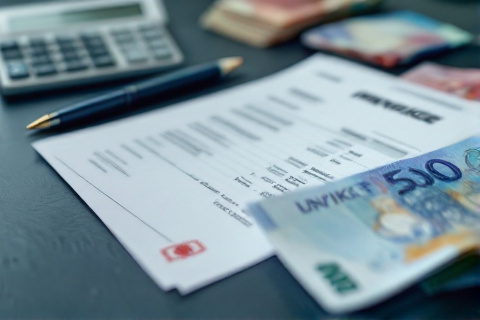
The withholding filing is monthly, and it's the advertiser's job, not Google's.
Law No. 7194 appeared in the Official Gazette on 7 December 2019 and took effect on 1 March 2020. It taxes gross revenue from digital advertising services — including ad serving, ad control, measurement, and performance services — along with digital content and intermediation platforms. A provider is in scope only if it clears both thresholds: 20 million TRY of Turkish revenue and €750m of global revenue in the prior financial year. Google clears both comfortably.
The original rate was 7.5%. On 25 December 2025, Presidential Decision No. 10767 cut it to 5% from 1 January 2026, then to 2.5% from 1 January 2027. The tax collected 33.7 billion TRY in 2025, so the cut isn't small change for the treasury.
Why cut it? US trade pressure, almost certainly. The USTR had already found Turkey's DST actionable under Section 301 back in 2021, and a fresh investigation opened in February 2025 aimed squarely at countries taxing American tech firms. The December decree reads as a concession. It didn't buy much — Turkey still caught a separate 12.5% Section 301 forced-labour tariff that took effect on 24 July 2026.
Enforcement on the tax itself is unusually blunt. Miss payment and the Revenue Administration escalates from written notice, to a public notice on its website, to blocking access to the provider's services in Turkey after 30 days.
The 4.5% surcharge, and the line that catches people out
Google's own help documentation is unambiguous on how the surcharge is scoped:
"Regulatory operating costs or DST fees may be charged in addition to your advertising costs. This applies every time an ad is served in specific jurisdictions, regardless of where your actual business is located."
Read that twice if you're account-shopping. The Turkey ROC follows where the ad serves, not where you're incorporated and not where your account was opened. An agency account registered in Ireland, Cyprus or the UAE running ads to Turkish users still pays the 4.5%. Anybody promising otherwise is wrong, and I'd rather lose that sale than have you find out from your invoice.
The flip side is more interesting and almost nobody writes about it. A Turkish company advertising to Germany pays no Turkey ROC at all. The surcharge is serve-location based, so Turkish teams running cross-border campaigns have a genuinely different cost profile from what Google's Turkey help pages imply. We've got several Turkish e-commerce clients in exactly that position.
Two mechanics worth knowing:
- Surcharges are applied on top of your account budget. A TRY budget cap does not cap the ROC.
- VAT is calculated on the surcharge too. It's not VAT-free.
Small accuracy note that tells you something about how closely Google maintains these pages: the help article still illustrates prepayment mechanics with "€7 EUR of regulatory operating costs" on a €100 payment — a 7%-era example that hasn't matched the real rate since the start of 2026. Don't take the examples literally. Take the rate table.
The 15% withholding tax nobody budgets for
This is the line item that wrecks Turkish media plans, and it never appears on a Google invoice.
Presidential Decree No. 476, published 19 December 2018 and effective on payments from 1 January 2019, requires a 15% withholding on digital advertising payments to non-resident corporations. Google Ireland is a non-resident corporation. The Turkish payer withholds and remits — Google doesn't file it, doesn't deduct it, and doesn't mention it.
In practice Turkish advertisers pay Google in full and then fund the withholding separately, which grosses up to roughly 17.6% of the invoice rather than 15% of it. I should flag that the gross-up is accounting practice, not published Google or Revenue Administration policy, so confirm the mechanics with your own mali müşavir.
And there's live legal uncertainty underneath it. The Turkey–Ireland double tax treaty gives Ireland exclusive taxing rights over business profits where there's no Turkish permanent establishment. Turkish tax courts have ruled against the withholding on that basis, repeatedly. The Revenue Administration keeps collecting anyway. That's not a settled question — it's an open fight, and your exposure depends on whether you want to litigate.
What 100 TRY of Turkish media actually costs
Here's the arithmetic, for ads served in Turkey and invoiced by Google Ireland:
| Line | 2026 (ROC 4.5%) | 2027 (ROC 2.5%) |
|---|---|---|
| Media | 100.00 | 100.00 |
| + Turkey Regulatory Operating Cost | 4.50 | 2.50 |
| = Invoiced by Google | 104.50 | 102.50 |
| + 15% withholding, grossed up | 18.44 | 18.09 |
| + 20% VAT via KDV-2 | 20.90 (recoverable) | 20.50 (recoverable) |
| Effective cash cost | ≈ 122.9 | ≈ 120.6 |
Call it 23% overhead this year, 21% next year. VAT washes out for registered businesses through the KDV-1 deduction, so it's a cash-flow drag rather than a cost — but the withholding is real money, permanently gone, and it's the single largest line after the media itself.
Now run the same spend through an account invoiced by Google Turkey — Google Reklamcılık ve Pazarlama Ltd. Şti. Turkish VAT applies directly, the reverse charge disappears, and because the counterparty is a Turkish full taxpayer, the 15% withholding drops to zero. Effective cost: about 104.5 per 100 of media. Roughly 4.5% overhead instead of 23%.
Same ads. Same auction. An 18-point difference, decided by which entity Google decided to bill you from.
Turkey's Competition Authority is now asking about exactly that
The Rekabet Kurumu opened a preliminary inquiry in January 2026 and voted to open a formal investigation on 5 March 2026, announced in early April. The allegation: Google invoices some Turkish advertisers and agencies through Ireland and others through its Turkish entity, with no objective published criteria for which you get — and the Ireland-billed customers carry a materially higher total cost for identical service. Under the Turkish Competition Act, that's potential discrimination.
The Authority isn't new to this. It published a final Online Advertising Sector Inquiry report on 2 June 2025, and in July 2020 it forced Google to withdraw Shopping Ads from Turkey entirely over search-dominance findings.
As of late October 2026, no decision has been published. If one lands, it could reshape the numbers in the table above — worth watching if you're planning 2027 budgets.
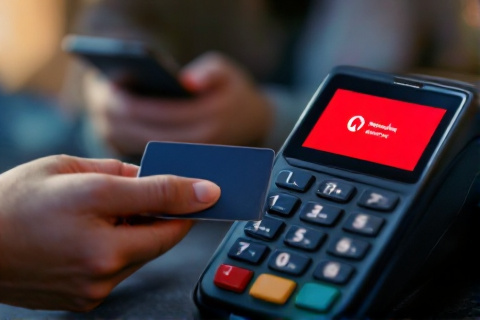
Turkish cards need international e-commerce switched on separately. Most aren't.
Why Turkish cards decline against Google
This is the part we deal with daily, and it's less about tax and more about plumbing.
Turkish regulation requires cardholders to explicitly opt in to online transactions — Google's own Turkish help text explains the rule as consumer protection against unauthorised card use. The catch is that domestic and international e-commerce permissions are separate toggles. A card that works fine on Trendyol will still decline against Google Ireland, because Ireland is an international transaction and that switch was never flipped.
Stacked on top of that:
- 3D Secure everywhere. Turkish issuers enforce it near-universally. If the 3DS flow times out, Google flags the card "Temporarily Unavailable" and you're locked out of your own billing.
- Foreign currency blocks. Issuers tighten FX transaction limits when the lira moves, which it does.
- Google's position is that the bank declined, not Google. Technically correct, operationally useless when campaigns are paused.
Repeated declines are an account-health problem, not just an annoyance
Here's the part that costs people accounts. Google's "suspicious payment activity" suspension — reported by agencies as the second most common suspension reason after Circumventing Systems — triggers on patterns that look exactly like a Turkish advertiser fighting their bank:
- Cards that don't match the registered account owner
- Billing country mismatching the payment profile
- Frequent payment method changes
- One card used across several accounts
- Repeated declines or chargebacks
- A card previously attached to a banned account
Look at that list next to the decline causes above. An advertiser whose card keeps failing does the obvious thing — tries another card, then a colleague's card, then a third — and walks straight into a suspension. We see this cycle maybe twice a month from Turkish advertisers who arrive at YeezyPay already suspended. One client last quarter had burned through four cards in nine days before the account went down; the fix wasn't a better card, it was stopping the retry pattern and moving billing to a stable funded account with one consistent payment source.
My honest opinion: the single highest-leverage thing a Turkish advertiser can do for account stability costs nothing. Stop rotating payment methods. One card, one profile, one billing country, consistently — even if that one card occasionally fails — beats three cards that each fail once.

Funding Google Ads from Turkey without the card roulette
If your cards keep declining against Google Ireland, or you're already carrying a payment-related suspension, we fund agency accounts with stable billing and no retry cycle. Top-ups in crypto or by transfer, campaigns live the same day, and a real person on support rather than a form.
See how YeezyPay account funding works →
The lira problem, stated honestly
USD/TRY touched roughly 49.95 on 30 October 2026 — a record low, and the first approach to 50. The lira is down about 19% year on year and 16% year to date. Inflation ran 29.73% in September 2026, a near-five-year low, and the central bank cut its policy rate 100bp to 36% in October. ING's forecast sits at 51.50.
What that means for your account depends entirely on who you're advertising to, and this is where competitor content usually serves up a half-truth.
If you're advertising to Turkish users, hard-currency billing doesn't save you. Turkish CPCs reprice in lira. Your costs and your revenue move together, roughly. Paying in dollars just means watching the same spend get more expensive in your own books.
If you're advertising to foreign markets and earning in foreign currency, a lira-denominated prepaid balance is losing you about 1.5–2% of purchasing power a month on trend. That's where hard-currency billing through an agency account genuinely pays for itself, and it's the clearer case of the two.
Market context, with the dates attached
Turkey's total media and advertising investment reached 253.6 billion TRY in 2024, up 78.9% year on year, with digital taking 74.2% — over 158 billion TRY, up 83%. Mobile was 79.4% of digital; social took 47.1%. Those are IAB Türkiye / Reklamcılar Derneği / Deloitte figures published in April 2025.
For 2025, the only figure I'd stand behind is IAB Europe's: €4,761m in Turkish digital ad spend, up 37%, placing Turkey in Europe's top six against a €131bn European total.
I couldn't find IAB Türkiye's full-year 2025 lira report, so don't let anyone quote you 158bn TRY as a current number. It's a 2024 figure, and in an economy running near 30% inflation, a two-year-old nominal number is close to meaningless.
Policy traps specific to Turkey
Gambling and betting. Everything except the state operators — Milli Piyango, İddaa, Spor Toto — is illegal. Enforcement runs through domain blocking under Law 5651 at tens of thousands of sites a year. Google prohibits offline gambling ads in Turkey, and real-money gambling apps are off both app stores there. The rules tightened again in 2026: a February decision restricted betting promotion with a focus on minors, and the amended Commercial Advertising and Unfair Commercial Practices Regulation published 1 July 2026 took effect 1 August 2026, extending the advertising ban to illegal betting and gambling — and, oddly, to fortune tellers, mediums and astrologers. Check the Official Gazette text for exact scope before you build anything around it; my sources on that one are Turkish press rather than the Gazette itself.
Crypto. The CMB licenses crypto service providers. A foreign platform that runs a Turkish-language site or markets to Turkish users is treated as providing unlicensed services. Prohibited ad content includes guaranteed returns, loss guarantees, directing users to specific assets, and referral-benefit mechanics. Enforcement is access blocking.
Financial services. Google requires verification through its partner G2RS before financial services ads serve in Turkey, and your business details must match Turkish financial registries exactly. Mismatched information gets verification revoked and the account suspended. A further financial-services verification requirement was announced for June 2026.
Law 5651's advertising ban. Platforms with over a million daily Turkish users must appoint a local representative or face an escalation ladder: fines, then a ban prohibiting Turkish taxpayers from buying ads on the platform, then 50% and 90% bandwidth throttling. ICTA used it against Twitter, Pinterest and Periscope on 19 January 2021. Google complied early and was never subject to it — but the mechanism exists and applies to whatever platform you diversify onto.
Where an agency account helps — and where it doesn't
I'll state both sides, because the asymmetric version of this pitch is dishonest.
| Problem | Does an agency account solve it? |
|---|---|
| 4.5% Turkey ROC on Turkey-served ads | No. Follows ad serve location, not account location. |
| Your own Turkish WHT obligation on payments you make | No. That's between you and the Revenue Administration. |
| Turkish cards declining against Google Ireland | Yes. Billing moves off your card entirely. |
| Suspension from repeated declines / card rotation | Yes. Removes the trigger pattern. |
| Lira erosion on prepaid balance (foreign-market campaigns) | Yes. Hard-currency funding. |
| Lira erosion (Turkey-targeted campaigns) | No. Your CPCs are in lira anyway. |
| KDV-2 filing burden on Ireland-invoiced spend | Partly. Changes who the counterparty is — ask your accountant. |
| Recovering an account suspended for policy violation | No. Fix the policy issue first. |
What to do before January
Three things, in order.
First, check which Google entity invoices you. Open any invoice and look at the issuing company. Google Ireland means you owe the 15% withholding; Google Turkey means you don't. If you're on Ireland and your competitors aren't, that's an 18-point handicap you should at least be asking your account rep about — and the Competition Authority investigation gives you a reason to ask.
Second, reprice your 2027 plan. The ROC drops from 4.5% to 2.5% on 1 January. On a 10m TRY annual budget that's 200,000 TRY back, which is real.
Third, audit your billing hygiene before you audit your campaigns. One payment method, matching country, no rotation. The cheapest suspension is the one you don't get.
All figures here are current as of 30 October 2026. Tax rates in Turkey move on Presidential Decision with weeks of notice, so verify the rate against the Official Gazette and Google's jurisdiction surcharge page before you commit a budget to it.
Sources
- Google Ads Help — Jurisdiction-specific surcharges
- EY Tax News — Türkiye revises DST rate for 2026 and 2027
- Erdem & Erdem — Withholding tax in digital advertising services
- Rekabet Kurumu — Online Advertising Sector Inquiry, final report
- IAB Türkiye — IAB Europe AdEx Benchmark 2025
- Google Ads Help — Billing and payment suspensions


