


Best Virtual Cards for Google Ads 2026: 15 Providers Compared
Every media buyer I talk to has a graveyard of dead cards.
Mine started in 2021. I had eleven virtual cards from four different providers sitting in a spreadsheet, each one attached to a Google Ads account, each one declined at a slightly different point in its life. Some died on the first charge. Some ran fine for six weeks and then stopped mid-campaign on a Friday night. One got the account suspended outright. That spreadsheet is the reason I ended up working on payment infrastructure instead of just buying traffic.
So this is not a listicle written from provider homepages. It's a working comparison of fifteen virtual card services that advertisers actually use for Google Ads in 2026, what they charge, and — the part nobody puts in a comparison table — where each one tends to fail.
One thing up front. Every fee in this article is what the provider published at the time of writing. These services change pricing quietly and often. Check the live tariff page before you deposit anything.
The distinction almost every comparison gets wrong
Start here, because it reframes everything below.
Google's billing documentation says, flatly: "Google does not accept prepaid cards for postpay." But the same page confirms Google does accept one-time-use virtual credit cards "as long as they have a Visa or MasterCard logo," subject to region. So the axis that decides whether your card works isn't virtual versus physical. It's whether the BIN is classified prepaid or credit. ("Postpay" is the setting where Google charges you after delivering ads; "prepay" is where you fund a balance first.)
That matters more than it sounds, because prepay isn't offered in most of the Americas, much of Europe and parts of APAC — including the US and Canada. Prepay is the only setting that accepts prepaid cards. Put those two facts together and you get the uncomfortable conclusion: in the US and most of the EU, a prepaid BIN has no legitimate route into Google Ads at all. Not a risky one. None. (Google Ads Help, payment methods · payment settings by country.)
Most of the fifteen services below issue prepaid programs. Some issue credit-classified BINs. Almost none of them tell you which, clearly, before you pay.
Why Google Ads declines virtual cards in the first place
Beyond the prepaid question, the mechanics. If you don't understand why cards die, you'll just rotate through providers and keep hitting the same wall.
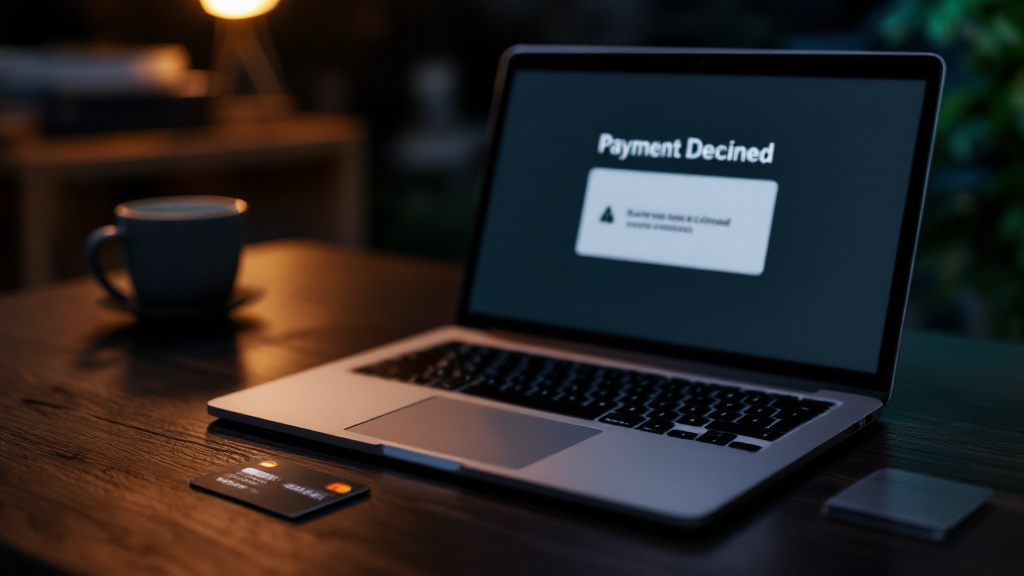
The Friday-night decline. Campaigns stop, spend data goes flat, and the appeal queue opens Monday.
There are four separate failure points, and they get confused with each other constantly.
The BIN check. Google reads the first six to eight digits of the card, which identify the issuing bank and the card product — prepaid, debit, credit, commercial. Google doesn't publish a blacklist, but in practice heavily-used prepaid BINs from the media-buying ecosystem accumulate a bad history: chargebacks, fraud flags, thousands of accounts sharing the same issuer. When a BIN goes bad, every card on it goes bad at the same time. This is why your card can work perfectly for two months and then die along with everyone else's.
3-D Secure. Google's billing flow can require 3DS authentication, and a virtual card with no linked phone number or app-based confirmation simply can't complete it. Some providers handle 3DS properly through their dashboard or a Telegram bot. Many don't, and you discover which category yours is in at the worst moment.
AVS mismatch. Address Verification. A Lithuanian or Hong Kong BIN attached to a billing address in a different country, on an account whose profile says something else again, produces a mismatch. Sometimes it's tolerated. Sometimes it's the signal that pushes a fresh account into review.
The account-level risk signal. This is the one that costs real money. A declined payment isn't just a failed charge — it's a data point. Google's 2025 Ads Safety Report describes systems that analyse "hundreds of billions of signals — including account age, behavioural cues and campaign patterns." Google suspended 24.9 million advertiser accounts in 2025 and blocked or removed 8.3 billion ads, stopping over 99% of policy-violating ads before they served. Payment behaviour feeds that model. A new account, a fresh prepaid BIN, a declined charge, and a retry from a different card is a pattern that looks like someone cycling payment methods — because that's exactly what it looks like when fraudsters do it.
If a provider can't pass 3DS, no BIN quality in the world saves the card.
Context for the decline rates: card-not-present transactions authorise at roughly 80% across e-commerce generally, and fraud-prevention systems account for an estimated 15–20% of all declines, false positives included. Blocked legitimate transactions are projected to cost the global economy over $264 billion a year by 2027.
I want to be straight about what nobody can tell you here. There is no public dataset on decline rates for virtual cards specifically on Google Ads. Every "40% of virtual cards get declined" figure you'll find in this niche is vendor marketing with no stated methodology. Google doesn't break out how many accounts it suspends for payment reasons. If someone quotes you a precise virtual-card decline rate, ask where it came from, and watch what happens.
And here's the part I'd underline twice, because it isn't inference — it's written down. Google's Suspicious payment activity policy lists, as signs of suspicious activity, "suddenly using several new credit cards, having payments declined or chargebacks, and unclear credit card ownership or billing details," and states that Google "will suspend your account or limit spending."
Read that against how virtual cards are actually used. Buy fifty cheap cards, attach them to accounts, replace them as they die. That workflow — the standard one, the one every provider's marketing describes — is a pattern Google has published as a suspicion signal. Not a rumour from a Telegram chat. Google's own policy page.
My read, and this one is opinion: the card itself is rarely what gets you banned. The card is what exposes an account that was already fragile. A clean account with a clean history survives a decline. A three-week-old account with an unverified identity and a nutra landing page does not.
For scale, independent context on where suspensions come from: an agency sample of over 1,000 suspensions published in October 2026 attributed 37% to Circumventing Systems, 28% to Unacceptable Business Practices, and only 6% directly to suspicious payments or billing. One agency's client mix, self-selected toward people who needed suspension help — so treat it as indicative, not census. The nuance matters though: payments are a small direct cause, but payment irregularity is exactly the kind of evidence that feeds the two categories making up 65%. (StubGroup.)
The 15 providers, compared
Fees below are as published by each provider or by public directories at the time of writing.
| Provider | Card issue | Top-up fee | Min deposit | Funding | BINs |
|---|---|---|---|---|---|
| ePN (e.pn) | from $2 ($2–4/mo per card) | from 3% (tiered 6.7% → 3.0%) | $50 ($30 free card) | USDT, wire | 102, 36+ banks |
| Multicards.io | $2 / €2 | 0–5% by method | $200 | Crypto, wire | 80+ |
| PST.NET | $1 (100 free on some plans) | 2% (one source says 6%) | Not stated | Crypto, cards | 20+, US & EU |
| Capitalist / CardsPRO | $2.50 / €2.65 | 0% SWIFT/SEPA; 7% auto top-up | $10 US BIN, $25 HK/UK | SWIFT, SEPA, crypto | US, HK, UK |
| LinkPay | $0 (100 free on top tier) | 0–1% | Not stated | Crypto, fiat | Multi-BIN |
| FlexCard | $2.50 | from 3.5%, refunded on withdrawal | $50 | USDT TRC20/ERC20, wire | Multi, priced per BIN |
| MyBroCard | First 50 free, then $2 | USDT 4%, wire 3%, Capitalist 7% | $250 | USDT, wire, Capitalist | Multiple |
| Karta.io | Free with KYC (Visa 5 USDT) | 3.5% account, crypto free | Not stated | Crypto, fiat | Multiple |
| Wallester Business | 300 free, then €0.35/mo | EUR IBAN free; card top-up 1.20% | — | SEPA, card, USDC | Estonian EMI, Visa |
| Spend.net | Not stated | Not stated (2% cashback) | Not stated | USDT TRX, BTC | "Premium BINs" |
| AdPos | $1 | Not stated | Not stated | Wire, crypto, Capitalist | 2 (HK, USA) |
| Lamanche | $0 | 3% | Not stated | Crypto | 7 |
| Spendge | €5 (+€5/mo) | 1.5–2.5% | €300–1000 | USDT, wire | 3 |
| YesCard | First 50 free | Not stated | $500 | USDT | 1 |
| Genome | Separate pricing page | Not stated | Not stated | SEPA / SWIFT | EU EMI, Visa, 3DS |
A few honest notes on that table.
The gaps marked "not stated" are real gaps. Several of these providers don't publish full tariffs publicly and only show them after registration or KYC — which is itself useful information about how they operate. I'd rather leave a cell empty than fill it with a number I can't source.
Where sources conflict, I've shown the conflict rather than picking the prettier number. PST.NET's top-up is reported as both 2% and 6% depending on card type and who's writing. ePN is quoted at 2.5% in affiliate roundups but e.pn's own site says "from 3%" on a ladder that starts at 6.7% and only reaches 3.0% at high cumulative volume. If a review quotes you the floor of a volume ladder as if it were the standard rate, that review is selling something.
Some names you'll see in competing lists are missing here on purpose. Mellow is a contractor-payment platform, not an ad-spend card issuer — it keeps appearing in these roundups by mistake. Brex and Ramp require a US entity. And for several brands that circulate in Telegram lists I couldn't find primary pricing or corporate evidence at all, so they're out. Fifteen verifiable providers beats twenty with five invented ones.
Notice how little the card issuance fee matters. Two dollars a card is noise. The top-up commission is what you actually pay, every single time you move money. At 4% on a $50,000 monthly budget, that's $2,000 a month — a thousand times the card fee. Yet most comparison posts lead with "free card issuance."

The issuance fee is marketing. The top-up percentage is the actual price.
Also watch the minimum deposit. Cardgen at €1000 and YesCard at $500 aren't expensive in percentage terms, but they lock up working capital. If a BIN goes bad two days after you fund it, that money is sitting in a dashboard you no longer want to use. Several of these services make withdrawal slow or costly on purpose.
And single-BIN providers are a structural risk, not a detail. YesCard lists one BIN. One BIN means one point of failure for your entire card portfolio. Multicards with 80+ BINs is a genuinely different risk profile, even if the headline fees look similar.
What the mainstream fintechs actually offer
People ask about Wise, Payoneer and Revolut Business constantly, so let's be direct.
They work, and they're cheaper and more stable than anything above — if you qualify. That's the whole catch. All three are regulated institutions with real KYC and real jurisdiction lists. If you hold residency and a business entity in a supported country, a Revolut Business or Wise card is a better instrument than any media-buying card: proper 3DS, real commercial BINs, no 4% top-up tax.
If you're registering from a country they don't serve, you don't have a pricing problem. You have an eligibility problem, and no amount of comparison shopping fixes it.
The countries where none of this works
This part isn't about cards at all.
Google is a US company and complies with OFAC sanctions. Google advertising products aren't available to clients in Crimea, Cuba, the so-called Donetsk and Luhansk People's Republics, Iran, and North Korea, per Google's own country restrictions documentation. Syria was removed from the fully embargoed list in August 2025 following a change in OFAC policy — which is genuinely unusual, countries almost never come off that list.
In those territories the restriction is at the account level. A Hong Kong BIN won't help, because the card was never the blocker.
Beyond the sanctioned list there's a much larger grey zone: countries where Google Ads exists but local cards fail, local currency isn't supported, monthly invoicing isn't offered, or the self-service signup flow quietly refuses your payment profile. Russia, Belarus, Iraq, Afghanistan, Myanmar and a long tail of others sit in that zone depending on the month. This is where most of our customers come from, and it's where virtual cards became standard practice — not because they're good, but because they were the only thing available.
I'll say the uncomfortable thing. The virtual card market exists because Google's payment coverage has holes in it. Providers aren't solving a payments problem so much as renting you a temporary workaround, and they price in the fact that you have no better option. A 4% top-up fee on money you already own is not a service charge. It's scarcity pricing.
The law changed in October 2025, and it matters more than any fee
This is the single most important development for anyone buying traffic from Russia or Belarus, and I've seen almost no card comparison mention it.
The EU's 19th sanctions package was adopted on 23 October 2025 and took force the next day. For the first time it prohibits "issuing of payment instruments, acquiring of payment transactions, or payment initiation services" and "issuing of electronic money" to Russian and Belarusian nationals, residents and established entities — Article 5b of Regulation 833/2014 for Russia, Article 1u of Regulation 765/2006 for Belarus. There are carve-outs: executing payment transactions themselves, Russian subsidiaries of EU-parent companies, EEA and Swiss nationals resident in Russia, and Russian nationals permitted to reside in the EEA or Switzerland.
Work out what that means for the list above. Wallester is an Estonian EMI. Genome is an EU EMI. Revolut is licensed in Lithuania. A large share of the specialist brands in this market are front-ends on EU-licensed issuers. All of them are now legally barred from issuing cards or e-money to Russian and Belarusian persons.
That isn't a provider risk policy you can argue with or route around with a different passport scan. It's statute. The "get an EU virtual card as an RU or BY media buyer" model didn't get harder in October 2025 — it stopped being lawful for the issuer.
Separately, the card schemes tightened in the same direction. Visa's prepaid card issuance requirements were reviewed and updated effective 25 July 2026. Visa's VAMP excessive threshold drops to 1.5% with 1,500+ events a month from 1 April 2026, down from 2.2%. And Mastercard raised its excessive authorization attempt fee from $0.10 to $0.50 per retry in 2026 — a fivefold increase aimed squarely at card testing, which also makes the habitual "just retry the decline" tactic five times more expensive to the issuer who'll pass it to you. PSD3 and the Payment Services Regulation, agreed in trilogue in April 2026, will force every EU EMI to re-authorise under a single merged regime.
None of these were aimed at media buyers. All of them narrow this route.
Worth knowing too: this market consolidates by shutdown, not by merger. WildCard stopped issuing virtual cards on 12 July 2025 at regulators' request and came back as an AI top-up service with no cards at all. DuPay and OneKey also exited in the 2025 shakeout. Wirex closed the crypto side of its Classic app in the EEA and Australia on 30 June 2026, which in turn ends Cardano Card on 31 October 2026. I have no evidence of trouble at any provider in my table — but a $500 minimum deposit at a company that might exit is a different proposition than a $500 deposit at a bank.
How agency accounts change the question
Here's where I have to declare an interest, so take it with the appropriate grain of salt: this is what we build at YeezyPay.
An agency account inverts the model. Instead of you holding a card that Google has to accept, the account sits under an agency's Google partnership and is billed on invoice. There's no card in the flow at all. No BIN to go bad, no 3DS prompt to fail, no AVS mismatch, no decline event landing in your account's risk profile. You fund a balance — wire, SEPA, USDT — and spend from it.
What that genuinely removes: card declines, BIN death, the mid-campaign Friday outage, and the payment-method churn signal that Google's own policy page describes as suspicious.
The obvious question is why you can't just get invoiced billing yourself. Here's the answer, in Google's numbers. Monthly invoicing requires being a registered business for at least one year, holding a Google Ads account in good standing for at least six months, and spending at least $5,000 a month in any three of the last twelve. Credit terms are typically 30 days and the line is sized by your spend history. (Google Ads Help, monthly invoicing.)
That bar is the whole reason this product category exists. Most advertisers can't clear it — and advertisers in countries where Google won't open a payment profile can't clear it at any spend level.
I should disclose the limits honestly, because they're real and most sellers hide them. Google's consolidated billing documentation states that the feature "isn't available to media agencies", that it will "no longer be provided to advertisers in France" under Loi Sapin, that all accounts under one invoice must share a single currency, and that a manager account caps at 50,000 accounts. (Google Ads Help, consolidated billing.)
So the honest framing is this: an agency account removes the card-BIN failure mode completely. It does not remove geography. It changes the question from "will my BIN pass" to "whose legal entity holds the credit line." If you're in an OFAC-embargoed territory, neither answer helps you.
What it doesn't remove, and I want to be clear about this because the market oversells it: policy compliance. An agency account doesn't make a non-compliant landing page compliant. It doesn't exempt you from advertiser verification, from vertical certifications for gambling or finance or supplements, or from suspension if your creatives violate policy. We suspend accounts ourselves when they do. Anyone telling you an agency account means "no bans" is selling you something that doesn't exist.
Our concrete experience, since I promised one: of the advertisers who come to us from virtual cards, the complaint that brings them is almost never the fee. It's the unpredictability. A buyer running $80,000 a month told us he'd lost roughly nine days of spend over a quarter to card failures across two providers — not to bans, just to declines and reissues. At his margins the nine days of lost volume cost more than two years of our commission. That calculation is the real comparison, and it never appears in a fee table.
Tired of rotating cards?
If you're advertising from a restricted country and your budget is dying to declines rather than to policy, an invoiced agency account removes the card from the equation entirely. Fund in wire, SEPA or USDT and spend without a BIN in the middle.
How to choose, practically
If you're staying with virtual cards, here's the order I'd evaluate in.
- Top-up commission first. Multiply by your monthly budget before you look at anything else. Everything else on the pricing page is rounding error.
- BIN count second. More BINs means your whole portfolio doesn't die at once. One BIN is a single point of failure.
- 3DS handling third. Ask explicitly how confirmations are delivered. Dashboard, app, bot? If the answer is vague, assume it doesn't work.
- Withdrawal terms fourth. Can you get unspent money out, how fast, at what cost? Read this before funding, not after.
- Minimum deposit last. It's a capital-lockup question, not a cost question — but it determines how much you lose when you need to leave.
Two operational habits worth more than provider choice. Don't attach a brand-new card to a brand-new Google Ads account on the same day; both are fresh risk signals and they compound. And never run one card across multiple ad accounts — when it dies, they all stop together, and shared payment instruments are a documented clustering signal for Google's enforcement systems.
Where I'd actually land
For small or testing budgets under roughly $5,000 a month, virtual cards are fine. The fee drag is small in absolute terms and the flexibility is real. Multicards and Multicards-style multi-BIN providers, or LinkPay if its 0% top-up holds, are reasonable starting points.
For anything at scale, the arithmetic turns. A 3–4% top-up fee plus unpredictable downtime plus the account risk from decline events is an expensive way to pay for advertising you've already budgeted for. At that point you're not choosing between card providers. You're choosing between renting a card and removing the card.
Check live tariffs before you commit to any provider here. This market moves faster than any article can.
— Mike, YeezyPay


