


Best Ad Platforms for Advertisers in Sanctioned Countries
Here's the thing almost every article on this topic gets wrong. People talk about "sanctioned countries" like it's one category, one rule, one wall. It isn't. There are two completely separate things happening, they have different causes, different legal weight, and different workarounds — and if you confuse them you'll either waste money chasing a door that's welded shut, or walk past one that's been open the whole time.
I'm Mike. I review the payment side of this at YeezyPay, which means I see what actually happens when an advertiser in Moscow, Minsk, Caracas or Tehran tries to fund an ad account. Policy pages are one story. Declined transactions are another. This piece is about both.
Two kinds of "blocked" — and why it matters more than anything else
The first kind is legal. OFAC maintains comprehensive embargoes against a short list: Cuba, Iran, North Korea, and the Russian-occupied Ukrainian territories (Crimea, so-called DNR and LNR). That's four programs. Providing advertising services into those jurisdictions is a federal crime for a US person. No agency structure fixes that. No payment method fixes that. It isn't a policy you can appeal.
Syria used to be on that list. It isn't anymore. Executive Order 14312 revoked the Syria sanctions program effective 1 July 2025, the Syrian Sanctions Regulations were struck from the CFR on 26 August 2025, and Google removed Syria from its advertising sanctions list on 13 August 2025 — ending restrictions that had stood since 2011. That one change is the best proof that this map moves, and that reading a two-year-old guide will cost you money.

Most platforms are a corporate decision away from being available, not a legal one.
The second kind of block is corporate. Russia and Belarus are under targeted and sectoral sanctions, not comprehensive embargoes. There is no US law prohibiting the sale of advertising services to an ordinary Russian private company. Every platform block affecting Russian advertisers — Google's, Meta's, Microsoft's, Snapchat's — is a decision those companies made in March 2022 and have never reversed. That's a terms-of-service matter, not a criminal one.
Google's own help page makes this plain. "Understanding Google Ads country restrictions" lists exactly six territories: Crimea, Cuba, Iran, North Korea, DNR, LNR. Russia isn't on it. Belarus isn't on it. The Russia block lives in a separate March 2022 announcement that paused ads for Russia-based advertisers globally, and PPC.land confirmed in October 2026 that the pause is still active with no reversal in sight.
Europe is the one place where it genuinely is law. Article 5n of Council Regulation 833/2014, amended by the ninth sanctions package in December 2022, prohibits EU persons from providing advertising services to Russian legal entities or the Russian government. Note the wording carefully — the European Commission's own FAQ confirms the prohibition doesn't extend to services supplied to individual consumers. An agency domiciled in the UAE or the US isn't bound by Article 5n at all.
Platform-by-platform: who blocks whom, and why
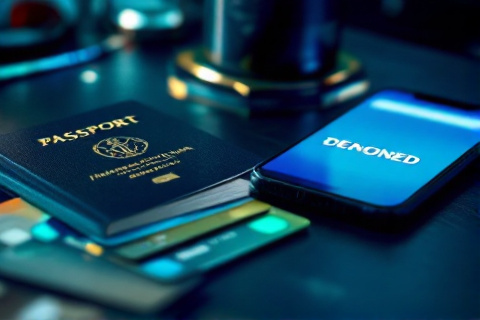
The ad account is rarely the hard part. The card is.
I've grouped these by what's actually stopping you, because "unavailable" means five different things depending on the platform.
| Platform | Legally embargoed for | Self-withdrawn from | Practical access from RU/BY |
|---|---|---|---|
| Google Ads | Crimea, Cuba, Iran, N. Korea, DNR, LNR | Russia (Mar 2022) | Only via foreign-billed agency account |
| Meta (FB/IG) | Cuba, Iran, N. Korea, Crimea, DNR, LNR | Russia (Mar 2022) | No; also illegal to place from inside RU |
| Microsoft Ads | — | Russia (Mar 2022) | No — 1,483 RU advertisers suspended |
| TikTok Ads | Iran not listed | RU uploads frozen 2022 | Docs say eligible; reality says otherwise |
| X Ads | Per trade restrictions | Russia + Ukraine (Feb 2022) | No |
| Snapchat | — | RU, BY, UA (1 Mar 2022) | No |
| — | RU-targeted ads (Mar 2022) | No | |
| Telegram Ads | None (Dubai entity) | No | Yes — but see the Russian-side trap below |
| Yandex Direct | None | No | Yes, domestic demand only |
| Adsterra / PropellerAds / RichAds / MGID | Varies | No | Yes, crypto accepted |
| Taboola / Outbrain | No published policy | Unknown | Undisclosed — don't assume open |
Google Ads — still first, still worth the effort
For anyone selling to a Western audience, nothing replaces it. Google holds roughly 26.4% of worldwide digital ad spend in 2026 at $239.54B, and YouTube now leads every platform on ad reach at 2.65 billion. Intent-based search demand simply has no substitute in push networks.
The cost of getting it wrong is steep though. Google's trade sanctions policy says suspension happens immediately, without prior warning, and that reinstatement happens "only in compelling circumstances, such as in the case of a mistake." That's not a soft warning. Treat a suspended account as gone.
One oddity worth knowing: Google's Publisher Policies page has dropped Syria from its sanctions list, but Merchant Center Help still listed it when we checked. Internal inconsistency at Google is normal. Verify against the specific product page you're using, not a general one.
TikTok — the documentation is lying to you
This is the trap I see people fall into most. TikTok's official help docs still list Russia, Belarus, Ukraine and Kazakhstan as eligible regions for Business Center and ad account creation. Iran isn't listed at all. Read that and you'd conclude TikTok is wide open.
It isn't. TikTok froze uploads and livestreams in Russia in March 2022 and the app has run view-only there since. Belarus banned TikTok outright on the user side. The eligibility docs are stale, not permissive. I'd treat registration there as a coin flip that costs you a verified identity when it fails.
Telegram Ads — the structural outlier
Telegram FZ-LLC is based in Dubai and isn't a US person, so OFAC exposure simply doesn't arise. It runs separate accounts for Russia and Ukraine, with a "Euro World" account covering everything else at the same rates. In 2025 it added TON and Stars as payment options alongside EUR, which solves the card problem outright.
My honest opinion: Telegram Ads is oversold in the SEO content on this topic. The official direct tier sits behind a threshold most SMBs will never reach, so you end up with a reseller, paying their margin, with less control. Reported CPMs of €1–2 in Europe are real enough, but I couldn't verify a single official minimum budget figure from ads.telegram.org — every number circulating comes from secondary blogs and they contradict each other. Budget accordingly and don't plan around numbers nobody can source.
Push and native networks — a complement, not a replacement
Adsterra, PropellerAds, RichAds and MGID don't care where you live. Adsterra's minimum deposit is $100 by card or Paxum, $200 by crypto including USDT, $1,000 by wire. PropellerAds starts at $100. No residency gate, no identity verification theatre, no sanctions screening worth the name.
The trade-off is obvious once you run them. You're buying impressions, not intent. For nutra, sweepstakes and similar affiliate verticals that's fine. For a B2B SaaS or a legitimate e-commerce store, it's mostly wasted money. Use them alongside search, never instead of it.
The real blocker is almost never the platform. It's the card.
This is where my side of the business lives, and it's the part guides skip.
Visa and Mastercard ceased operations in Russia on 10 March 2022. Russian-issued cards still work domestically through NSPK but are dead for any foreign online merchant. The Russian Central Bank announced on 31 July 2025 that Visa- and Mastercard-branded cards from Russian banks will be phased out entirely. Mir works abroad in about eleven countries — Armenia, Belarus, Venezuela, Vietnam, Kazakhstan, Cuba, Laos, Tajikistan and a few others — and not one of them hosts a major Western ad platform's billing entity.
So an advertiser can have a perfectly valid agency account and still be unable to spend a dollar through it. In our experience at YeezyPay, the single most common failure is not account suspension — it's the first top-up getting declined at the issuing or acquiring bank, usually because the card BIN country, the IP geography and the account profile tell three different stories. Cards bought from grey exchangers fail that first-payment check at a rate I'd describe as near-total. We've had clients arrive after burning three accounts in a week, every one of them lost at the billing step rather than the policy step.

Consistency between BIN, IP and profile beats every other trick.
The fix is boring and it works: one coherent identity across billing country, IP, timezone and account details, funded through a rail that the acquiring bank recognises as normal. That's it. There's no clever trick underneath it.
Market pricing for this service has commoditised, which is good news for buyers. Russian-market reporting puts typical agency commission at around 9% on top-ups from €50, with flat subscriptions from roughly $399/month at 0% commission. The differentiator between vendors in 2026 isn't access to accounts — everyone has those. It's whether your money lands.
Running into declined top-ups? YeezyPay handles Google Ads billing for advertisers in restricted countries through agency accounts with stable foreign payment rails — card, bank transfer or crypto. No burned accounts at the first deposit. See how it works at yeezypay.io.
The two-sided squeeze nobody warns Russian advertisers about
Western platforms shutting you out is only half of it.
Since 1 September 2025, Russian law — amendments to Federal Law 38-ФЗ on Advertising, plus 114-ФЗ — prohibits distributing advertising on blocked or "undesirable" resources, explicitly covering Instagram and Facebook. In March 2026 the FAS and Roskomnadzor extended that reading to Telegram and YouTube, with secondary reporting suggesting retroactive application to 1 September 2025 and fines up to 500,000 ₽ per ad under Article 14.3 of the Administrative Code. I'd flag that the retroactivity claim comes from secondary outlets; I couldn't retrieve the primary FAS document.
Stack those together and the picture gets narrow fast. Western platforms refuse Russian advertisers for inbound. Russian regulators penalise them for placing on those same platforms domestically. The domestic alternatives are decelerating — the whole Russian media ad market grew 8.5% in 2025 to 980 bn ₽, down from 24% the year before, and VK's online ad revenue managed just 2%.
Which leaves exactly one clean use case: a Russian or Belarusian business advertising to audiences outside Russia. That's legal under US law, outside Article 5n's reach for a non-EU agency, and untouched by the Russian domestic ad ban. It's also, not coincidentally, the case we serve.
Belarus deserves its own paragraph

Belarus is usually treated as Russia-lite. The mechanics are genuinely different, though. Belarusian advertisers were never formally banned from Google Ads — they were squeezed out of the banking rails that fund it. Google deactivated all Belarus-based AdSense, AdMob and Ad Manager accounts on 13 December 2024, with final payouts between 21 and 26 January 2025.
Snapchat was the only major platform to name Belarus alongside Russia on day one, on 1 March 2022. Everyone else let the payment infrastructure do the work. The practical consequence is that Belarusian advertisers face a payments problem rather than a policy problem, which is a meaningfully easier thing to solve.
Where the line is, and we won't cross it
Agency accounts are a legitimate, boring commercial product for advertisers in Russia, Belarus, Venezuela, Myanmar, Sudan and Afghanistan. None of those are under comprehensive OFAC embargo. A foreign-billed account for a Russian company advertising to European customers is a commercial workaround for a corporate policy, with suspension as the worst case.
For Iran, Cuba, North Korea, Crimea, the so-called DNR and the so-called LNR, the identical structure is sanctions evasion. That's a federal crime, not a terms-of-service breach, and we won't take that business. Any provider telling you they can get you Google Ads from Tehran is either lying or setting you up to be the one holding it when it unravels. We say this out loud because plenty of our competitors go quiet here, and I think that silence tells you something.
The enforcement gap — context, not permission
Worth knowing, and worth dating properly. Adalytics published an investigation on 20 April 2022 documenting that Google's exchange had monetised websites on the OFAC SDN list for years. Vostochny Bank's site served ads until roughly 20 March 2022, nearly a month after designation. A Crimean site designated in December 2015 was still serving Google ads in March 2022 — including Google's own Chrome campaigns. Adalytics observed 64,606 .ru websites using Google ad inventory, with 87% of Google's Russian inventory marked confidential.
That data is four and a half years old. Quote it for what it shows structurally: compliance is enforced hard at the advertiser signup layer and loosely at the inventory layer. It's an observation about asymmetric enforcement, not a loophole anyone should plan around.
What I'd actually do, ranked
- Google Ads via a foreign-billed agency account — for RU/BY advertisers selling outside Russia. Highest demand quality, legally clean under US law, and the failure mode is recoverable if your billing is coherent.
- Incorporate abroad — the only permanent fix. Expensive, slow, and Google's advertiser identity verification still surfaces beneficial-ownership nationality, but it removes the ToS problem for good. The endgame once you're spending real money.
- Telegram Ads — genuinely useful for CIS, MENA and SEA reach, with crypto rails that sidestep the card problem entirely. Now legally hazardous to place from inside Russia, and reseller-dependent for most budgets.
- Microsoft Advertising — overlooked, and it expanded into 29 new European and African markets while everyone watched Google. If your foreign entity is in one of them, it's cheap incremental search volume.
- Push and native networks — $100 entry, crypto accepted, no questions asked. Fine as a supplement for affiliate verticals. A poor primary channel for anything with a considered purchase.
- Yandex Direct and VK — only if your customers are in Russia. Yandex holds around 70% of Russian search. Both are decelerating hard.
Verify before you spend
Everything above was checked against primary sources in November 2026. This list changed materially twice in eighteen months — Syria came off the embargo list, Russia's domestic ad ban came in — and it'll change again. Before you commit a budget, open the platform's own help page rather than anyone's summary of it, including this one.
And check your payment rail before you check anything else. That's the step that actually decides whether you advertise this month.


