


What Is a Google Ads Agency Account and How Is It Different
What Exactly Is a Google Ads Agency Account?
It's not what most people think.
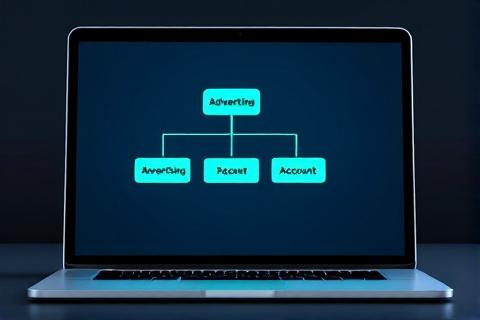
Agency accounts sit above individual ad accounts in a hierarchical tree structure
A Google Ads agency account — officially called a Manager Account or MCC (My Client Center) — is a special account type designed to manage multiple Google Ads accounts from a single dashboard. Unlike a regular advertiser account where you run campaigns for one business, an agency account sits above individual accounts and provides centralized control over billing, reporting, and user permissions. Think of it as the difference between renting a single apartment and owning the entire building. You don't run ads directly from the agency account itself. Instead, you create or link client accounts underneath it, and those sub-accounts are where campaigns actually live.
Google originally built this structure for marketing agencies managing dozens or hundreds of clients. But over time, it's become the go-to solution for media buyers, affiliate marketers, and advertisers in restricted countries who need higher trust levels and fewer billing headaches.
Agency Account vs. Regular Account: The Real Differences
The gap between a regular Google Ads account and an agency account is bigger than most advertisers realize. Here's what actually changes when you move from one to the other.
| Feature | Regular Account | Agency Account |
|---|---|---|
| Account structure | Single account, one business | Umbrella over unlimited sub-accounts |
| Spending limits | Often capped at $500–$5,000/day initially | Significantly higher or no spending caps |
| Trust level | Starts low, builds slowly | Inherits agency's established trust score |
| Billing | Per-account payment only | Consolidated or per-account billing options |
| Suspension risk | Higher — new accounts get flagged often | Lower — agency reputation shields sub-accounts |
| Support access | Standard (email, chat) | Priority support with dedicated reps |
| Reporting | Single account view | Cross-account dashboards and analytics |
| Beta features | Rarely available | Early access to new tools and ad formats |

Agency accounts unlock cross-account dashboards and centralized campaign management
The spending limit difference alone is worth the switch for many advertisers. A fresh regular account might struggle to spend $500 per day without triggering a review. An agency sub-account can often start at $5,000+ daily because it inherits trust from the parent account's track record.
MCC vs. Agency Account: Are They the Same Thing?
This confuses a lot of people. Let me clear it up.
Technically, every agency account is an MCC (Manager Account). But not every MCC qualifies as a true agency account. Anyone can create an MCC at ads.google.com — it takes about five minutes. That gives you a basic manager account for organizing your own accounts. A true agency account, however, comes with something extra: a verified relationship with Google, often through the Google Partners program, which requires at least $10,000 in managed ad spend over 90 days, certified team members, and proven performance. This verification is what unlocks higher trust, better spending limits, and reduced suspension rates. It's the difference between having a driver's license and being an authorized taxi company — both can drive, but one has far more credibility with passengers.
Who Actually Uses Agency Accounts?
The user base has expanded far beyond traditional agencies.

Advertisers in restricted regions rely on agency accounts to access Google Ads
- Digital marketing agencies — the original use case. Managing 10, 50, or 200+ client accounts from one login.
- Media buyers and affiliates — running campaigns across multiple offers and verticals, needing higher spend limits and lower ban rates.
- Advertisers in restricted countries — this is huge. If you're in Russia, Belarus, Iran, Nigeria, Pakistan, or another country where Google has limited billing options, an agency account from a provider in an unrestricted region is often the only way to run Google Ads at all.
- E-commerce brands scaling fast — companies that outgrow their regular account limits and need $10K–$100K+ daily budgets.
- White-label ad management services — resellers who manage campaigns under their clients' brands.
At YeezyPay, we've seen the restricted-country use case grow the fastest. More than 60% of our clients come from countries where paying for Google Ads directly isn't possible or is severely limited.
5 Benefits That Make Agency Accounts Worth It

1. Higher Trust = Fewer Suspensions
Google suspended 12.7 million advertiser accounts in 2024 alone. That's a staggering number. Regular accounts — especially new ones — are disproportionately affected because they haven't built trust with Google's systems. Agency sub-accounts benefit from the parent account's history. If the agency has been spending consistently and following policies for years, its sub-accounts start with a reputation buffer that regular accounts simply don't have.
2. Spending Limits That Don't Hold You Back
New regular accounts hit spending caps fast. Google imposes these limits to protect against fraud, but they can cripple legitimate advertisers who need to scale quickly. We've had clients at YeezyPay who went from $0 to $15,000/day within their first week on an agency account — something that would've taken months of gradual increases on a regular account.
3. Consolidated Billing Across Markets
If you're running campaigns in multiple currencies or from a country with limited payment options, billing becomes a nightmare on regular accounts. Agency accounts offer consolidated billing: one payment method, one invoice, multiple campaigns across different regions. This is particularly valuable for advertisers who can't use local bank cards because Google doesn't accept payments from their country.
4. Access to Beta Features and Better Tools
Google rolls out new features to agencies first. Performance Max updates, new bidding strategies, enhanced audience segments — agencies often get access months before these reach regular accounts. This isn't a minor perk. In competitive verticals, having access to a new ad format before your competitors can mean a 15–20% advantage in CTR.
5. Professional Support That Actually Helps
Regular account support is... let's be honest, it's frustrating. You'll wait days for an email response and often get generic templates. Agency accounts with Google Partner status get dedicated account managers, priority phone support, and faster resolution times. When your account gets flagged or a campaign gets disapproved, the difference between a 48-hour email wait and a 2-hour phone call can cost thousands in lost revenue.
Need an agency account without starting an agency?
YeezyPay provides verified Google Ads agency accounts to individual advertisers, media buyers, and businesses in restricted countries. No agency certification required — we handle the infrastructure so you can focus on your campaigns.
How to Get a Google Ads Agency Account
You've got two paths. Neither is wrong — they serve different situations.
Path 1: Create Your Own (The Official Route)
- Go to ads.google.com/home/tools/manager-accounts/ and create a manager account
- Link or create client accounts underneath it
- Build spending history and maintain policy compliance
- Apply for Google Partners status once you meet the requirements: $10,000+ in 90-day managed spend, at least one certified team member, and demonstrated campaign performance
- Wait for verification and approval
This works if you're a legitimate agency with time and existing clients. It doesn't work if you need an agency account now, or if you're in a country where Google won't let you create one in the first place.
Path 2: Use a Third-Party Provider
Services like YeezyPay give you access to sub-accounts under an established agency umbrella. You get the benefits — higher trust, better spending limits, consolidated billing — without building the agency infrastructure yourself. The provider handles compliance, billing, and the relationship with Google. You handle the campaigns.
This is the practical option for:
- Solo advertisers and media buyers who don't manage client accounts
- Advertisers in sanctioned or restricted countries
- Anyone who needs to scale spend immediately
- Affiliate marketers running multiple offers
What Google Changed in 2025–2026
Google isn't standing still on this front.
Advertiser Identity Verification (AIV) has expanded to more regions, including Southeast Asia, Latin America, and the MENA region. New accounts — including agency sub-accounts — now face stricter documentation requirements: government-issued business registration, payment method verification, and domain ownership confirmation. Google also removed 5.5 billion ads and suspended 12.7 million accounts in 2024, a clear sign that enforcement is tightening across the board. For high-risk verticals like finance, gaming, supplements, and crypto, additional compliance documentation is now mandatory. Landing page quality standards have also evolved — bounce rates, user satisfaction metrics, and content relevance now directly impact ad ranking and CPC.
What does this mean for agency accounts? They're more valuable than ever. A verified agency with clean history can shield sub-accounts from the brunt of these changes, while fresh regular accounts are getting caught in the crossfire of Google's increasingly aggressive automated moderation.
Common Misconceptions About Agency Accounts
Let's kill a few myths.
"Agency accounts are immune to bans." They're not. Agency sub-accounts still need to follow Google's policies. The difference is that they start with higher trust, which means fewer false-positive suspensions. But running blatantly prohibited content will get you banned regardless of account type.
"You need to be an agency to get one." False. Providers like YeezyPay exist specifically to give individual advertisers access to agency-level accounts. You don't need employees, clients, or a company registration.
"They're only useful for big spenders." Not true. Even advertisers spending $1,000–$3,000/month benefit from the stability. When your regular account gets suspended on a Friday and you can't reach support until Monday, that's three days of lost revenue. Agency accounts reduce that risk significantly.
"MCC and agency account are different things." As I explained above, the MCC is the technical structure. "Agency account" describes an MCC that's been verified and has built trust with Google. The platform feature is the same — the difference is in status and reputation.
A Real Example From YeezyPay
One of our clients — a media buyer based in Nigeria — had been trying to run Google Ads for an e-commerce client for six months. Every regular account he created got flagged within 48 hours. Payment methods declined. Verification requests he couldn't fulfill because of his location. He was spending more time creating accounts than running campaigns.
After switching to a YeezyPay agency account, he was running live campaigns within four hours. His daily spend went from $0 (because nothing worked) to $2,800 within the first two weeks. Six months later, he's scaled to $8,000/day across three sub-accounts. Same person, same campaigns, same landing pages — the only difference was the account type.
Is an Agency Account Right for You?
Ask yourself three questions.
First: have you experienced account suspensions, payment declines, or spending limits that prevent you from scaling? If yes, an agency account solves those problems directly.
Second: are you in a country where Google limits or blocks advertising? Countries like Russia, Iran, Belarus, and several others face severe restrictions. An agency account from an unrestricted region is often the only viable path.
Third: do you value stability over saving a small monthly fee? Agency accounts through providers like YeezyPay cost a percentage of your ad spend — typically 3–7%. For most advertisers, the reduction in downtime and the ability to scale consistently makes this a clear positive-ROI investment.
If you answered yes to any of these, it's worth exploring. The worst approach is the one most advertisers take: keep creating regular accounts, keep getting banned, keep losing money and time in the cycle.
Bottom Line
A Google Ads agency account isn't magic. It won't fix bad campaigns or make non-compliant ads pass review. What it does is give you a stable, trusted foundation to advertise from — higher limits, better support, fewer false suspensions, and billing options that work regardless of your location. For advertisers who've hit the ceiling of what regular accounts can offer, it's the logical next step. And you don't need to build an agency to get one.


