


What Happens When a Google Ads Account Is Permanently Banned
A permanent ban doesn't look dramatic. One morning the campaigns sit at zero impressions, a red bar appears across the top of the account, and the words "account suspended" turn up where yesterday there was a spend graph.
I'm Mike, and I review most of what we publish here at YeezyPay. We work with advertisers who can't pay Google directly from where they live — Russia, Kazakhstan, Uzbekistan, parts of LATAM and Southeast Asia — so suspended accounts land in our support inbox constantly. Some of those bans were mistakes. Some were absolutely deserved. And in almost every case, the advertiser had the wrong mental model of what had just happened to them.
So here's what actually happens. Not the vendor-blog version with invented recovery statistics, but what Google's own documentation says, what the Ads Safety Reports show, and what we see on our side of the billing rail.
The short answer: ad serving stops instantly and globally. Your account isn't deleted — it goes read-only and you keep access. Your unspent money is refundable, though not contractually guaranteed. Accounts Google considers related to yours are at risk. And you have at least six months to appeal, which means "permanent" is a policy label, not a system state.
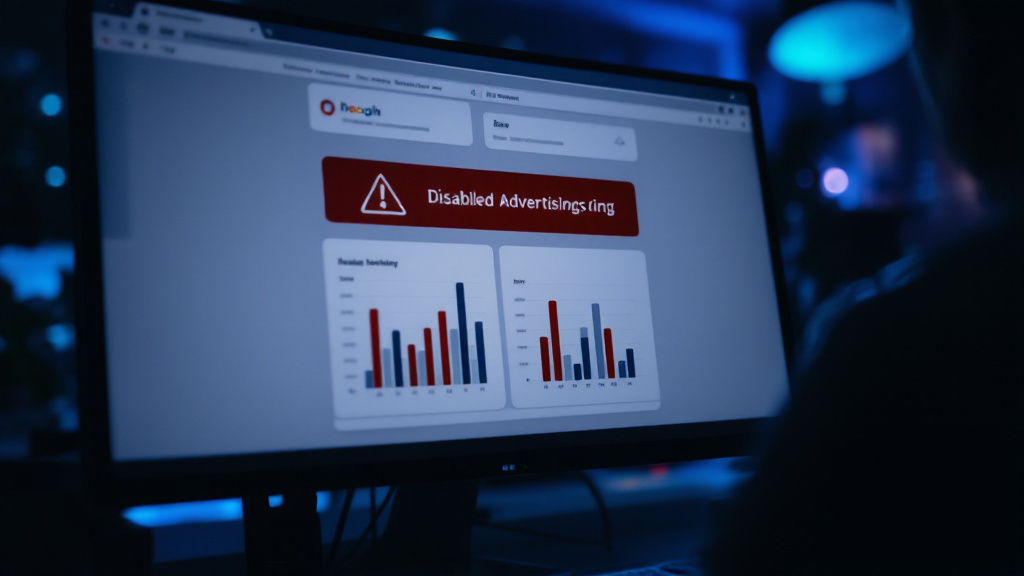
The campaigns are still there. They just don't serve anymore.
Suspended, canceled, closed: three different things
Google doesn't have a product state called "banned." The Google Ads API exposes three relevant customer statuses, and the difference between them matters more than any article on this topic usually admits.
| Status | What Google's docs say | Can it be undone? |
|---|---|---|
| Suspended | "A suspended account unable to serve ads. May only be activated by Google support." | Only through appeal |
| Canceled | "A canceled account unable to serve ads. Can be reactivated by an admin user." | Yes, by you |
| Closed | "A closed account unable to serve ads. Status is permanent and may not be reopened." | No |
A "permanent suspension" sits in the first row, not the third. The phrase comes from policy language — specifically from the sentence Google attaches to its most serious violations: "you will not be allowed to advertise with Google Ads again." Harsh wording. But the account still carries the SUSPENDED flag, and Google's own suspensions page gives every advertiser "at least 6 months from the date of account suspension to submit an appeal."
That distinction gets flattened in most coverage of this topic, and flattening it costs people money. They read "permanent," conclude the account is gone, abandon the appeal window, and start building a new account — which is the one move that turns a recoverable situation into an unrecoverable one. More on that below.
The violations that get you banned with no warning

Payment instruments are one of the strongest links Google draws between accounts.
Google maintains a list of what it calls egregious violations. These trigger suspension on detection, without a warning and without a strike. The current list:
- Circumventing systems
- Coordinated deceptive practices
- Counterfeit
- Malicious software
- Prescription opioid painkillers
- Promotion of unauthorized pharmacies
- Unacceptable business practices
- Trade sanctions violation
- Sexually explicit content
- Child sexual abuse and exploitation
Note the eighth item. Trade sanctions violation is an egregious-tier offence, which is why geography is not a cosmetic detail for advertisers in our markets. Google treats a handful of territories as fully embargoed — Cuba, Iran, North Korea, Crimea, and the DNR and LNR regions — and no account may exist there at all.
Russia is a different legal animal, and the difference is worth stating carefully. Google paused all advertising in Russia on 4 March 2022 as a corporate decision. That's a voluntary suspension of service, not an OFAC embargo. The practical effect on a Russian advertiser is similar — no local billing, no local serving — but the legal framing isn't the same, and treating them as identical leads people to assume compliant routes don't exist when they do.
Three strikes is a separate system, and most people confuse it
Running alongside the egregious list is the three-strikes mechanism. It applies to a different, narrower policy set: unapproved substances, weapons, tobacco, clickbait, misleading ad design, personal loans, binary options, enabling dishonest behaviour.
The escalation is published and mechanical. First violation gets a warning with no penalty beyond the ad coming down. Strike one holds the account for three days. Strike two holds it for seven. Strike three is a permanent account suspension. Strikes expire after 90 days without a repeat of the same policy, and Google gives at least seven days' notice before the first two actions.
Why this matters: if you got suspended out of nowhere, with no prior warnings, you were not three-struck. You were hit with an egregious violation, and the appeal you write needs to address that policy specifically. Advertisers who write a generic "please reinstate me, I'll comply" letter against a Circumventing Systems suspension are answering a question nobody asked.
What actually stops working
Ad serving
Immediately, everywhere. All campaigns, all locations, no grace period. There's no partial state where search keeps running and display doesn't.
Account access
This surprises people. Your account isn't wiped. It becomes read-only. You can still log in, pull historical performance data, export reports, change security settings, cancel the account, request a refund, and file the appeal. Everything you need for the recovery process is still in front of you.
Your money
Unspent funds are not forfeited. The documented path is to cancel the suspended account, at which point remaining unused funds auto-refund to the original payment method. Promotional credits are the exception — those are never refunded, and never were yours in a cash sense.
| Payment method | Google's stated refund window |
|---|---|
| Credit card | 2–3 weeks |
| Bank transfer | 3–4 weeks |
| SEPA direct debit | 8 weeks |
| End-to-end, including your bank | Generally 4–12 weeks |
Advertisers in Argentina, Brazil, Mexico, South Korea and Ukraine using local payment methods have to supply bank details and typically wait around four weeks. If the original card has expired or been closed by the time the refund processes, you may need to add a new payment method and briefly reactivate the account to re-trigger it.
Here's a caveat I've never seen another article print. Google's Advertising Program Terms contain no contractual refund guarantee for prepaid balances. Section 12 states Google "may suspend Customer's ability to participate in the Programs at any time." Section 1 allows Google to "reject or remove a specific Target, Ad, or Destination at any time for any or no reason." Liability is capped at amounts paid in the preceding 30 days. The refund you'll almost certainly get is a support policy, not a contractual right. In practice it works. Don't build a cash-flow plan around it being enforceable.
Merchant Center
The cascade runs mostly in one direction: GMC problems suspend Ads accounts, not the reverse. StubGroup — the one firm in this space whose numbers I trust, because they publish their sample sizes — found that 95% or more of Google Ads "Terms and Conditions" suspensions are actually downstream of a linked Merchant Center suspension, usually for Misrepresentation. If you got a vague T&C suspension and you run Shopping, check Merchant Center first. The Ads appeal will fail as long as the real problem sits in the other product.
Manager accounts
Google says accounts "linked to the same manager account" may be suspended. "May," not "will." In our experience a single child-account suspension doesn't automatically take down its siblings. If the manager account itself gets suspended, it loses the ability to link new clients, which is a much bigger operational problem.
YouTube
Most articles blur this, so let me be precise. A Google Ads suspension does not delete, strike or penalise your YouTube channel. Different product, different policies. Your video campaigns stop serving because the Ads account stopped, not because YouTube took action against you. The genuine crossover is on the monetization side — YouTube's related-accounts rules can disable monetization across channels tied to a flagged AdSense or payments identity. That's an AdSense story, not an Ads story.
Your Google payments profile
This is the one that catches people off guard. The payments profile is a separate object from the Ads account. It can be suspended independently — unverifiable identity, mismatched address, a chargeback, flagged activity — and a suspended payments profile blocks serving across every Ads account attached to it. That's the real multi-account blast radius, and it's bigger than most people realise until it happens.

The appeal form is the entire recovery process. There is no second channel.
How Google decides two accounts are "related"
Circumventing Systems is the policy that does the linking, and it's the single most common suspension reason we encounter. The policy text forbids attempts to "trick or circumvent our ad review processes," and it covers three things: cloaking, multiple account abuse, and false or misleading verification information.
Google's own wording on the consequences is blunt. "Accounts related to the suspended account may be suspended." "Any new accounts that the advertiser tries to create may also be suspended." Their stated advice is to "reinstate all the suspended ads accounts first, before attempting to create new accounts."
Google doesn't publish the signals it uses for linkage. What follows is practitioner consensus — ours and that of the agencies and anti-detect vendors working this problem daily — not official documentation. Treat it as informed inference:
- Payment instrument, card BIN, billing address
- IP address and login patterns
- Device and browser fingerprint
- Business name, registration data, phone, email
- Landing page domain — including the domain's history, so a previously burned domain carries risk forward to whoever buys it next
- Ad creative and landing page similarity
- Manager account linkage
Here's the part nobody likes: these signals produce false positives. A shared office IP, a shared corporate card, a coworking address, a borrowed laptop — any of these can tie you to an unrelated suspended advertiser you've never met. We've handled cases where the only connection between two businesses was a building. If that's your situation, say so plainly in the appeal with the evidence attached. It's one of the few scenarios Google reliably reverses.
A note from our side of the billing rail
We're a payment service. Advertisers come to us because Google won't take their money where they live, and we route it through agency accounts that can bill legitimately. So you'd expect this section to pitch you an agency account as the escape hatch from a ban.
It isn't one, and I'd rather say that than sell you something that gets you suspended again.
If the same business that was permanently suspended resumes advertising through an agency MCC, that is multiple account abuse under Circumventing Systems. Doesn't matter whose MCC it is. Google's third-party policy explicitly makes agencies "responsible for ensuring their clients and managed accounts adhere to all Google Ads policies, including preventing circumvention attempts." Any provider promising you a clean restart after an egregious-violation ban is either lying to you or planning to burn the account and sell you another.
What agency accounts genuinely solve is a different problem: payment rails, currency, billing entity and market availability for advertisers in good standing who simply have no way to pay Google from their country. A Kazakh e-commerce business with a clean policy record and no local Google billing is exactly who this is for. A suspended dropshipper looking for a fresh start is not. We turn down the second kind, and we check.
Advertising from a restricted country with a clean account history?
YeezyPay runs Google Ads payments through agency accounts for advertisers who can't pay Google directly — no local card required, top-ups in crypto or local currency, accounts in good standing only. If your problem is the billing rail rather than a policy violation, that's the problem we solve.
The appeal: what the process actually looks like

Reinstatement happens. It just isn't the default outcome.
You start from the suspension banner inside the account: Contact Us, then the policy-specific appeal form. There's no separate portal and no phone number that shortcuts it.
The window is at least six months from the suspension date. That's generous, and you should still move inside the first week, because the quality of your evidence degrades as the account ages and your memory of what you changed fades.
Some advertisers hit an identity verification gate before the appeal form even unlocks. You get three attempts at verification. Fail all three and, in Google's words, "you'll no longer be allowed to appeal." Worth reading twice. And submitting falsified verification documents is itself a Circumventing Systems violation, so the shortcut converts a recoverable suspension into a permanent one.
On appeal limits: individual ads get a maximum of three appeals. Account-level appeals have no published hard cap, but Google states that "if you file too many appeals for the same account suspension, we may not process them," and suspected abuse of the appeals function triggers a seven-day processing freeze. Practitioners report that for egregious categories you effectively get one substantive shot — follow-up forms for Circumventing Systems are shortened and don't even include a document attachment field.
Speed has improved, and this is measurable rather than anecdotal. On 13 November 2025, Keerat Sharma, Google's VP and GM for Ads Privacy and Safety, published figures: appeals addressed 70% faster, 99% of advertiser appeals resolved within 24 hours, and incorrect account suspensions down by more than 80%.
Fast resolution is not the same as favourable resolution. Google's reinstatement bar is written in plain language: "Accounts are only reinstated in compelling circumstances, such as in the case of a mistake." A 24-hour turnaround on a rejection is still a rejection.
The real numbers, from Google's own reports
Google publishes an annual Ads Safety Report. The 2025 edition came out on 16 April 2026. Here's the trend:
| Metric | 2023 | 2024 | 2025 |
|---|---|---|---|
| Advertiser accounts suspended | 12.7M | 39.2M+ | 24.9M+ |
| Ads blocked or removed | — | 5.1B | 8.3B+ |
| Ads restricted | — | 9.1B | 4.8B+ |
| Scam ads removed | — | 415M | 602M+ |
| Accounts suspended for scams | — | 5M+ | 4M+ |
| Publisher sites actioned | — | — | 245k+ |
Suspensions tripled from 2023 to 2024, then fell 36% in 2025. The 2024 spike was Google deploying LLM-based detection at registration; the 2025 decline came alongside the 80% reduction in incorrect suspensions. Both movements are about detection quality, not about advertiser behaviour changing.
The top policies by ads blocked or removed in 2025: Abusing the Ad Network at 1.29B+, Personalization Violations at 755M+, Legal Requirements at 646.7M+, Misrepresentation at 421.5M+, Trademark at 372.7M+, Financial Services at 327.8M+, Gambling and Games at 270.7M+.
Now the caveat that makes these numbers usable rather than alarming. Google stated that in 2024 "the vast majority" of those 39.2M suspensions happened before the account ever served a single ad. These are bulk fraud-farm signups caught at registration, not established businesses losing their accounts. Using 24.9M as a denominator for "what are the odds I get banned" is statistically meaningless. StubGroup also noticed that the 2025 report's 14 country-level figures sum to roughly 11.3M of the 24.9M total — over 13M suspensions carry no geographic attribution at all.
Statistics on this topic that are simply made up
This is the part I most wanted to write, because the misinformation here is costing people real money.
There's a table circulating across dozens of reinstatement-service blogs giving appeal success rates by violation type: Circumventing Systems 12%, Misrepresentation 68%, Billing 89%, Unacceptable Business Practices 34%, Malicious Software 76%, Identity and Verification 91%. It looks authoritative. It has no source, no methodology and no sample size. The earliest instance traces to a single vendor blog, and everyone else copied it.
Same for "85% of suspended accounts can be reinstated" and "73% first-appeal success rate." Both are reinstatement-vendor marketing claims with zero attribution behind them.
Google publishes no appeal success rate. None. Any figure you see is invented. If a recovery service quotes you one, you've learned something useful about that service.
What does exist, with a stated sample, is StubGroup's breakdown of 1,000+ suspension cases they handled:
| Violation | Share of cases |
|---|---|
| Circumventing Systems | 37% |
| Unacceptable Business Practices | 28% |
| Counterfeit Goods | 9% |
| Suspicious Payments / Billing | 6% |
| Malware / Malicious Software | 4% |
In fairness, StubGroup's own articles disagree with each other — elsewhere they put Unacceptable Business Practices at around 38%, roughly tied with Circumventing Systems. I'm citing the table with the stated sample and flagging the inconsistency rather than pretending the number is settled. That's the honest version.
Can you just open a new account?
No, and Google wrote the answer down for you: "you can't create multiple Google Ads accounts after getting suspended," and "any new accounts that the advertiser tries to create may also be suspended."
People try anyway. New email, new card, new company name, a VPN, sometimes an anti-detect browser. It occasionally survives a few weeks of low spend. Then it scales, the detection catches up, and now there are two suspended accounts plus a documented circumvention attempt sitting in the file of the original appeal — which was the thing that could actually have worked.
My opinion, and it's an unpopular one with a certain kind of reader: the circumvention attempt is almost always what makes a ban truly permanent. The original violation was usually appealable. The cover-up isn't.
What to do instead
- Find the actual policy cited. It's in the suspension email and the in-account banner. Appeals that address the wrong policy get rejected on autopilot.
- Check Merchant Center if you run Shopping. Vague T&C suspensions are overwhelmingly GMC problems wearing an Ads costume. Fixing the Ads account won't help.
- Fix the underlying issue before appealing, not after. Google reinstates on evidence of correction, not on promises of it. Screenshot everything you changed, with dates.
- Write the appeal like a case file. What the policy says, what you were doing, what specifically changed, what proof you have. Not an apology letter.
- Cancel the account and recover the balance only once the appeal has definitively failed — cancelling is a separate action from appealing, and you don't want to close a door you're still trying to walk through.
- If the root cause was a payment rail rather than a policy, fix the rail. Advertisers who got flagged on suspicious-payment grounds because they were improvising with foreign cards from a restricted country are solving the wrong problem when they try a different card. A compliant agency structure with proper billing is the fix there.
The honest summary
A permanent ban stops your ads instantly, leaves your account readable, returns your unspent money on a support-policy basis, puts related accounts at risk, and gives you six months and realistically one good shot at an appeal. It is not the end of your access to Google advertising in every case — but it very much is if you respond by building a second account.
The advertisers we see recover are the ones who treated the suspension as a compliance problem with a paper trail. The ones who don't recover treated it as an obstacle to route around. Google's detection has gotten dramatically better at telling those two groups apart, and the 2025 numbers show it.
If your situation is the boring one — a legitimate business in a country where Google won't take your card — that's a billing problem, not a policy problem, and it has a clean solution. Talk to us at yeezypay.io and we'll tell you honestly whether you're a fit.
Sources
- Google Ads account suspensions overview
- Circumventing systems policy
- Unacceptable business practices policy
- Enforcement procedures for repeat violations (three strikes)
- Advertiser verification
- Google third-party policy
- Refund estimates on canceled Google Ads accounts
- Billing and payment suspensions
- Merchant Center warnings and account suspensions
- Google Ads API — CustomerStatus enum
- Google 2025 Ads Safety Report (PDF)
- Google 2024 Ads Safety Report (PDF)
- Google — Improved accuracy of account suspensions (13 Nov 2025)
- StubGroup — The State of Google Ads Suspensions
- StubGroup — Analysis of the 2025 Ads Safety Report
- CNBC — Google suspends all advertising in Russia
Last verified: 6 October 2026. Google's suspension policies changed materially during 2024–2025; we re-check every link on this page each April, when the next Ads Safety Report lands.


