


Even campaigns with cloaking now last only 2 days in Google Ads — what to do in 2026
Google made it clear that in 2026, it’s doubling down on artificial intelligence. Since more than 70% of its profit comes from advertising, it’s no surprise that AI is now deeply embedded in the ad review and moderation process.
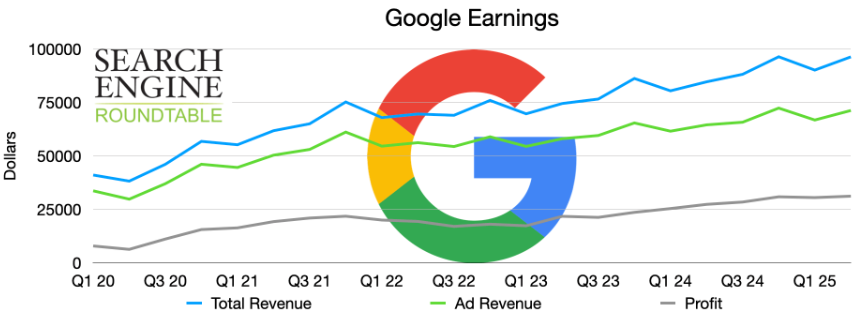
But that’s exactly why cloaking setups are dying faster than ever. Campaigns that used to run for weeks or even months now get flagged and suspended in just two or three days. Running gray-hat offers on Google Ads is becoming harder — but that’s not necessarily bad news. It’s pushing out beginners, stabilizing auctions, and opening new room for affiliates who can adapt.
Here’s what’s really happening — and how you can still profit from Google Ads in 2026, even if cloaking stops working the way it used to.
Why Google Ads kills cloaked campaigns so fast
A few years ago, Google only ran manual checks twice: during initial moderation and after user complaints. It was efficient — minimal resources wasted, fast removal of “bad actors” in Google’s eyes.
Now, AI does the heavy lifting. Experienced affiliates have noticed a pattern: ad reviews are now triggered in stages, depending on your daily spend.
-
At $5–$7/day: Google’s bots run surface-level checks to verify that nothing slipped through moderation.
-
At $20–$30/day: AI looks deeper — tracking redirects, analyzing user behavior, checking if your landing page provides real value. If something looks suspicious, a human moderator steps in.
-
At $100/day or more: manual reviews almost always kick in. If your campaign survives this stage, it usually keeps running.
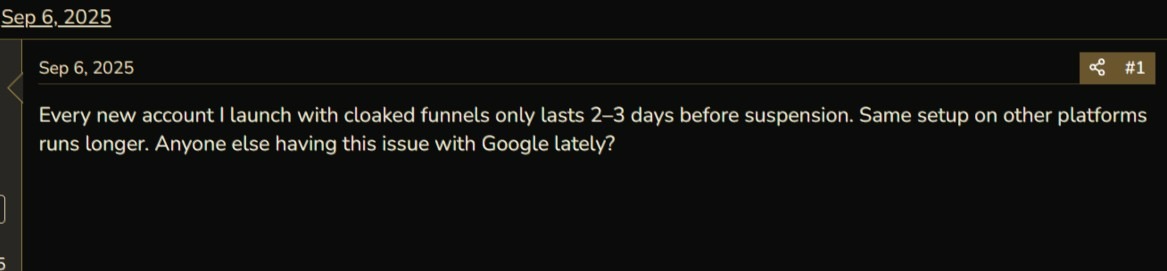
These numbers aren’t official — they’re based on affiliate observations — but forum discussions confirm this new behavior.
Many affiliates blame their cloaking tools. And yes, part of the problem is that Google’s AI easily spots patterns from popular cloaking services. But in most cases, the real issue is the account itself.
Because traffic is getting more expensive, some marketers try to save money by launching from personal or low-trust accounts. That’s a dead end. Top-tier teams now rely on Google Ads agency accounts, which are much harder to flag.
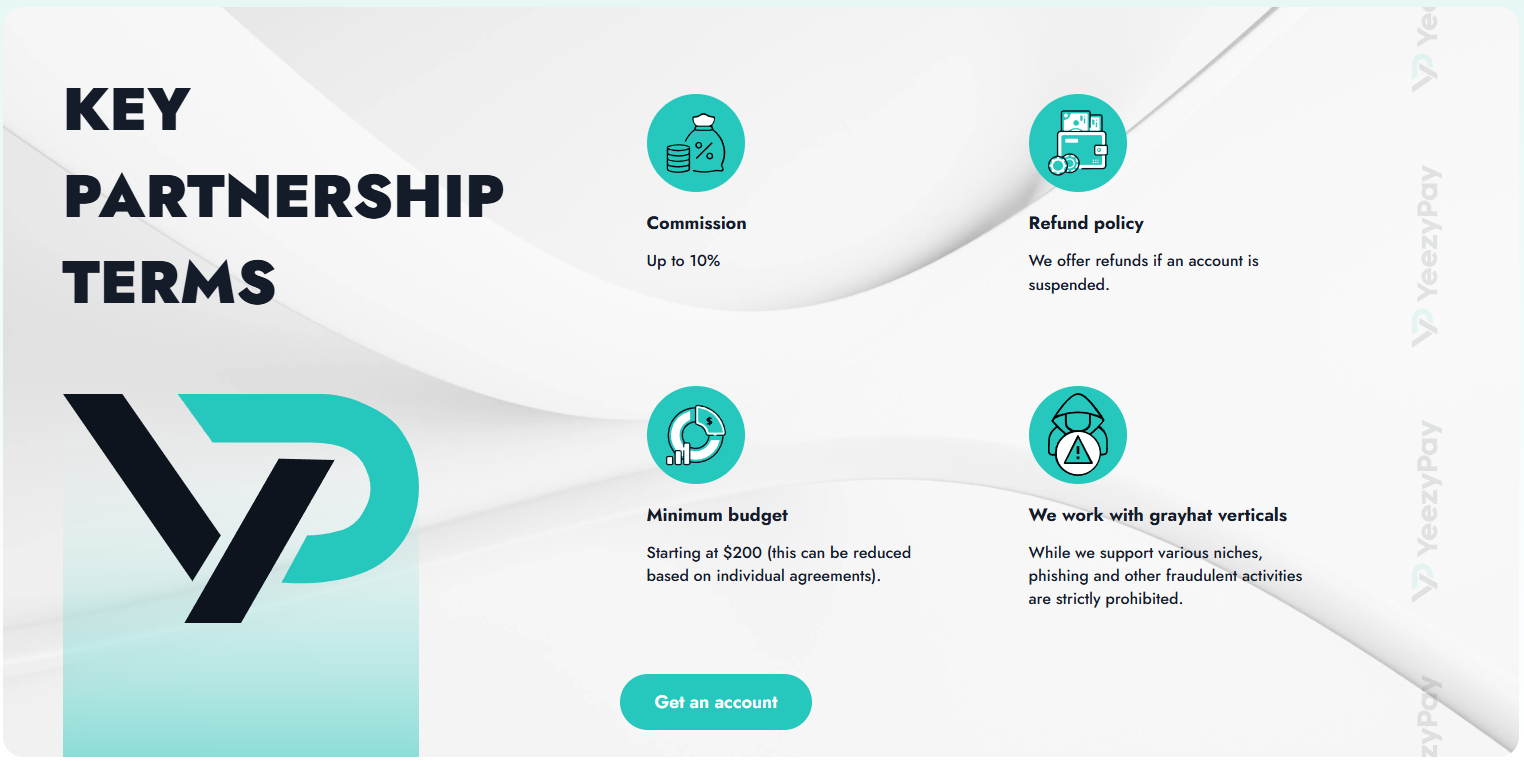
For example, YeezyPay provides verified agency accounts with strong trust scores. These accounts warm up faster (just a couple of days instead of weeks) and allow higher spend without triggering suspicion. You simply message a manager, top up your balance, and get access instantly through chat.
How to run Google Ads campaigns without getting banned
Here are a few practical steps to help you survive and profit in today’s ad environment.
First rule: always warm up your account with a white-hat offer before launching gray-hat niches like gambling or crypto. Google tracks your trust score — the higher it is, the fewer checks you face and the easier it becomes to raise your spend limits.
Once your account is warmed up, follow these principles:
1. Split your cloaking into stages
Start by ensuring your white page loads instantly, with zero sketchy redirects — or if there are any, they must point to a clean domain with a solid history. The landing page should look fully compliant with Google’s rules.
Then use black/white lists to filter bots and moderators. You can do this manually in Keitaro or through custom cloaking scripts. Finally, rotate creatives, domains, and user agents regularly. It’s smart to keep backup white-hat landers warmed up and ready to handle real traffic if needed.
2. Use custom cloaking scripts
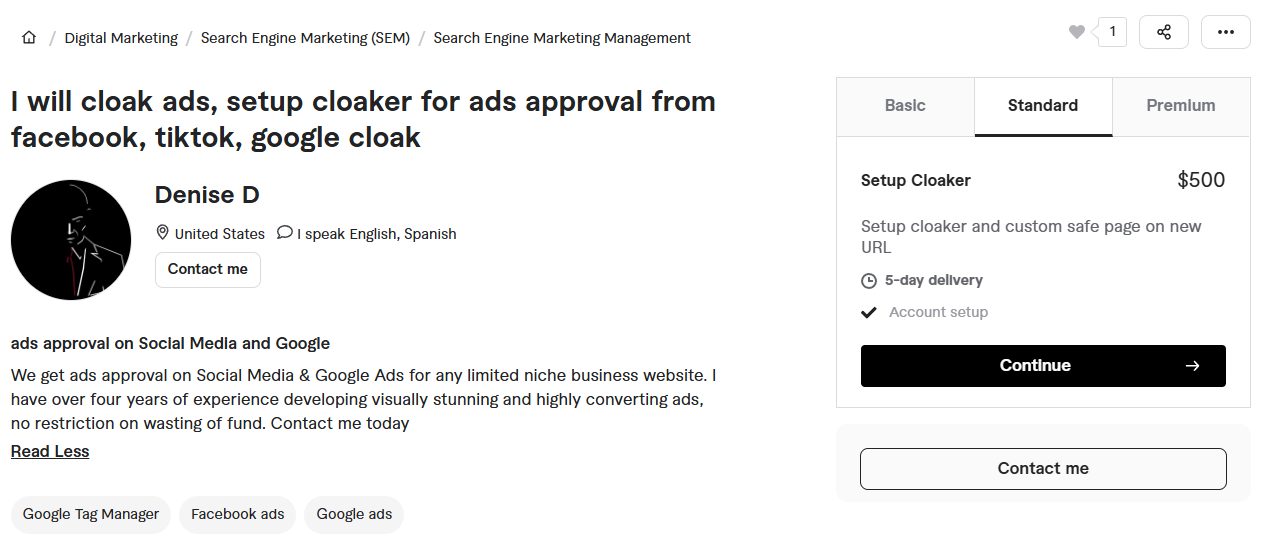
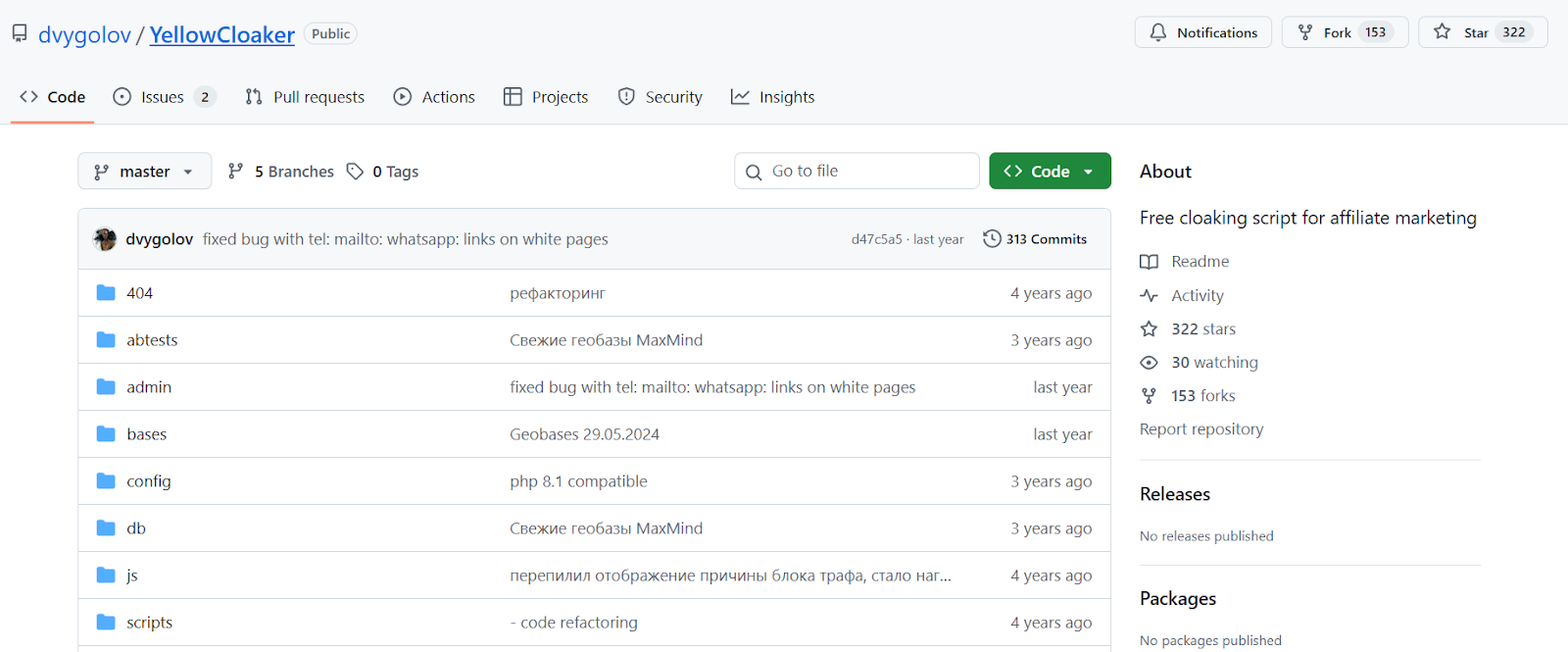
Public cloaking tools all follow similar algorithms — and that’s exactly what makes them detectable. A better long-term strategy is to use custom-built scripts from freelance developers. It’s not cheap, but it’s worth every dollar: your code is unique, so it’s harder for AI to flag it.
3. Invest in quality infrastructure
Your setup is only as strong as its weakest part.
Use clean domains with SSL certificates, residential mobile proxies, reliable anti-detect browsers, and trusted agency accounts.
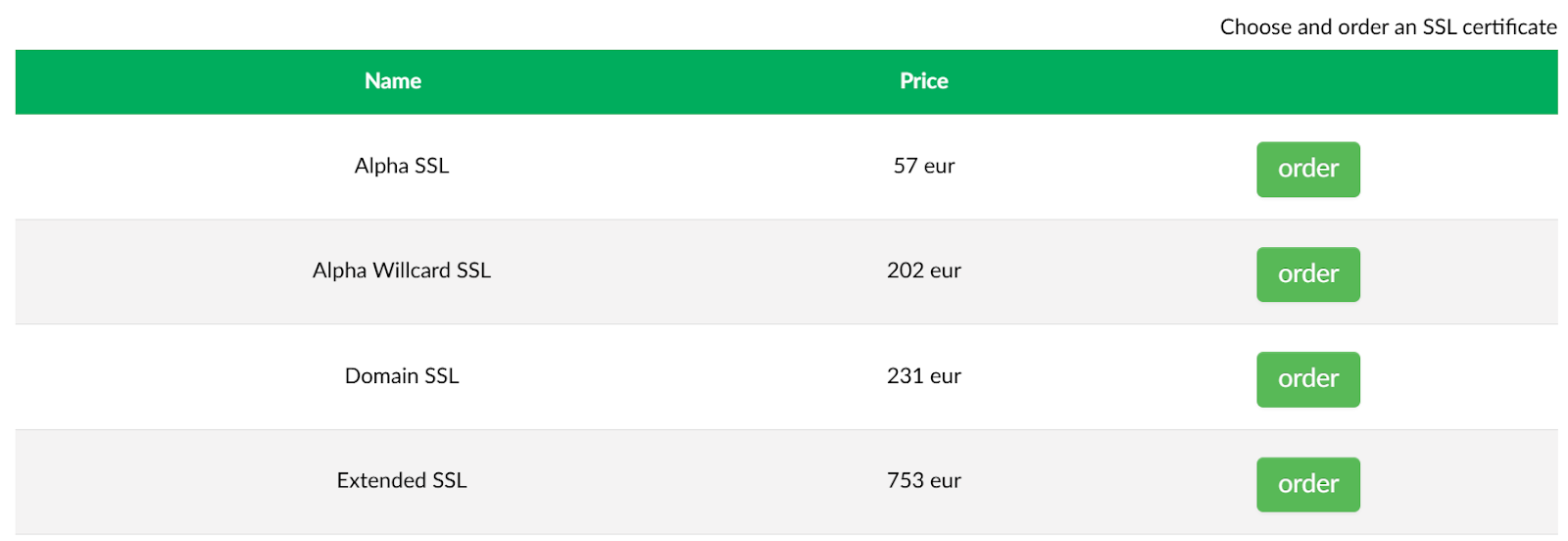
You can find good expired domains on ExpiredDomains and check their history on WebArchive. Avoid domains with multiple owners or drastic niche/language changes. SSL certificates from Let’s Encrypt are free, but paid ones ($15–20/year) look more trustworthy.
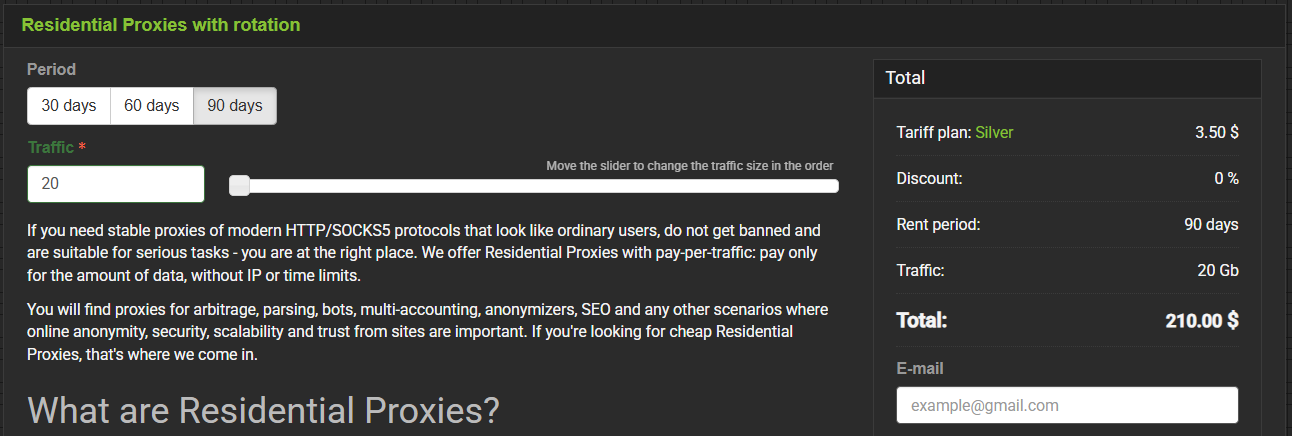
Residential proxies should match your target GEO — that’s crucial. Anti-detect browsers can be picked from affiliate tool compilations online.
And one more thing: don’t buy agency accounts from random resellers.
If one account under that agency gets flagged, Google often blacklists every linked profile.
That’s why affiliates prefer verified providers like YeezyPay, which works with 13+ major European agencies. Our managers monitor ad quality, so one buyer can’t ruin trust for everyone else. Even if your account gets suspended, YeezyPay helps recover your funds and provides a replacement. This level of support is what keeps campaigns running even under tighter Google moderation.
Final thoughts
Google has been pushing advertisers toward “compliance” for years — and now, with AI, it’s more effective than ever. But gray-hat niches won’t disappear. They’ll just require more precision, creativity, and technical skill.
To keep your campaigns profitable in 2026, you’ll need to:
-
Evolve your cloaking setup as your spend grows
-
Experiment with custom scripts
-
Use clean domains and residential proxies
-
And most importantly, work with trusted Google Ads agency accounts
YeezyPay’s team has been running grayhat offers themselves for years — that’s why our platform was built by affiliates, for affiliates. We understand what works in Google Ads right now and can match you with the right account setup for your specific vertical.